
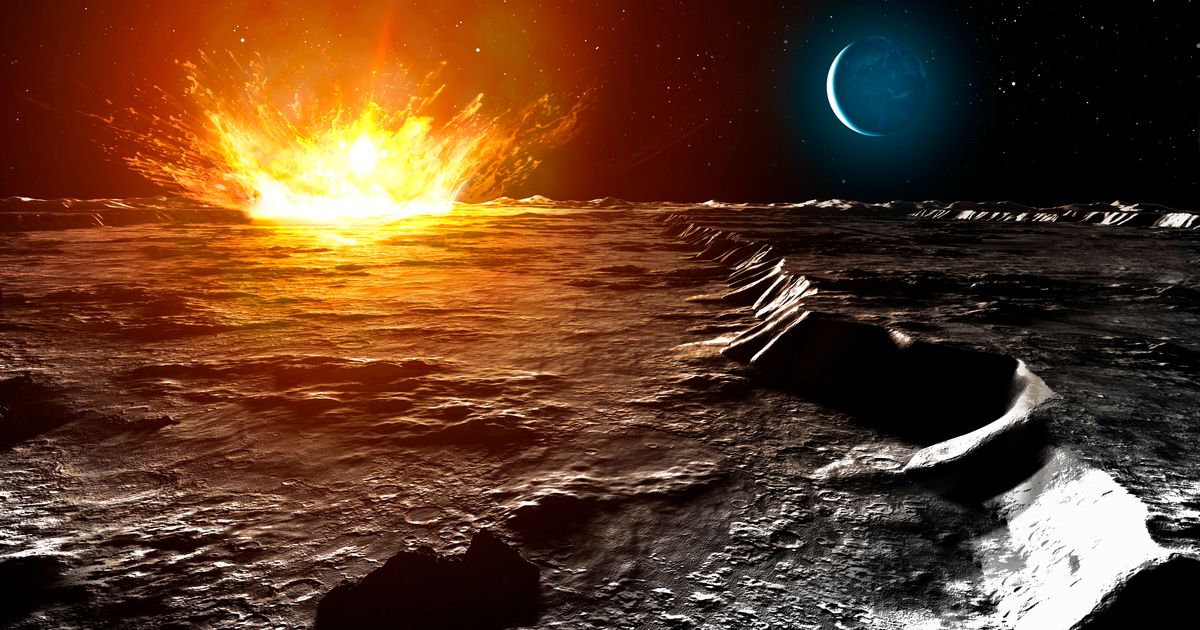
An asteroid the size of a 10-story building could collide with the Moon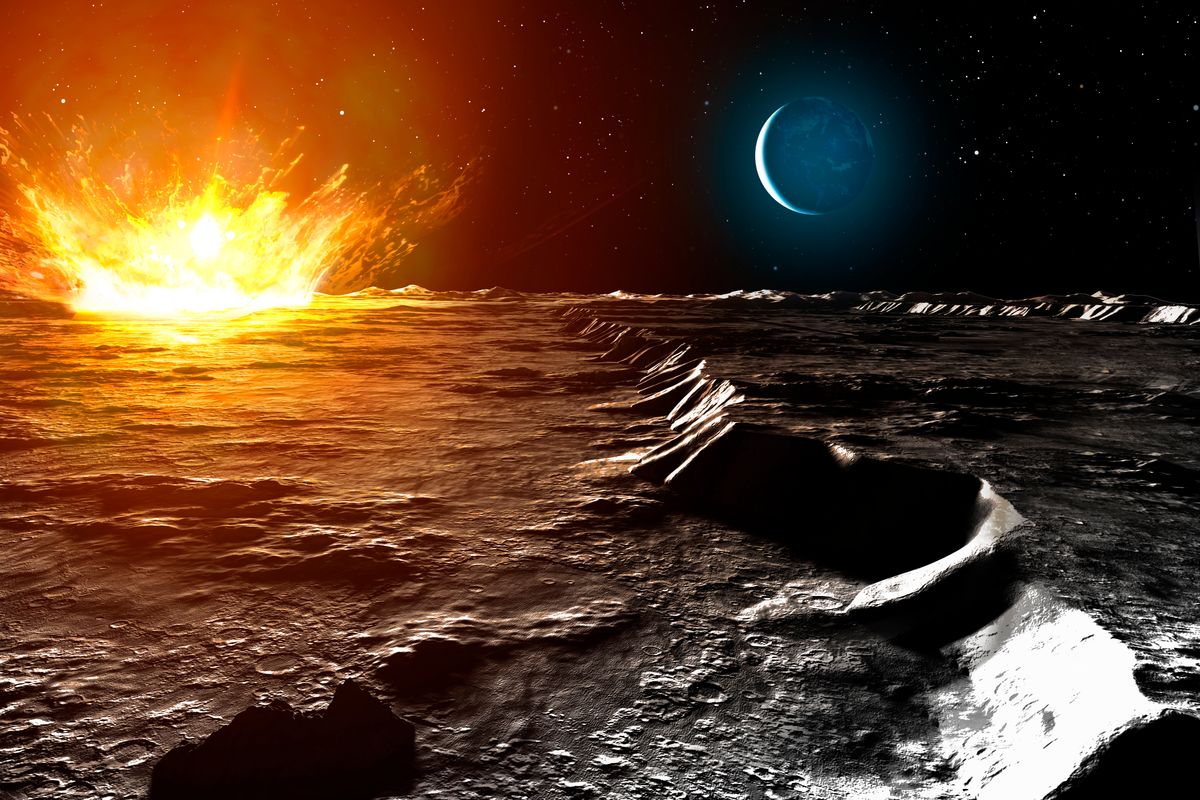
Asteroid 2024 YR4 could strike the Moon in 2032(Image: Getty Images)
Last year, a giant space rock hit headlines after NASA revealed there was a small chance it could smash into Earth. Once dubbed the ‘city-killer’ asteroid for its potential to wipe out a major city, asteroid 2024 YR4 had a 3.1 per cent – or one-in-32 chance – of hitting our home planet in 2032.
But after astronomers were able to refine the asteroid’s predicted path, it soon became clear its odds of impact with Earth are zero – though the same can’t be said for the Moon.
The space rock, which is about 200 feet (60 metres) wide, now has a 4.3 per cent chance of smashing into the Moon on December 22, 2032, according to NASA.
Now, a new preprint study, which is yet to be peer-reviewed, suggests a Moon collision could release an ‘optical flash’ visible from Earth. Astronomers said it would be the ‘most energetic lunar impact event ever recorded in human history’.
Scientists previously estimated that if asteroid 2024 YR4 hit the moon, it could create a debris cloud weighing more 100,000,000kg – 10 per cent of which could be drawn towards Earth in a matter of days. This could expose Earth’s satellites to damaging meteorites, wreaking havoc on our planet’s communication systems, scientists warned in a paper published in June.
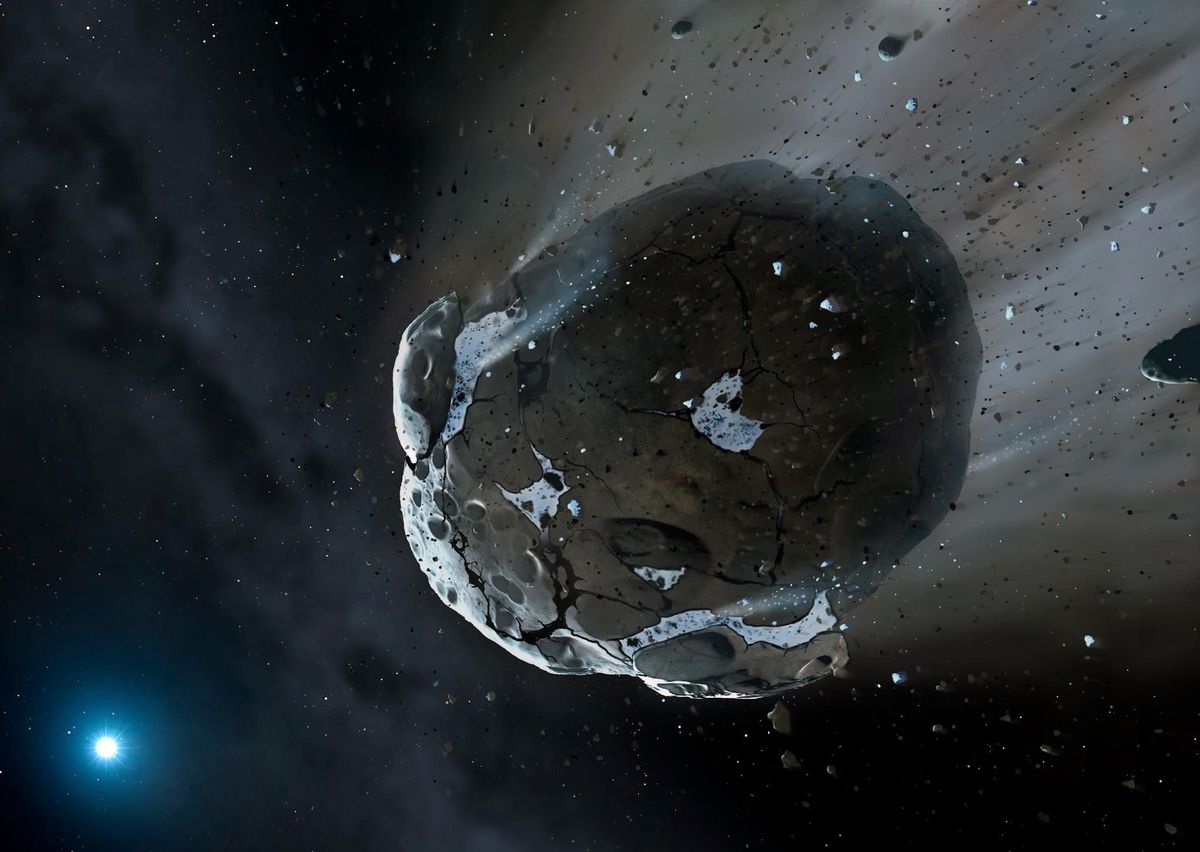
The ‘city-killer’ asteroid is around 60 metres in diameter(Image: PA)
But the new study suggests this collision could create a blast as bright as Venus. The authors say an impact would produce a flash between magnitudes -2.5 and -3, similar to Venus – the brightest planet in the night sky – which shines at around magnitude -3 to -5, depending on its position in its orbit and its distance from Earth.
For comparison, Sirius, the brightest star in the sky, shines about magnitude -1.5. The authors say the flash would last several minutes after the impact, followed by an infrared afterglow that could last several hours.
The debris from the impact would cause rocks and dust to escape the Moon’s gravity and hit Earth, causing meteors visible in our sky, the authors wrote. “Despite the associated risk,” the paper states, “this scenario offers a rare and valuable scientific opportunity.”
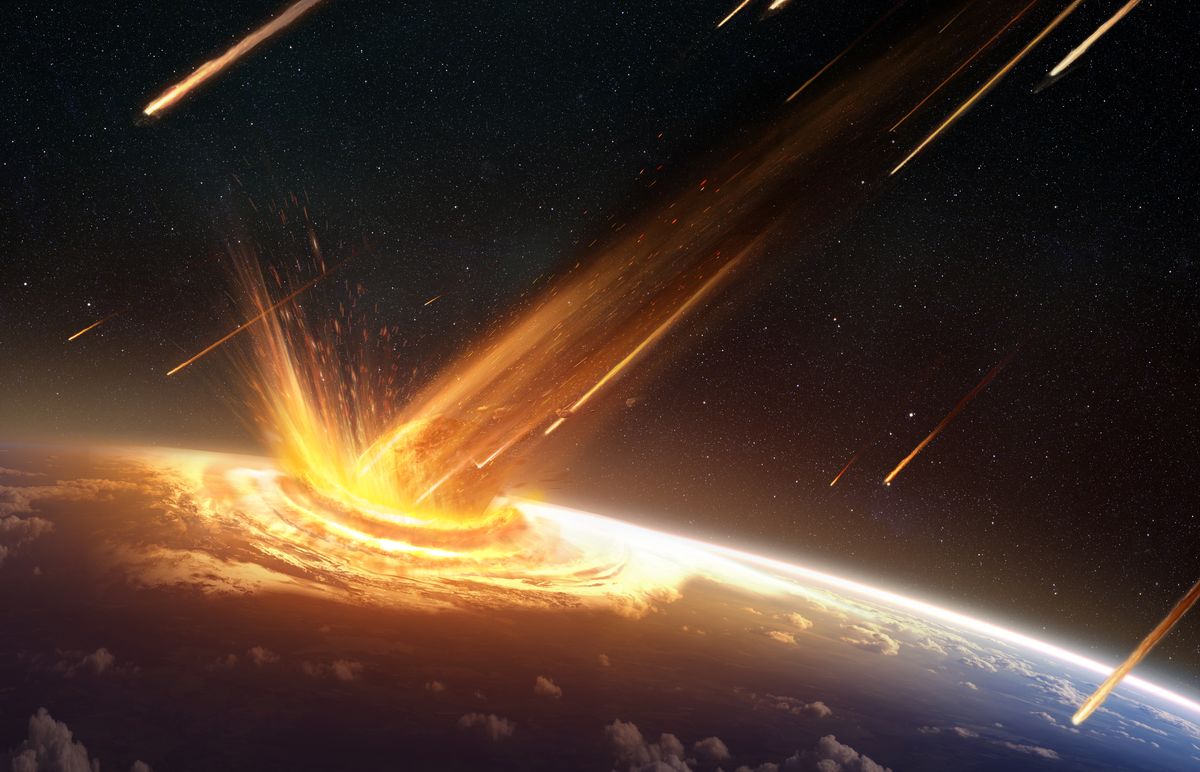
Asteroid 2024 YR4 once had a small chance of smashing into Earth(Image: Getty Images)
“If this scenario plays out,” Yixuan Wu, a researcher at Tsinghua University in China and an author of the paper, told Live Science, “it will be a milestone for planetary science, turning the Earth-Moon system into a grand stage for validating our understanding of asteroid impacts.”
If the collision were to occur, it would most likely be visible from East Asia, Oceania, Hawaii and western North America. However, the authors say just 70 per cent of the Moon is expected to be illuminated on the predicted day of impact – December 22, 2032 – meaning it would have to hit the unlit portion of the Moon for sky watchers to see it.
Astronomers will have another chance to observe asteroid 2024 YR4 in 2028, which should help them to calculate whether the asteroid will hit the Moon in 2032.