
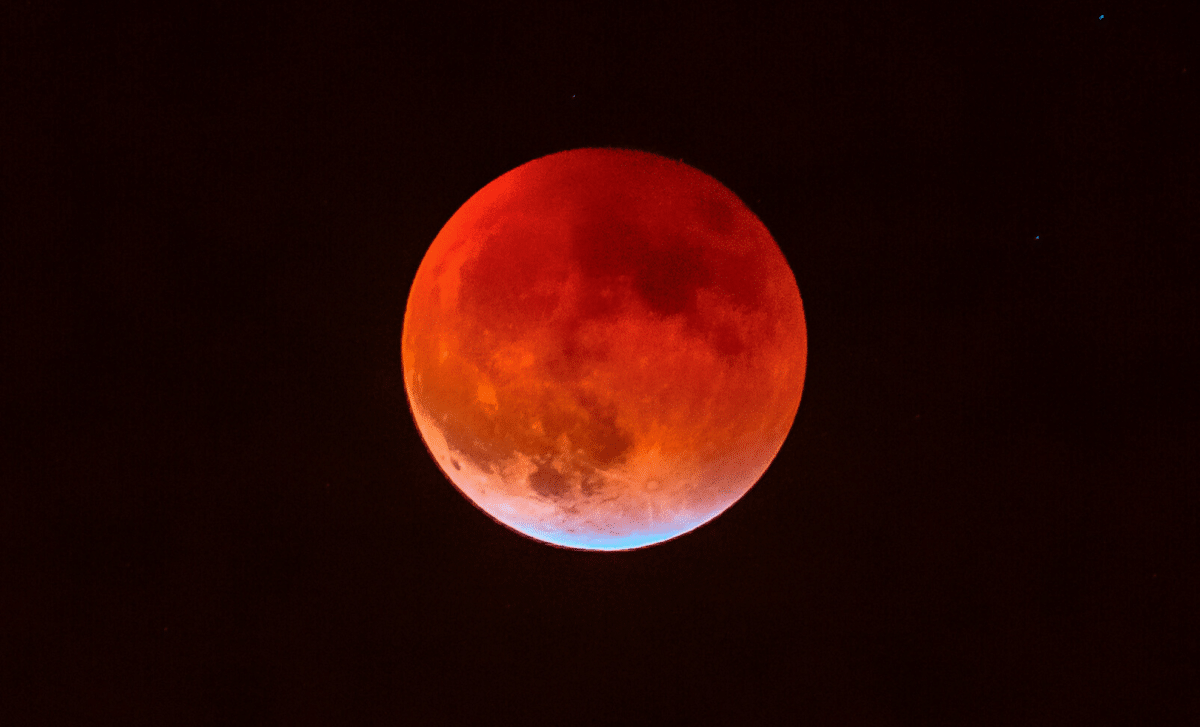
A rare celestial event is coming, a total lunar eclipse that will transform the moon into a blood-red hue. This spectacular phenomenon, often called a “blood moon,” can be seen across much of the United States, offering an early morning show you won’t want to miss. According to TimeandDate, this rare eclipse is not just a simple moon phase, but a thrilling event with a spooky, red glow that’s visible without special equipment. Here’s everything you need to know about how, when, and where to catch this stunning lunar display.
The Fascinating Science Behind The Blood Moon Eclipse
A blood moon happens when the Earth lines up directly between the sun and the moon, casting a shadow on the lunar surface. During this time, sunlight still reaches the moon, but it’s filtered through Earth’s atmosphere, which bends the light. This process filters out most of the blue light, leaving behind a reddish-orange glow. This reddish tint, combined with the darkness of the Earth’s shadow, gives the moon its iconic blood-red appearance.
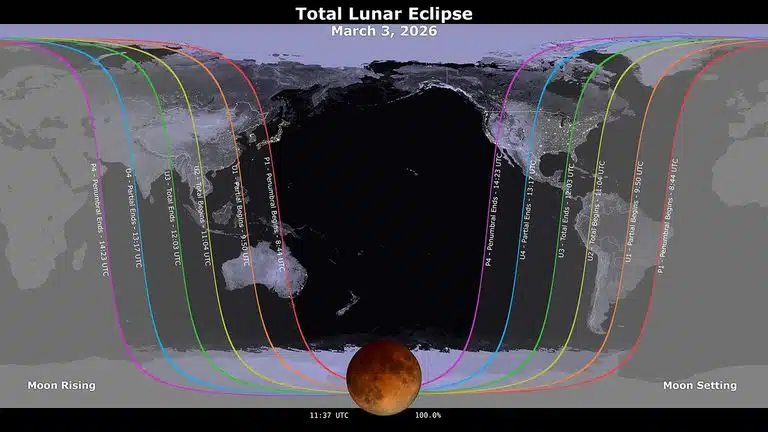 Map showing where the March 3, 2026 lunar eclipse is visible. Contours mark the edge of the visibility region at eclipse contact times, labeled in UTC.
Credit: NASA’s Scientific Visualization Studio
Unlike solar eclipses, which require special protective glasses, lunar eclipses are perfectly safe to view with the naked eye. The total lunar eclipse on March 3 will last for about 58 minutes, giving viewers a significant window of time to witness the moon’s transformation. The full event lasts over five and a half hours, from the first hint of the shadow touching the moon to the final exit of the moon from Earth’s shadow.
Best Viewing Locations for the Eclipse
If you’re hoping to catch the full eclipse, location is key. As the moon’s path across the sky is affected by your geographical location, the best viewing spots will be in the western parts of the United States, especially along the West Coast and in Hawaii. These areas will have a high enough vantage point to fully experience the eerie red phase.
However, as you move eastward, the chances of catching the entire eclipse decrease. In cities like New York and Boston, for example, the moon will set just as totality begins, cutting the show short for those viewers.
What Time Will the Blood Moon Eclipse Occur?
The time of the eclipse varies across the United States, so you’ll need to know when to wake up to catch the action. According to TimeandDate, the total lunar eclipse will unfold during the early morning hours. For those on the East Coast, the peak of totality will occur from 6:04 to 7:02 a.m. Eastern Time, although the moon will set before totality ends. In Central Time, the eclipse will happen from 5:04 to 6:02 a.m., while Mountain Time will see the best view from 4:04 to 5:02 a.m., and Pacific Time from 3:04 to 4:02 a.m. Hawaii and Alaska will have an even earlier view.
Planning ahead is key, setting an alarm to catch the blood moon eclipse could make all the difference in not missing this rare event. You don’t want to wake up too late and see only a partial eclipse!
Why This Blood Moon Eclipse is So Rare
Lunar eclipses are not uncommon, but this particular blood moon will be rare for several reasons. For one, it’s the first total lunar eclipse since 2025 and the last until 2028. The spacing between total lunar eclipses makes these events exciting and infrequent, which is why it’s so important to take advantage of this one. The next total lunar eclipse won’t occur again until New Year’s Eve 2028, nearly three years after this March event.
The rarity of a blood moon also comes from the timing and angle of the Earth’s shadow, which makes the eclipse an especially memorable spectacle. It’s the kind of astronomical event that leaves you in awe of the universe and is not something you want to miss.
Watching the Eclipse: What You Need to Know
As a lunar eclipse occurs at night, it’s the ideal celestial event to watch with the naked eye. You don’t need a telescope, special glasses, or any other equipment to view the eclipse. Unlike solar eclipses, which can be harmful to your eyes, lunar eclipses are perfectly safe and offer a clear, unfiltered view of the moon’s transformation.
For the best experience, find an area away from city lights. A wide open space, like a park or a hill, will give you the best view of the moon as it turns red. Make sure to dress warmly, depending on where you live, the early morning temperatures may be chilly as you wait for the moon to pass through Earth’s shadow.
The Impact of Weather on Your Viewing Experience
One major factor that could affect your eclipse viewing experience is the weather. If you’re in an area prone to clouds, such as the Midwest or parts of the East Coast, the weather could obscure your view of the moon. Clear skies are essential for the best viewing conditions. In areas where cloud cover is expected, your best bet is to track local weather forecasts and have a backup plan, such as traveling to a nearby area with clearer skies.
On the West Coast and in parts of the Southwest, the chances of clear skies are higher, so these regions are ideal for watching the eclipse in full.