
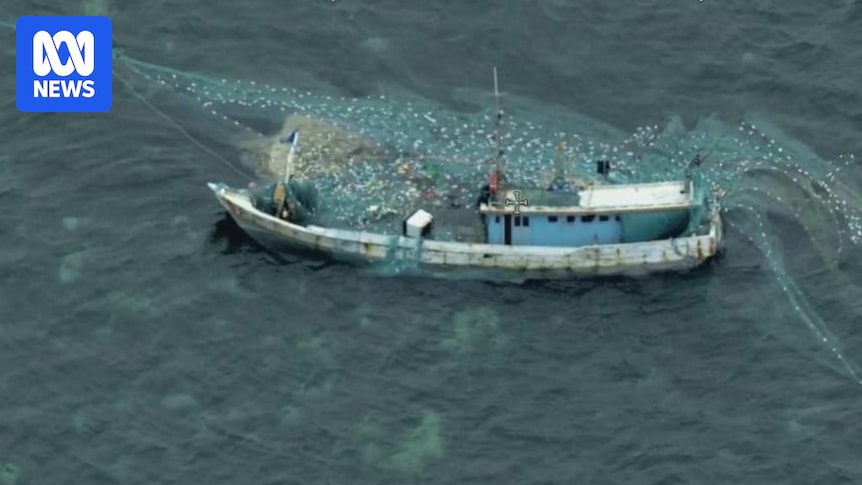
Authorities are launching a multi-agency operation to target foreign fishing boats illegally entering Australian waters in north Queensland and the Torres Strait.
Border Force has intercepted 10 suspected illegal fishing boats in Queensland waters since the start of the year but there is evidence of foreign fishers reaching the mainland as far back as October last year.
In a statement Home Affairs Minister Tony Burke said the new operation would build on similar efforts to tackle illegal fishing in north-west Western Australia and the Northern Territory.
“This operation is a response to illegal foreign fishing activity in the Torres Strait and is in partnership with the local communities we’ve spoken with who see and feel the impact,” Mr Burke said.
Torres Strait community leaders and Queensland politicians have been pressuring the federal government and Border Force to increase surveillance and patrols after a steady tide of border crossings.

CCTV footage from last month allegedly shows Indonesian fisherman walking up to a beachfront bar on Roko Island in the Torres Strait. (Supplied)
On January 14 a group of alleged illegal fishers were captured on camera walking up to a resort bar on Roko Island, just north of Cape York Peninsula, and asking for drinks.
‘Desperate’ situation behind the influx
The federal government has previously attributed the increase in illegal fishing in the Torres Strait to the success of Border Force’s operations in WA and the NT.
“The criminals have tried and failed in the Kimberley and Northern Territory,” Mr Burke said.
“They are now trying in the Torres Strait, but they will also fail there.
“Australian Border Force surveillance and patrol capabilities are active across vast and remote maritime regions.
“Foreign fishers who operate in Australian waters illegally risk losing their haul, their equipment, their vessel, and their freedom.”
However, Erub Island man Kenny Bedford said the recent influx was “unusual” and “alarming” because boats were getting as far south as the Cape York coast.
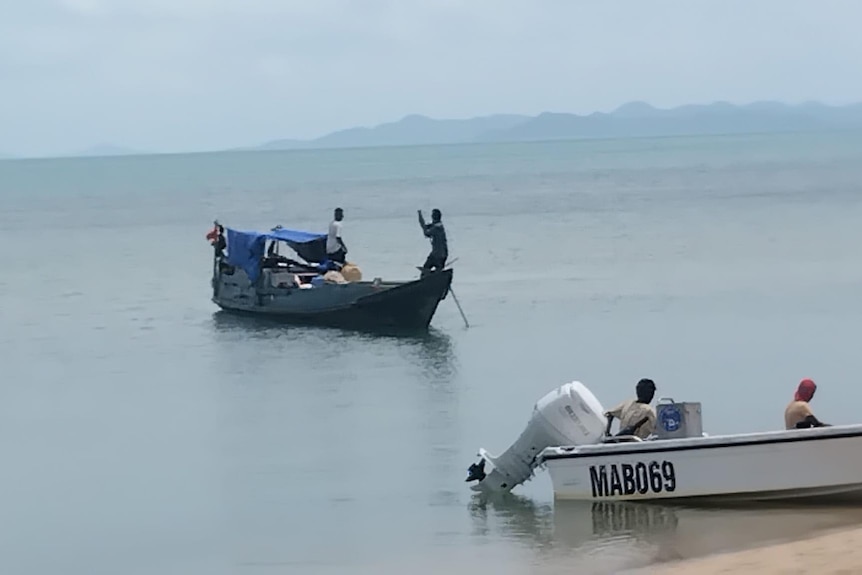
Mabuiag Island residents were alarmed when a foreign boat arrived on the island’s shores last month. (Supplied: Mabuiag Island resident)
Mr Bedford, who has worked in fisheries management in the Torres Strait for decades, said without deterrents “they are going to keep coming”.
He said food security issues in Indonesia and Papua New Guinea’s Western Province were driving the problem.
“There is a level of complexity behind this but it really comes down to desperate people who have fished out their own resources,” he said.
“This is all they know, fishing, and they are basically in survival mode and if they’re not catching fish there, they are not feeding their families.”
Locals ‘fear for safety’
The government has refused to reveal how many patrol boats are currently operating in the Torres Strait. At least two vessels in Border Force’s fleet are undergoing maintenance in Cairns.
The Torres Strait Island Regional Council has called for a review of federal agencies’ border monitoring capabilities, a consistent patrol boat presence in known incursion hotspots and better communication from the government.
“When suspected foreign vessels enter our waters, it creates real fear — fear for the safety of our hunters and fishers, fear for families, and fear of what else could be happening in our region,” Mayor Phillemon Mosby said.
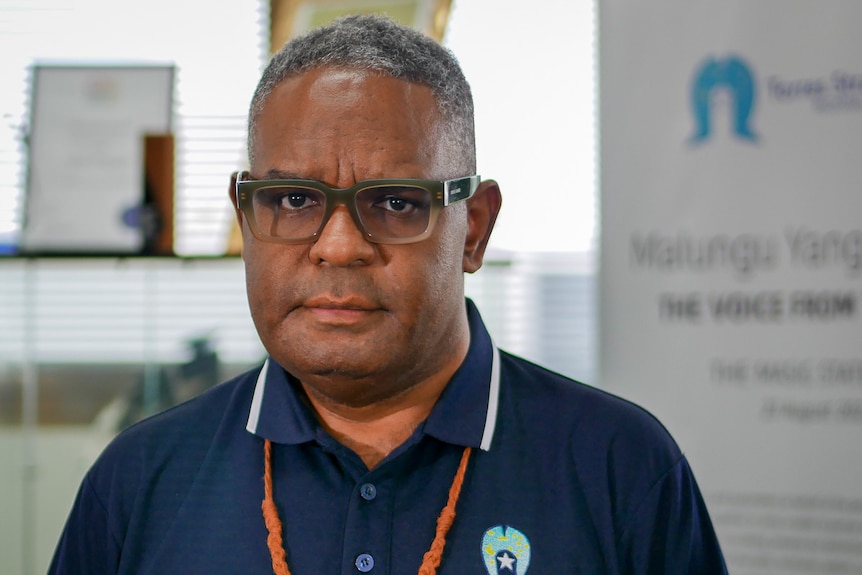
Phillemon Mosby says a loss of confidence in border protection made Torres Strait Islanders afraid for their safety. (ABC Far North: Brendan Mounter)
Mr Mosby said he still had not been given any details about how the new operation, named Operation Broadstaff, would work.
Assistant Minister for Customs Julian Hill said while the incursions were unacceptable, there had been “no threats of violence” from anyone on board the 10 boats intercepted since January.
Mr Hill said the joint operation would include fisheries agencies, foreign affairs intelligence officers, Australian Federal Police and state agencies.
Opposition home affairs spokesman Senator Jonno Duniam said the government had been “reactive, not proactive in responding to the needs of communities on our northern border”.
“Our borders are weaker, and criminal operators are exploiting the gaps,” he said.