
Several Irish citizens have sought official help after being arrested and detained by US Immigration and Customs Enforcement (Ice), according to the Irish Government.
It comes as Taoiseach Micheál Martin said that the treatment of people in Ice facilities was a “concern,” and confirmed he will be raising concerns about the treatment of undocumented Irish people with the US president Donald Trump in Washington DC.
Minister for Foreign Affairs Helen McEntee confirmed that a “small number” of less than a dozen Irish citizens have also sought help from Irish embassies, in situations similar to that of Seamus Culleton.
On Monday The Irish Times reported that Culleton, an Irishman living in the United States for more than 20 years, has been held by Ice since being arrested last September.
Culleton, who has described his experience as “a torture”, has appealed to the Taoiseach to raise his case with Trump during the St Patrick’s Day visit to the White House next month.
While Culleton’s case was reported to the Department of Foreign affairs late last year, Martin told journalists that he had only been briefed about it on Monday. He said the Government was considering how it can talk to Trump’s administration about the case.
Speaking on his way to a Cabinet meeting on Tuesday morning, Martin said the Irish Government has been raising concerns about undocumented Irish in United States “long before president Trump came into office”.
“There is now a crackdown in America in terms of the migration law, which we are concerned about in terms of how it affects the Irish undocumented,” he said.
The Taoiseach said that being in the United States without legal status was “a very difficult and dangerous position to be in, because it can end at any time”.
“Every country has migration policies, but those Ice facilities are a concern.”
Martin added that securing long term security for undocumented Irish was “more with the Hill and Congress”, which he said had never been in a position to get agreement on migration law to protect Irish migrants. “That’s become a more negative scenario in the last 10 years, because of the way the migration debate has gone in the US.”
Martin confirmed that he would raise the issue with Trump: “We’ll be raising it, we’ve been raising it consistently.”
McEntee confirmed that Culleton’s case had been brought to the attention of the Department of Foreign Affairs late last year. “We have been providing support and consular assistance to him, and we continue to provide that to him. I acknowledge it’s a really distressing situation for him, and we want to do everything that we can to support him,” McEntee said.
[ Ice detention camp, where Irishman is held, under scrutiny for unexplained deathsOpens in new window ]
She confirmed that her department was aware of other Irish citizens who have sought help after being detained by Ice.
“I am aware of a small number of cases where people have directly reached out to our embassy team. We’ve made it very clear that the embassies right across the US are there to support any citizen in any situation they’re in, but only a small number of people have come forward.”
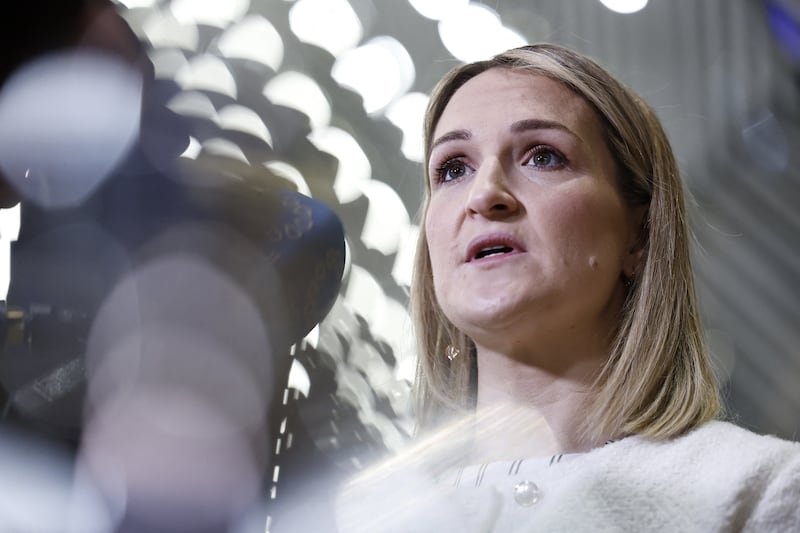 Helen McEntee said there were less than 12 Irish citizens, detained by Ice, have reached out for official help. Photograph: Simon Wohlfahrt/ AFP via Getty Images
McEntee said that the number of cases was fewer than 12, and said she would “stress” that if anyone was in a similar scenario to Culleton, Irish embassies are able to support them.
Asked if the cases of Irish people detained by Ice should be raised by the Taoiseach during his visit to the White House, McEntee said there was “always a time and a place to raise concerns that we may have about individual cases or particular scenarios”.
“I have no doubt that the Taoiseach will give this consideration,” she said.
Tánaiste Simon Harris said it was an “extremely stressful” time for Culleton’s family, and added that Ireland will be using diplomatic channels to advocate for the Irishman between now and the Taoiseach’s White House visit in March.
“I take the point that’s made about what may or may not happen on the 17th of March, I would just make the point, it’s fair whack a time to go between now and the 17th of March,” he said.
“Certainly Ireland, Irish authorities, through our diplomatic channels will be continuing to engage and make the point, to make representations between now and then. And of course, the Taoiseach and the Government will judge where that’s at in March.”