
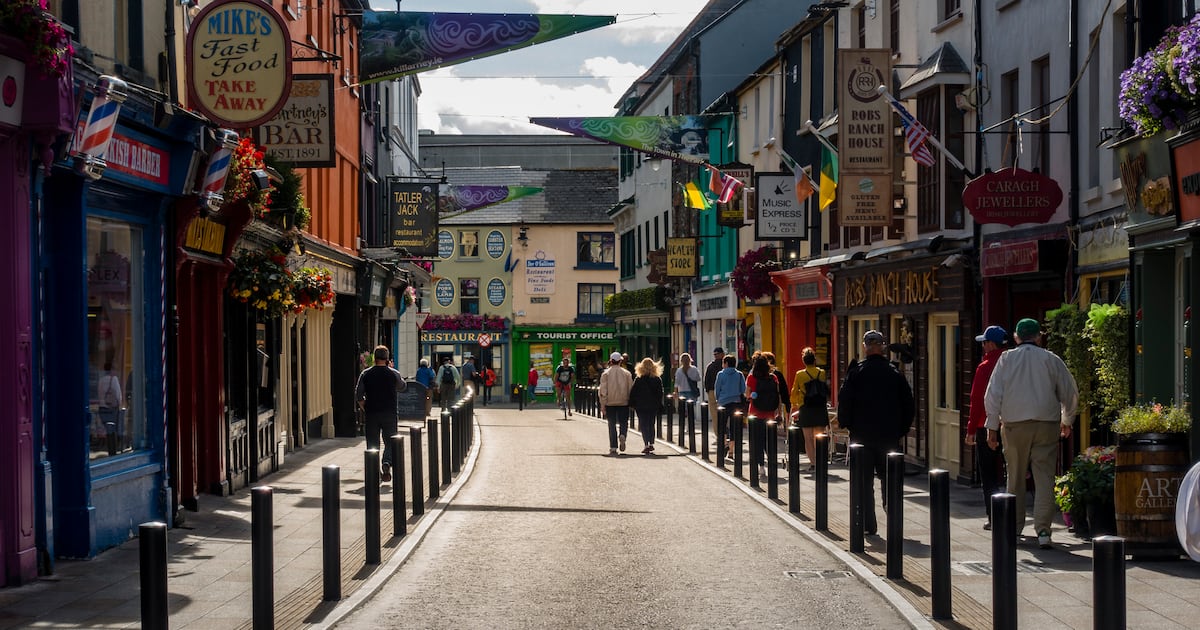
New restrictions on short-term lets will only apply to towns and cities with populations of more than 20,000 people, as the Government abandons a former plan to set a cap on populations of more than 10,000.
Explaining the rowback, Minister for Tourism Peter Burke said the Government was trying to be “understanding” towards smaller towns that were in high demand for tourism but suffered from a lack of tourist accommodation.
Norma Foley and Michael Healy-Rae, respectively a Minister and Minister of State from Co Kerry, had previously opposed plans to cap short-term lets for large Irish towns, which would have affected those running Airbnb-style rentals in popular tourist towns such as Killarney.
Burke denied the change in policy was a response to pressure from Foley and Healy-Rae, and said instead he had been in discussions with the tourism sector over a number of months.
Speaking on his way to a Cabinet meeting on Tuesday morning, Burke confirmed he had agreed the new policy restricting short-term lets on towns with populations of 20,000 or more party leaders on Monday night.
He said the Government had to be “cognisant and understanding” of the fact many towns in Ireland do not have enough hotel accommodation to meet tourism demands.
“And short-term lets are key to providing that capacity,” he said. “So I want to be very honest with the sector, to ensure that we have that capacity there. So that’s important, to keep rural tourism alive.”
He said more than half of short-term lets in Ireland were in the State’s five cities, which he said he believed would most benefit from increased housing supply when the restrictions on short-term lets came into place.
“But whether you’re looking at the Wild Atlantic Way, the western sea board, Leitrim, Roscommon, smaller areas that have a lot of tourist attractions, but the capacity isn’t there, we have to work on that,” he said.
Asked about people living in smaller towns who feel they are losing out on rental accommodation that is being turned into short-term lets, Burke said, “If you look where the acuteness of the housing crisis is, it’s generally in places with [a population above] 20,000″.
“I believe that metric should capture all those and ensure that we are getting a good return to the long-term rental market, for more stability. And I believe that does strike a balance. It’s the smaller areas you just have to be careful of.”
Burke said he expected the legislation to be brought in by the middle of this year.
In a post on his Instagram account on Tuesday, Healy-Rae took credit for the policy change. He said he had been “working hard at Government level” on the new rules, and the announcement from Government “reflects that work.”
Last month The Irish Times reported that Healy-Rae had told his Coalition colleagues that there needed to be a “serious rethink” on the plans to change the rules for short-term lets “before irreparable damage is done to rural Ireland”.
In an email released under Freedom of Information, the Minister of State at the Department of Agriculture said the plans were “not the solution to the housing crisis … It is scapegoating and I cannot and will not support it.”
In Healy-Rae’s November 2nd email to Taoiseach Micheál Martin and Tánaiste Simon Harris, he wrote to reiterate his “absolute opposition to how this is being approached and to urge a serious rethink before irreparable damage is done to rural Ireland.
“It is increasingly clear to me that not enough thought is being given” to “the devastating consequences this legislation will have on rural communities, rural tourism, and rural jobs,” he wrote.
“Let me be blunt: this legislation will not deliver the housing return being promised, and it will do enormous damage to rural economies in the process.”