
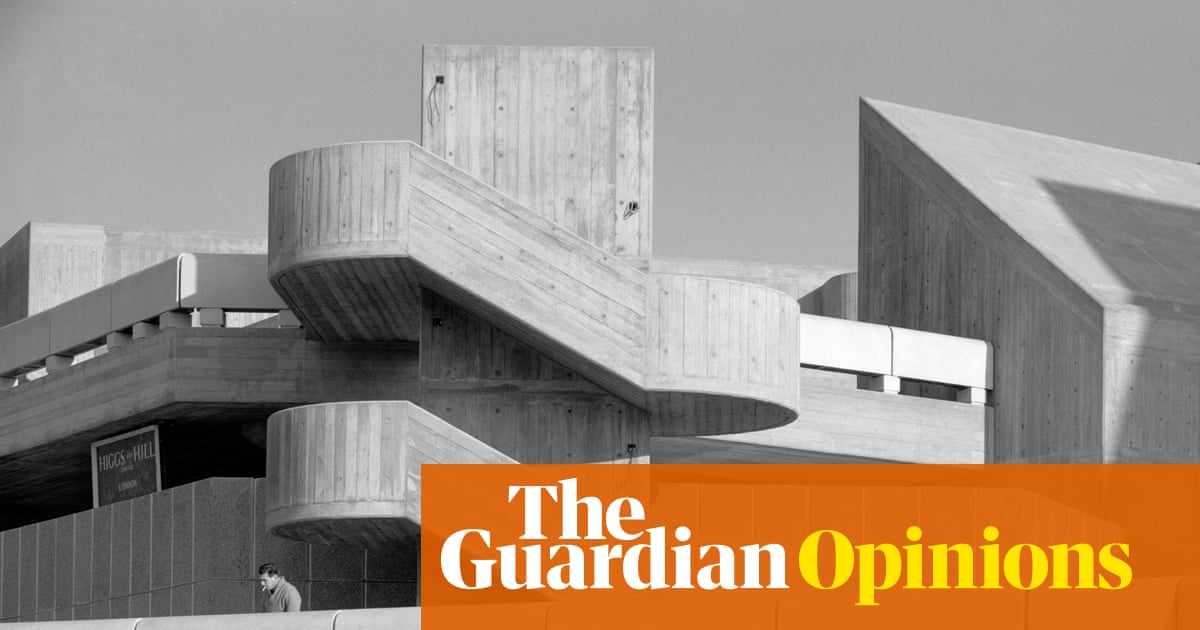
Britain’s battle of brutalism has finally reached an exhausted conclusion with the listing of London’s Southbank Centre. The so-called “concrete monstrosities” of the Hayward Gallery, Purcell Room, Queen Elizabeth Hall and its skatepark undercroft have finally been Grade II-listed by the Department for Culture, Media and Sport. Traditionalists may be spitting feathers, but as football pundits are apt to assert: “It was the right result.”
However, it turned out to be a very long and very tetchy game. Constructed between 1949 and 1968 in an uncompromisingly brutalist style, the Southbank Centre was once voted Britain’s ugliest building. Since 1991, the Twentieth Century Society (C20), champions of all things modern, and Historic England had recommended listing on six separate occasions, yet their advice was rejected by successive secretaries of state. Until now. The decision brings to an end an unprecedented 35-year-long impasse, one of the longest-running battles in British architectural heritage.
The brutalist era produced some of the boldest, architecture in Britain, constructed on a scale unlikely to be repeated
“The lack of listing had become a complete anomaly,” said Catherine Croft, C20’s director. “The Southbank Centre is admired as one of the best brutalist buildings in the world, so this decision is obviously very well deserved and long overdue. The arts complex is a highly sophisticated sculptural masterpiece, with enormous richness of form and detail inside and out. The experience it gives concert-goers and gallery visitors is unlike any other venue in the country, its virtuoso spaces still unrivalled.”
The Upper Ground of the South Bank, circa the opening of the National Theatre in 1967. Photograph: Heritage Images/Getty Images
Ironically for the spitting feathers traditionalists, the origins and present form of the Southbank Centre can be traced back to Winston Churchill, whose Conservative government spitefully swept away most of the old Festival of Britain site, except for the Royal Festival Hall. This scorched earth policy paved the way for new development along the Thames, in the style of the day.
Enter Norman Engleback, who helmed London County Council’s youthful architectural team charged with designing the Southbank Centre. Eschewing the more milquetoast, Scandinavian-style modernism of the neighbouring Royal Festival Hall, Engleback and his gang opted instead for a full-on droogs’ paradise of board-marked concrete walls, walkways, staircases and rooftop terraces, punctuated by concrete air conditioning ducts and pyramidal glazing.
As an architectural movement, brutalism has oscillated wildly in public affection and critical standing. But the wheel turns, and since the 2010s it has been rediscovered by a new generation of admirers, drawn not only to its aesthetic qualities but also to what it represented in terms of progressive social reconstruction in the postwar era. The listing of the Southbank Centre is merely the long overdue cherry on the concrete cake.
Queen Elizabeth Hall. Photograph: John Maclean, View/Alamy
Yet the saga was not without its bizarre twists and turns. The abolition of the Greater London Council in 1986 led to the creation of the South Bank Board, which sought to generate more income from the site, and the reviled “concrete monstrosities” were an obvious target for redevelopment. The next four decades saw numerous putative salvoes, from cosmetic tweaks to outright demolition.
A 1989 proposal by postmodernist imperator Terry Farrell would have wrapped the buildings in a po-mo shell, but was abandoned in 1993. The Wave, a £70m Richard Rogers scheme from 1994, would have involved a curved glass roof enclosing the buildings and outdoor spaces, like a giant and somewhat preposterous conservatory. Criticised for its lack of practicality and exorbitant cost, it was axed after failing to receive National Lottery funding. A 1999 masterplan for the entirety of the South Bank by Rick Mather was touted by some as “the perfect antidote to the centre’s drab squalor”, but again remained unexecuted.
In 2013, Feilden Clegg Bradley put forward the Festival Wing, a £120m proposal featuring a 60-metre-long glazed pavilion looming over the Hayward Gallery and commercial spaces housed in shipping containers. Vigorously opposed by C20, this plan was also dropped, largely due to the protests of the skateboarders who frequent the undercroft of the Queen Elizabeth Hall, and whose “Long Live the Southbank” campaign attracted more than 80,000 supporters and the backing of the London Mayor.
Board meeting … the skates who gather in the undercroft below the Queen Elizabeth Hall campaigned to save it from demolition. Photograph: Linda Nylind/The Guardian
Following a £16.7m grant from Arts Council England, Feilden Clegg Bradley instead went on to lead an exemplary conservation and restoration programme for the Hayward Gallery, Queen Elizabeth Hall and Purcell Room in 2018.
The brutalist era produced some of the boldest, most uncompromising architecture in Britain, constructed on a scale unlikely to be repeated. Paradoxically, a style that was once seen as ugly, aggressive and alienating now features as sanitised decoration on plates, mugs, tea towels and a host of other merch. Yet as the Southbank Centre amply demonstrates, brutalism’s real power lies in its buildings: things of supreme heft, surprising beauty and audacious ambition.
“The battle has been won and brutalism has finally come of age,” said Croft. “This is a victory over those who derided so-called ‘concrete monstrosities’ and shows a mature recognition of a style where Britain led the way.”