
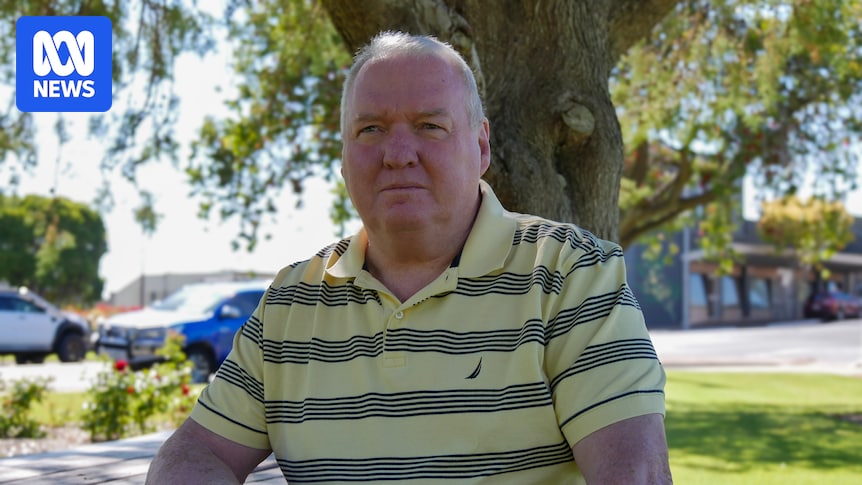
Millicent man David Walshaw spent close to two decades managing the public hospitals of South Australia’s Limestone Coast region.
But when he suffered a fall at his home, the ongoing struggles of the region’s health system became clear to him.
In November, Mr Walshaw fell from a ladder onto his side and, while he was in considerable pain, his wife called an ambulance to take him to hospital.
He was taken to the nearby Millicent and District Hospital and Health Service, where there was no doctor on site and he was assessed through a video consultation.
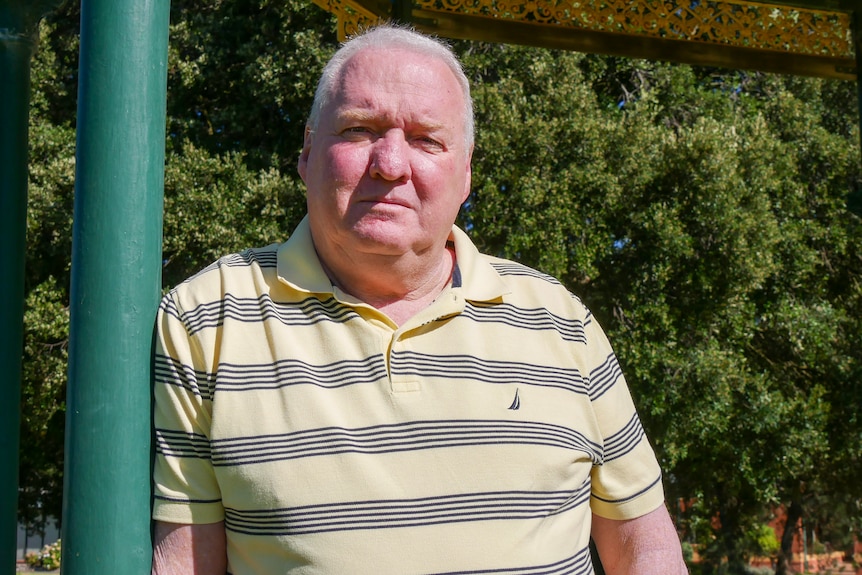
David Walshaw has been working with clinics in Millicent to attract and retain GPs. (ABC South East SA: Sam Bradbrook)
It was decided he should be taken to the larger Mount Gambier and Districts Health Service for scans, but there was an ambulance shortage.
“If an [ambulance] team was freed up in Mount Gambier during the night they’d come and get me but that obviously didn’t happen,” he said.
“I spent the night there in considerable pain and discomfort, and the ambulance team came down first thing the next morning.
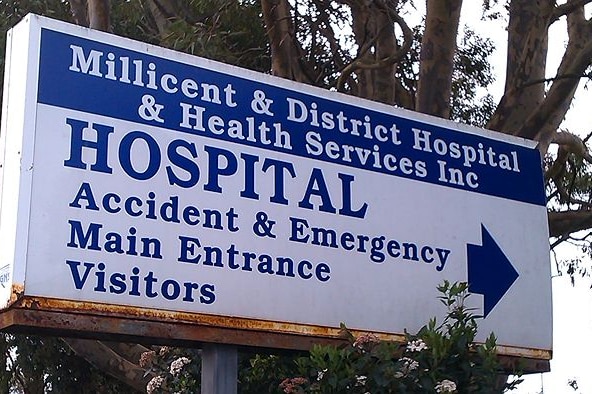
The Millicent and District Hospital serves a town of about 5,000 people. (ABC Local)
“Again, the ambulance team did a great job assessing my injury, taking a full history and preparing me to go into the emergency department at Mount Gambier hospital.”
Now, about 10 weeks after the incident, Mr Walshaw is still feeling pain and rehabilitating an injury picked up by later scans.
‘Different models’
Mr Walshaw said the care he received from the staff at both hospitals was positive and they did not deserve blame.
But he said local health had changed a lot since his time in the sector.
“When I first started at the Millicent hospital, there were 14 GPs in the town of 5,000 and another 5,000 on the periphery,” he said.
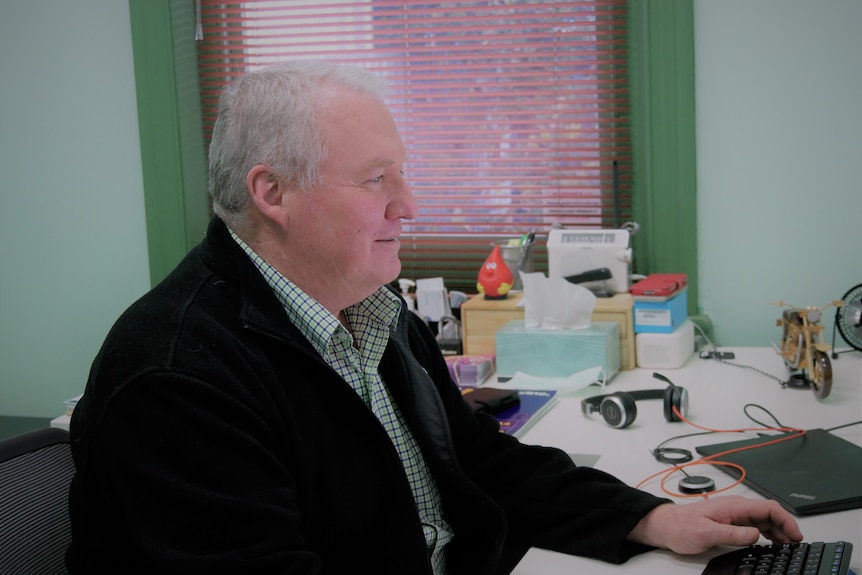
David Walshaw has praised the work of hospital and ambulance staff. (ABC South East SA: Leon Georgiou)
“We did 120 births [per year] at the hospital, we did surgery, chemotherapy, renal dialysis, we did a whole range of things.
“The GPs were all proceduralists. They were GP obstetricians, surgeons or anaesthetists; everyone had a sub-specialty.”
Now working with the Medical Clinic Millicent to attract new GPs, Mr Walshaw said new ways of thinking were required.
He said long-running staff shortages across the region’s health sector meant the system was failing local people.
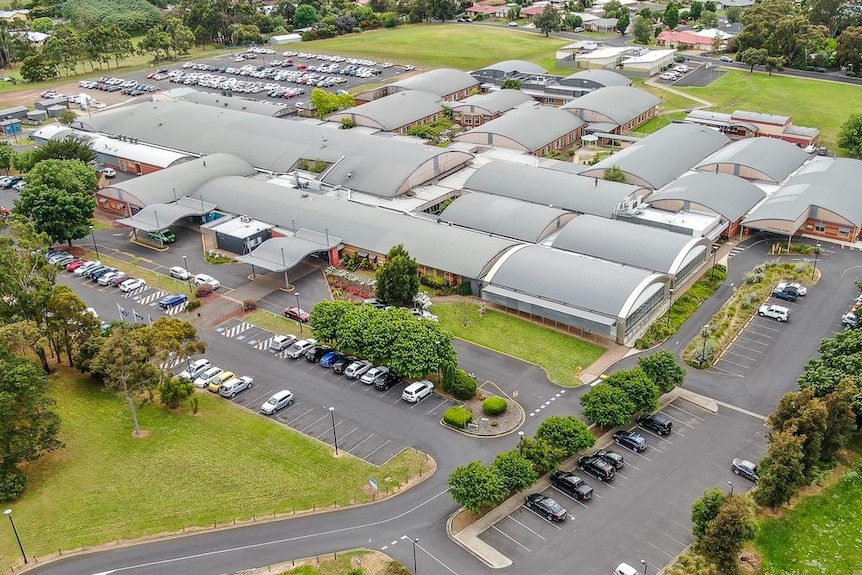
Mount Gambier Hospital is the largest public health facility in regional South Australia. (ABC South East SA: Bec Whetham)
“We’ve got to look at different models of care now; what worked in the past may not be what’s going to work OK in the future,” Mr Walshaw said.
“What we found worked really well is the nurse practitioner model, where a nursing staff member becomes more advanced and qualified as a result of further training.
“They’re then able to do much more inside their scope of practice and trialling that in the Millicent clinic at the moment is proving to be pretty successful.”
Regional plan needed
Australian Medical Association (AMA) SA president Peter Subramaniam said that with a state election on the horizon, both major parties needed to present a plan to improve regional health.
“How are we going to get more specialists to be attracted to, or have a presence in regional areas?” Professor Subramaniam said.
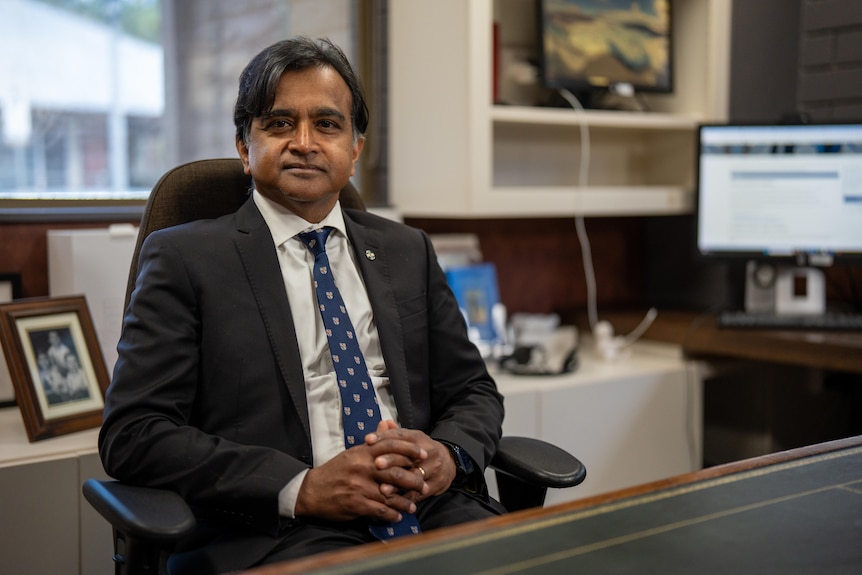
Peter Subramaniam says a clear plan for regional healthcare is needed. (ABC News: Ashlin Blieschke)
“How are we going to get those hub hospitals, like Mount Gambier, to a stage where more people from the regions can access care in the regions?
“Both parties will talk about how primary care is to do with Commonwealth funding, but none of us can sit back and watch a train crash without doing something about it.”
When asked about Mr Walshaw’s situation, Limestone Coast Local Health Network (LCLHN) chief executive Emma Poland said “the health and wellbeing of our consumers is our highest priority”.
Ms Poland said the South Australian Virtual Emergency Service (SAVES) was used at the Millicent hospital “for category three-to-five” presentations between 7pm and 7am.
“The rostered medical officer remains on call for all triage one and two presentations,” she said.
“The recently released LCLHN Clinical Services Plan 2025-2035 provides a 10-year road map and outlines that surgical services will continue at Millicent Hospital for the foreseeable future.”