
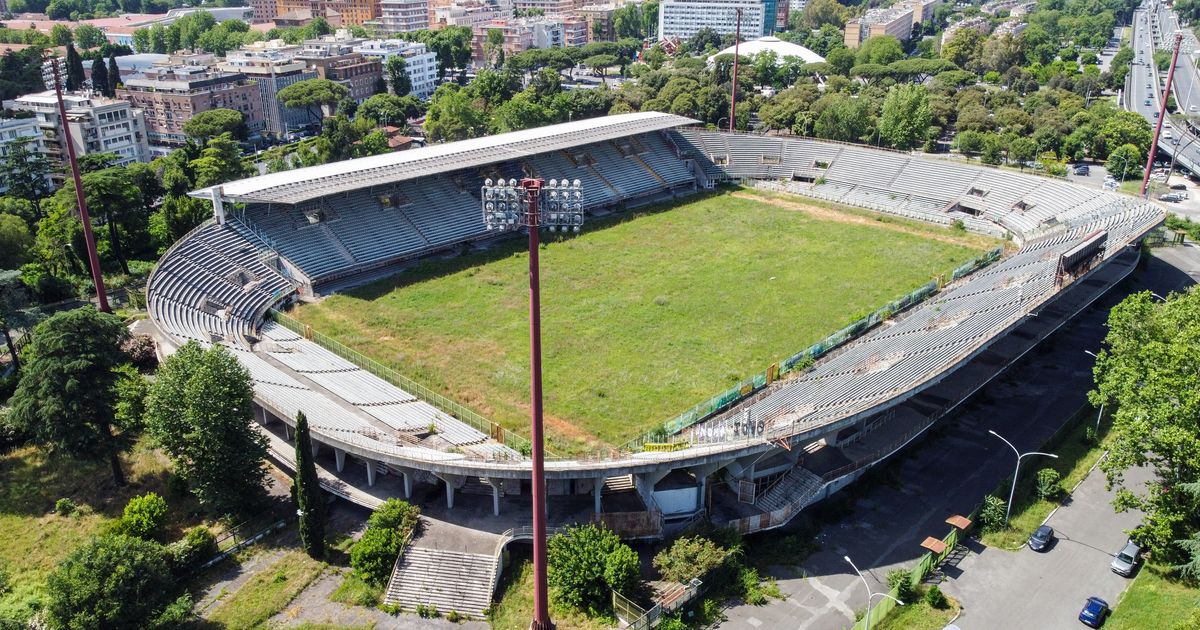
Italy’s Stadio Flaminio, which hosted Six Nations matches for over a decade, now lies derelict and decaying – a far cry from when Ireland regularly made the journey to compete there.
The Rome venue, which could hold 30,000 spectators, originally opened its doors in 1959 ahead of the 1960 Summer Olympic Games. Primarily used for football, it began staging rugby union matches in 2000 when Italy joined the Six Nations Championship.
Throughout its operational years, it remained the tournament’s most intimate ground, eventually proving insufficient when Italian rugby moved their major internationals to the considerably bigger Stadio Olympico next door. More than a decade after Italian rugby’s departure in 2012, the stadium remains dilapidated, although there are signs of potential regeneration on the horizon.
Ireland played at the venue on six occasions, maintaining an unbeaten record at the stadium. Meanwhile, Wales first visited the ground in April 2001, twelve months after Italy’s Six Nations entry, reports Wales Online. The Dragons secured a 33-23 triumph, with Gareth Cooper touching down once and Scott Gibbs bagging a brace to clinch the victory.
In the years that followed, Wales – whose latest loss to Italy marked the final straw for recently departed head coach Warren Gatland – encountered mixed results in the Italian capital.
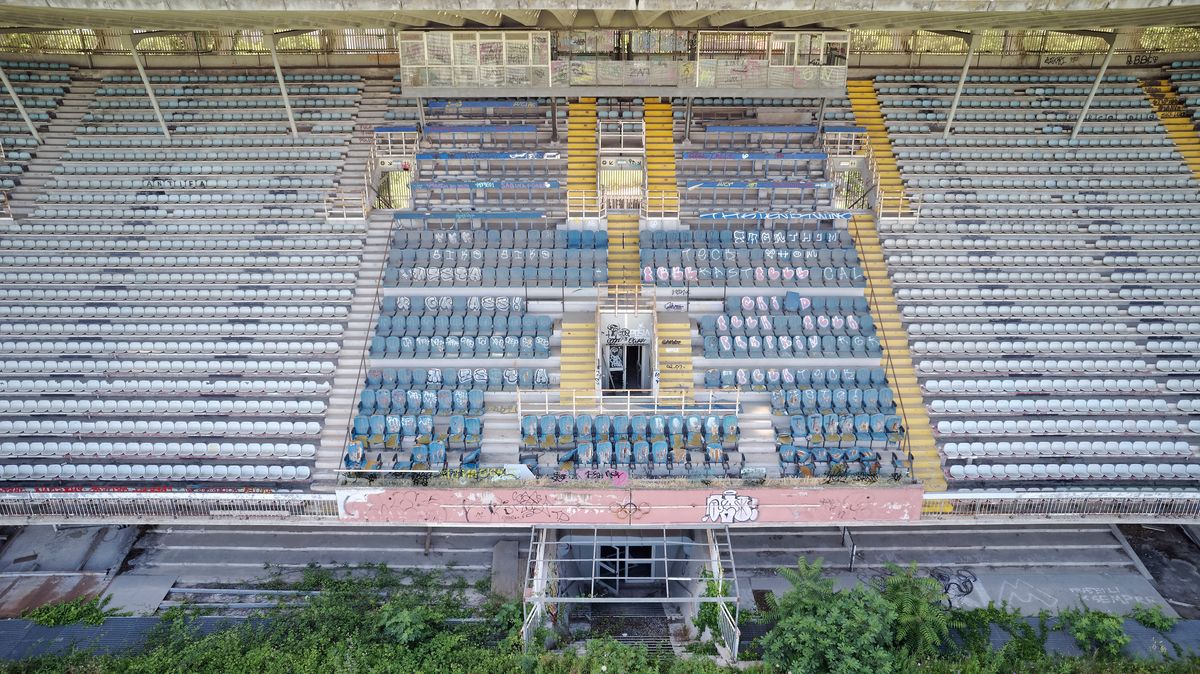
An aerial view of Flaminio Stadium in Rome(Image: Getty Images)
Italy recorded their first-ever win against Wales at the venue in 2003, repeating the feat four years later in 2007. In contrast, Wales enjoyed success at the venue on three other visits, leaving them with four victories and two losses at what is now an abandoned stadium.
Over the years, the Stadio Flaminio has played host to significant sporting moments.
In the 1989-1990 Serie A season, both Roma and Lazio used it as a temporary home while the Stadio Olimpico was being renovated.
The ground has also attracted major musical performers, with David Bowie drawing a crowd of 45,000 in 1987, while Pink Floyd and Bruce Springsteen have likewise taken to its stage.
Despite being spruced up in 2008, the Stadio Flaminio has fallen into serious disrepair since rugby fixtures and regular concerts stopped taking place there.
Footage available on YouTube has shown how nature has gradually taken over the site in recent times.
However, by 2021, there were signs that restoration could be back on the cards.
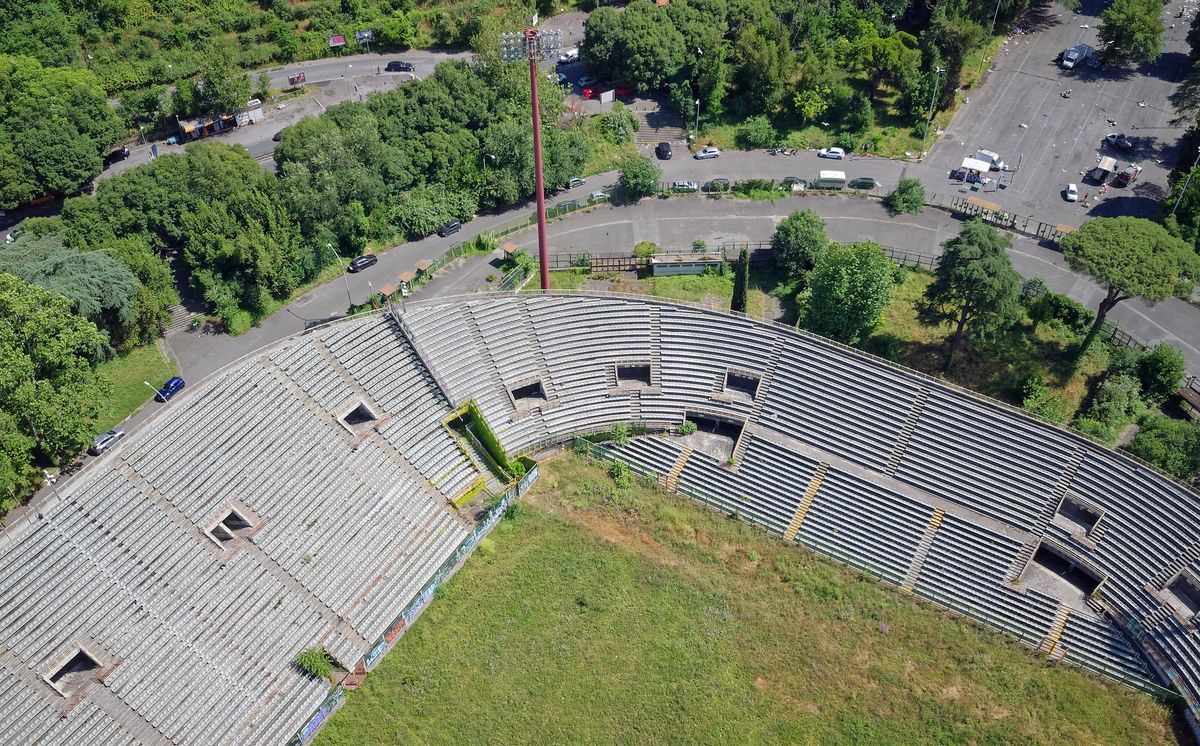
An aerial view of Flaminio Stadium in Rome(Image: Getty Images)
In December 2024, Lazio president Claudio Lotito presented Rome’s Mayor with a long-awaited proposal. The plan outlined converting Stadio Flaminio into a dedicated 40,000-50,000-capacity ground for the storied club.
While Lazio currently share their home with cross-city rivals Roma, this vision included a standalone stadium with a retractable roof plus extensive redevelopment of the surrounding area. Rome’s mayor responded positively to the preliminary proposal, saying: “President Lotito and his team showed us the pre-feasibility study for the renovation of the Flaminio stadium project. A beautiful project, it will have to be examined in detail, but we are happy that it has been announced that the proposal will be formally launched, thus triggering the administrative procedure.
“Now, we will work to examine it in detail. It seems that Lazio has moved from intentions to will to concrete facts. From here to a few hours we expect that what they presented to us, also with video, will become an official request with all the necessary documentation.”
Speaking at the club’s 126th anniversary celebrations earlier this year, Lotito described the £370m stadium rebuild project as a ‘top priority’ for the club, indicating that three years represents a ‘reasonable timeframe’ to begin construction.
Want to see more of the stories you love from the Irish Mirror? Making us your preferred source on Google means you’ll get more of our exclusives, top stories and must-read content straight away. To add Irish Mirror as a preferred source, simply click here