
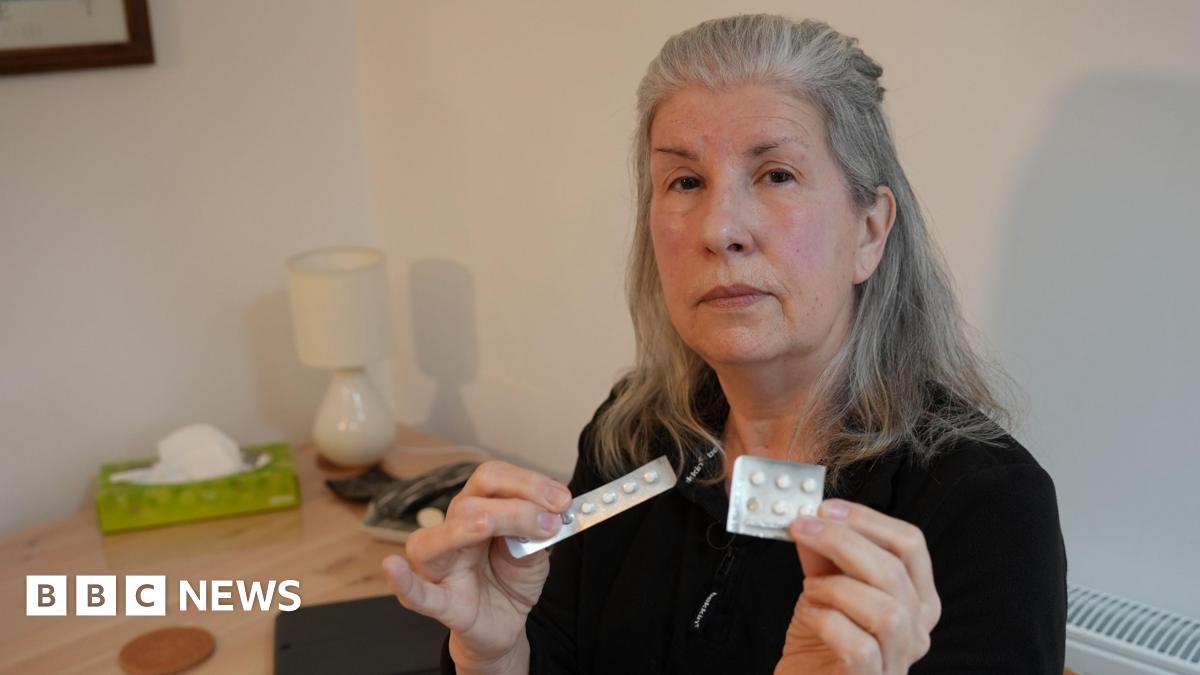
On Monday, Meredith said she only had nine tablets of her medication, Levothyroxine, and trying to find more was making her anxious.
“It’s very frustrating, it’s quite stressful, it’s very time-consuming.
“I spent an entire morning ringing all these chemists within a 50-mile radius and the result was I only managed to find two split packs.”
Medications for ADHD, cancer treatments, statins, opioid painkillers, anaesthetics and antibiotics have had persistent or recurring shortages globally in recent years.
In the UK, there are 124 drugs in short supply, external, down from 142 in February 2025, according to a tracker published by MIMS, an industry reference guide.
In January this year, the National Pharmacy Association (NPA) said 86% of the pharmacies it surveyed had been unable to supply aspirin to patients.
The body called on the government to speed up plans to scrap a law that prevents pharmacists from making substitutions to prescriptions when met with low stock.
At the time, a DHSC spokesperson said the government was “strengthening our domestic resilience” by investing “up to £520m to manufacture more medicines, diagnostics, and medical technologies in the UK”.
It was also working to “cut red tape” to grow the life sciences sector and “bolster supply chains”.