
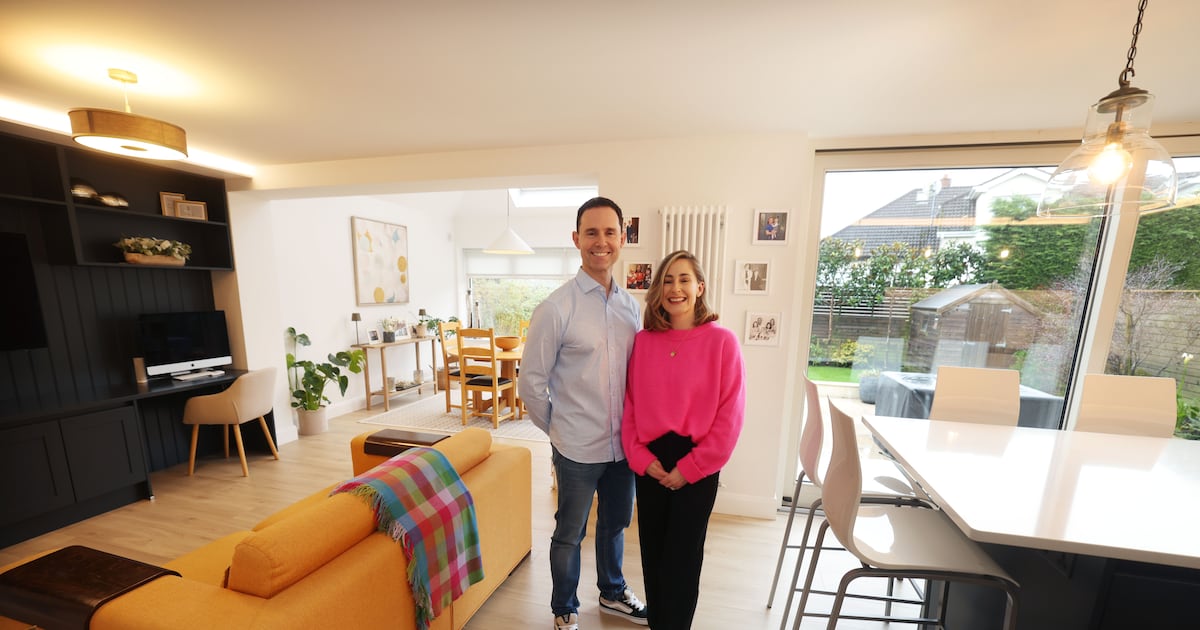
Bryan and Emma McCarthy knew they had a project on their hands when they bought their four-bedroom detached home at 23 Brighton Avenue in Foxrock in 2015. Maintenance had not been kept up to a high standard in the home, and it had a rather low Ber of D2.
“We had a young family, and it was growing at that stage, so we wanted to be able to change the house into a home and to make sure that it was warm and comfortable,” says Bryan, who works a solicitor.
Having done research at the Ideal Home Show, the couple engaged a retrofitting firm to assess their property to see how best to improve its energy efficiency. The firm provided them with a detailed report that included low, medium and higher-cost options, information on grants available and projected timings so they could make an informed decision.
“A key thing is to make sure to engage with a specialist, because as much as you can research all of the initiatives, there is quite a lot of information out there. We found a team that were practical, gave sound advice and covered so many aspects of it. We wouldn’t, as two working people, have had the time to spend on that project,” Emma says.
“And it is important to get those grants, which are really key to undertaking any of this retrofit work,” she adds.
The couple decided to do the works before they moved into the house in 2015. This meant they had a blank canvas to work with, which allowed them to opt for drylining insulation on the interior wall. This process can be difficult for homeowners with built-in units in situ as it takes up a portion of the interior perimeter – 1.25 inches in this case.
As part of the retrofit, they also added cavity wall insulation to the front of the house and replaced windows and the patio doors with triple-glazing at the back of the house, which is south-facing. They had new floors fitted and installed a new gas boiler which allowed for two-zoned heating: with one zone on the ground floor and the second zone comprising the first floor and the converted attic. This deep retrofit brought the home’s Ber from D2 up to B3.
“It was like a brand-new house, really. It was an instant feeling that the house felt much warmer and snug.”
Then in 2019, the retrofitting firm came back to them with the opportunity to be part of a pilot scheme for the use of solar panels. As part of the scheme, they were required to provide feedback on their experience in exchange for a reduced installation price.
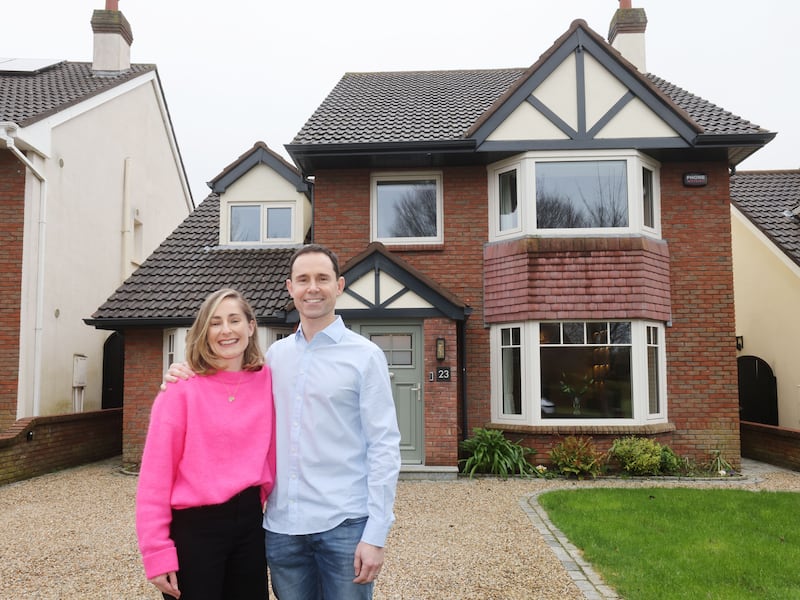 Emma and Bryan McCarthy at their home in Foxrock. Photograph: Alan Betson
With young children at the time, the couple’s focus had shifted a little bit, Bryan explains, from just enhancing comfort and achieving lower energy bills to striving for a level of environmental sustainability. They were interested in generating their own energy, “given that young families tend to have quite a good deal higher energy and electricity consumption perhaps than older families might have,” he says.
The PV panels, which feed a 4.2kWh battery storage unit, became a great source of interest to their children as they could see science in action, all monitored through an app.
Bryan estimates over the course of a year the solar panels provide about a third of the family’s electricity. They also brought the home’s Ber up a level to B2.
The addition of solar panels did not mark the end of this property’s energy evolution, however, as Bryan and Emma undertook further works in 2021 and 2023.
First, they had a new front door and triple-glazed windows installed in the front of the house, a project made costlier as it had to accommodate for two bay windows at the front of the house.
Then in 2023, they decided to reconfigure the layout to the back of the house to incorporate a diningroom into an open-plan kitchen/dining/livingroom. Moving the kitchen gave them access to the wall that they didn’t have previously and allowed for the back of the house to be reinsulated. They installed a new triple-glazed sliding door to the rear patio.
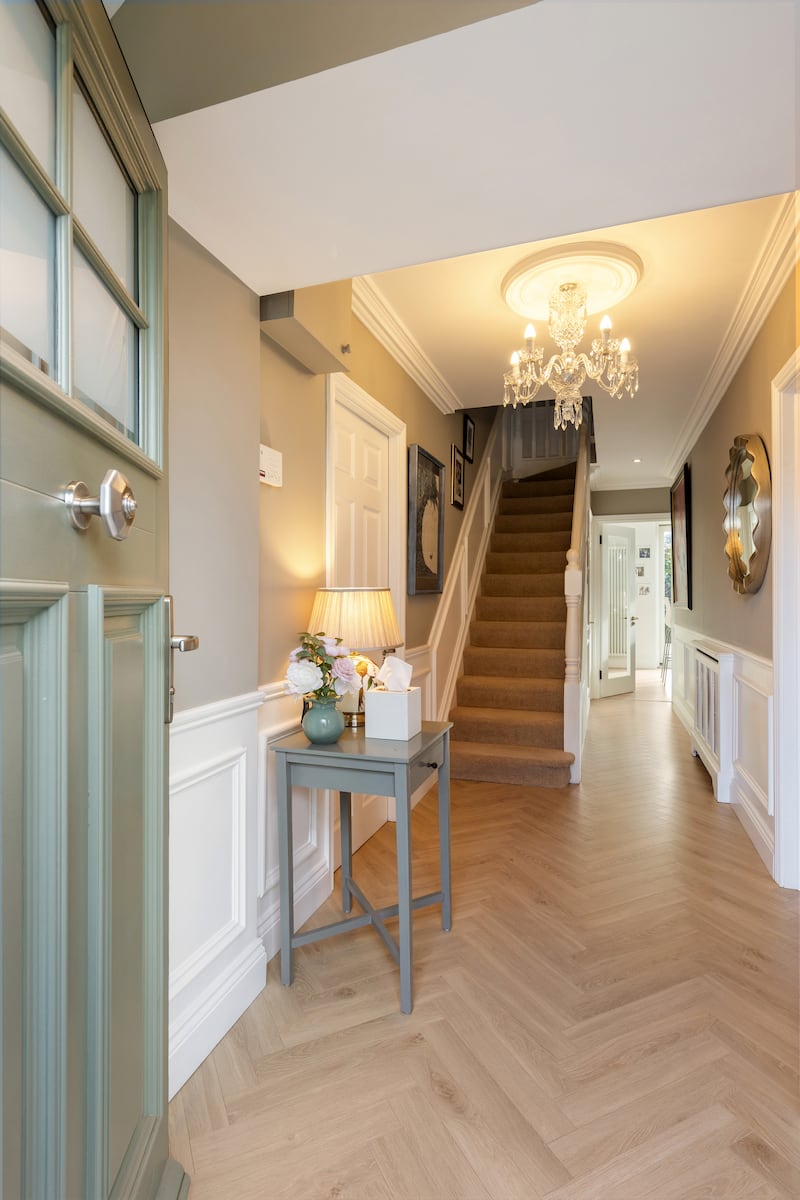 Entrance hall
 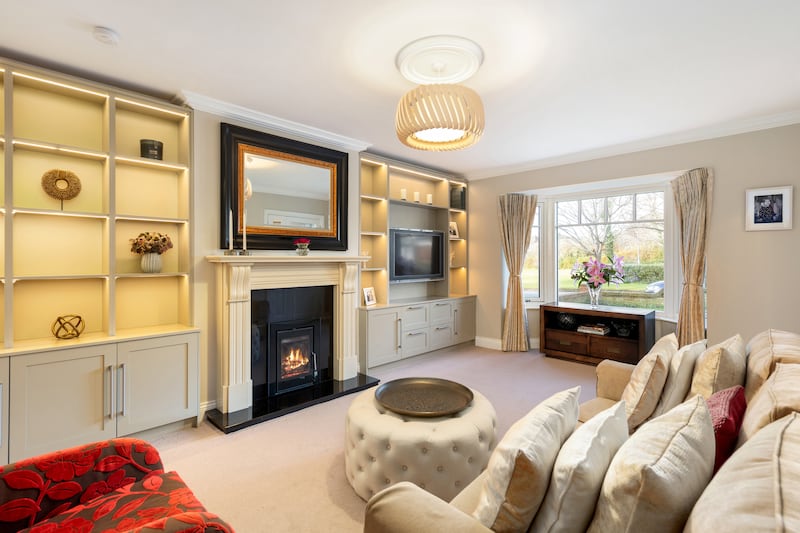 Livingroom
 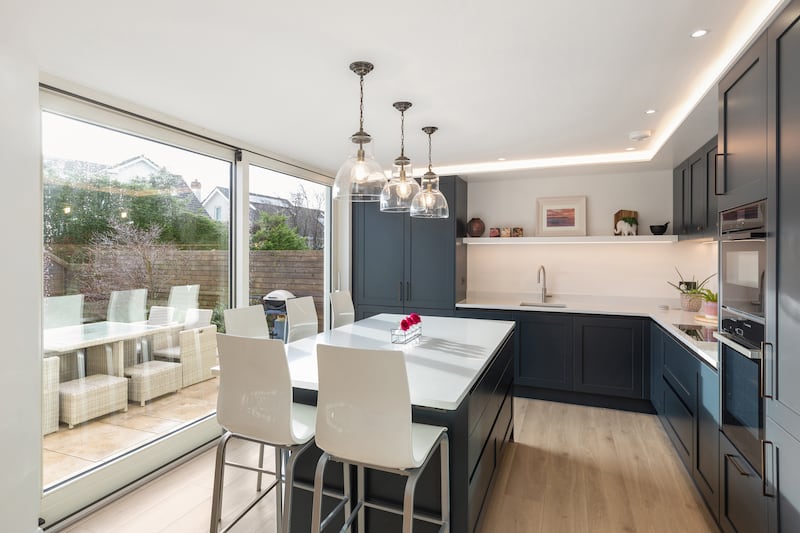 Kitchen
 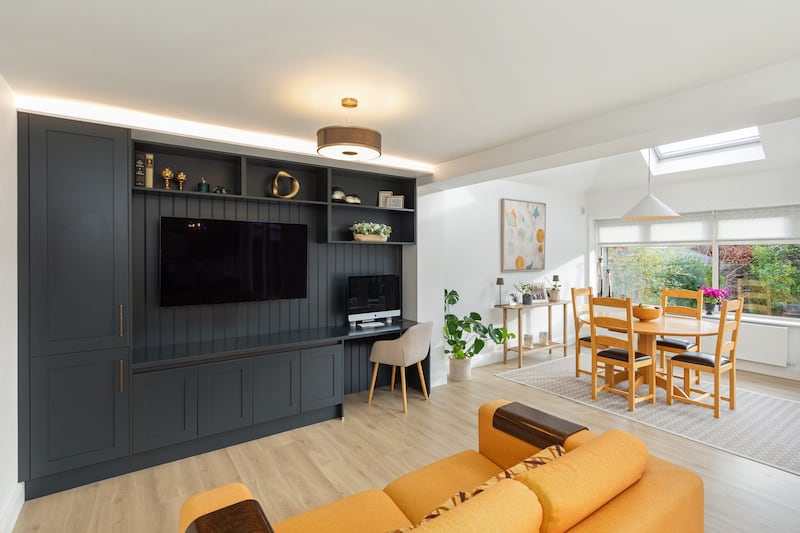 Living area
 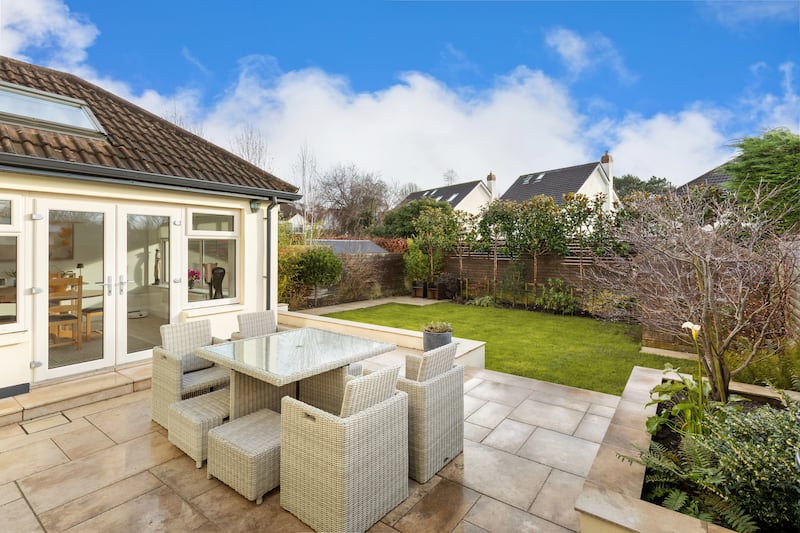 South-facing back garden
At that time, they spoke to their builder and plumber about their water needs with three children and decided on their advice to upgrade to a gas condenser boiler. This has allowed for “hot water on tap” and for three-zone heating, meaning they don’t need to waste energy heating the attic conversion – used as a home office and guest room – when its vacant. This final series of works brought the property’s Ber up to B1.
“I think the way we have done it in stages has probably been the best way for us because it never felt like it was this huge project and a massive draw financially or time wise because we had a report and we knew what we needed to do,” Emma says.
“The retrofit team said here’s the key things to do immediately and then these are the other steps you can do when time and money allow it. That’s really the advice we took from them, and we stuck to it.”
Now with the future of housing three children into their teenage years and young adulthood on the horizon, Bryan and Emma have decided to put their much-loved home on the market in search of something larger in the area. Extending to 193 sq m (2,085 sq ft) with four bedrooms and a converted attic, 23 Brighton Avenue in Foxrock is launching to the market with Sherry FitzGerald, seeking €1.475 million.
Details of grants and one-stops-shops for home energy upgrades can be found at seai.ie
Where to start
Val O’Brien, chartered building surveyor and SCSI member, details the potential steps you could take when upgrading these house types:
Three-bed semidetached house (1960s)
Whether in its original form or if the property has had some works done in the interim, the main areas to concentrate on are improving the insulation standards to the external fabric and upgrading the services.
Upgrade roof insulation: Consider the condition of the roof covering as it might be an ideal time to upgrade or replace the roof covering when upgradingUpgrade wall insulation: Options include: internal drylining, which allows for a quick heat build-up but tends not to hold the heat for as long; or external insulation, which tends to take longer to heat up but also tends to hold the heat longer.Upgrade floors: This regards those floors in contact with external elements. Very difficult to upgrade concrete floors as it involves breaking it up and stripping it out. Suspended timber floors are easier to insulate but floor finishes must be lifted to insert the insulation.Replace windows and external doors: Replace the windows with either double or triple-glazed windows. Ensure that good airtightness seals are achieved at the window frame/wall junctions.Upgrade services: Review and upgrade or replace the heating system with an energy-efficient system such as a heat pump or solar panels. Also look at upgrading the ventilation standards by incorporating a whole air mechanical ventilation system.Terraced period property
In many cases the above steps can be applied to a terraced period property. There can, however, be complications in that these houses could be protected, thereby limiting the ability to undertake improvement works. Consider the following:
Sometime only the external facades have to be preserved in architectural preservation areas and thus the option of external insulation is not appropriate and, in some cases, even the upgrading or replacement of windows may not be an option.You also need to consider the implications of the potential disturbance to the internal features. Typically, there are decorative cornices at ceiling/wall junctions and decorative joinery. These are normally quite attractive and form the main character of the house and sometimes a balanced decision needs to be taken regarding the level of upgrade.Detached bungalow (derelict condition)
This is perhaps the easiest type of house to upgrade because there is little to no waste as you are removing previous fixtures and services that need to be replaced. Such properties provide the closest thing to a blank canvas and thus provide a good opportunity to make a significant improvement on the upgrade and it is possible to achieve a very high standard.
This content is provided for general information only. It is not intended as advice on which readers should rely. Professional or specialist advice should be obtained before persons take or refrain from any action on the basis of this content. The Irish Times and its contributors will not be liable for any loss or damage arising from reliance on any content.