
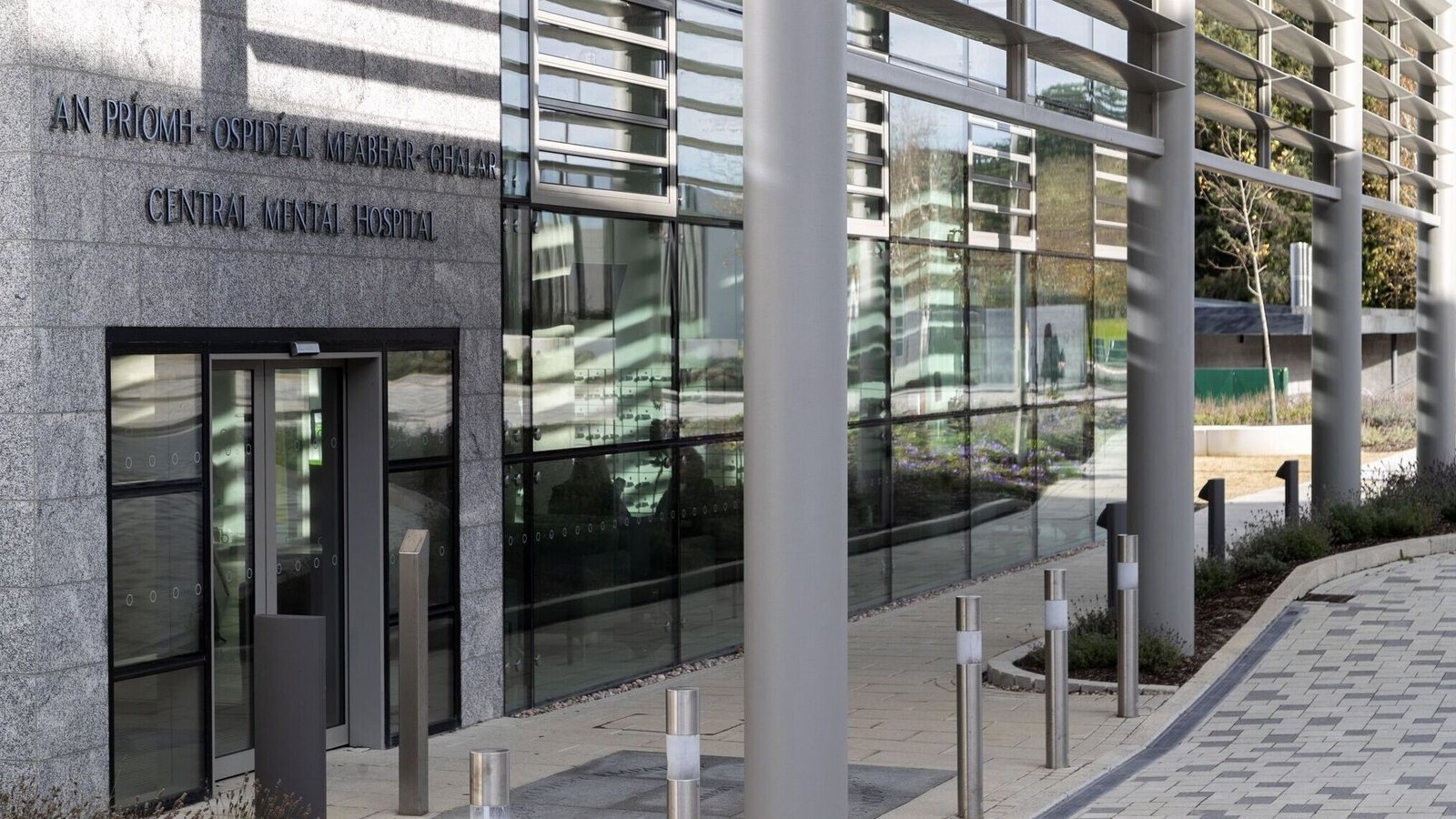
Minister of State with Responsibility for Mental Health Mary Butler has denied that seclusion is being used as a substitute for care.
She said the use of seclusion in the Central Mental Hospital has decreased significantly in the last 18 months.
Ms Butler said she did want to see anyone in seclusion after 23 hours, but said sometimes it is an appropriate treatment if a person is a risk to themselves or other.
Yesterday, RTÉ Investigates highlighted the case of a brain-injured man who spent almost five years locked on his own in small rooms in uninterrupted seclusion – going against all standards in modern psychiatric care.
Stephen Loughnane was first placed in continuous seclusion in Limerick Prison in 2021, before being transferred to the old Central Mental Hospital (CMH) in Dundrum, Co Dublin, and later to the new CMH in Portrane in north County Dublin in November 2022, where he currently resides.
He remained in uninterrupted seclusion across all three settings
Speaking on RTÉ’s Morning Ireland, Ms Butler said a whole of government approach is needed in order to address the problem of people with mental health issues being incarcerated when they need specialist treatment.
“This has to be a whole of government approach, not only health. And in the Programme for Government, it states quite clearly that we should have more forensic supports in prisons.”
She said the Department of Health is dealing with a huge amount of challenges in relation to mental health and has to pivot in order to deal with these adequately.
The minister said her focus is on expanding capacity in the Central Mental Hospital, but said even if there was the funding to open every bed there, “I would not be able to get all the specialist staff that are required.”
She said 114 patients are currently being treated in the hospital and two extra beds were opened in December.
By the end of the year another 26 beds will be opened, she added.
The minister said 90% of people who attend the CMH come through the prison system but pointed out that there are other patients who also need to avail of the services.
She said she accepted the fact that there are people in inappropriate placements in prisons where they would be better served in a hospital.
The minister said that people that are in prison are there for a reason, but “coupled with that, we have people in prison that have severe mental health illness.”
She said some are facilitated in the CMH but there are also psychiatric services being delivered in ten of Ireland’s prisons with “approximately 40 staff delivering this service”.