
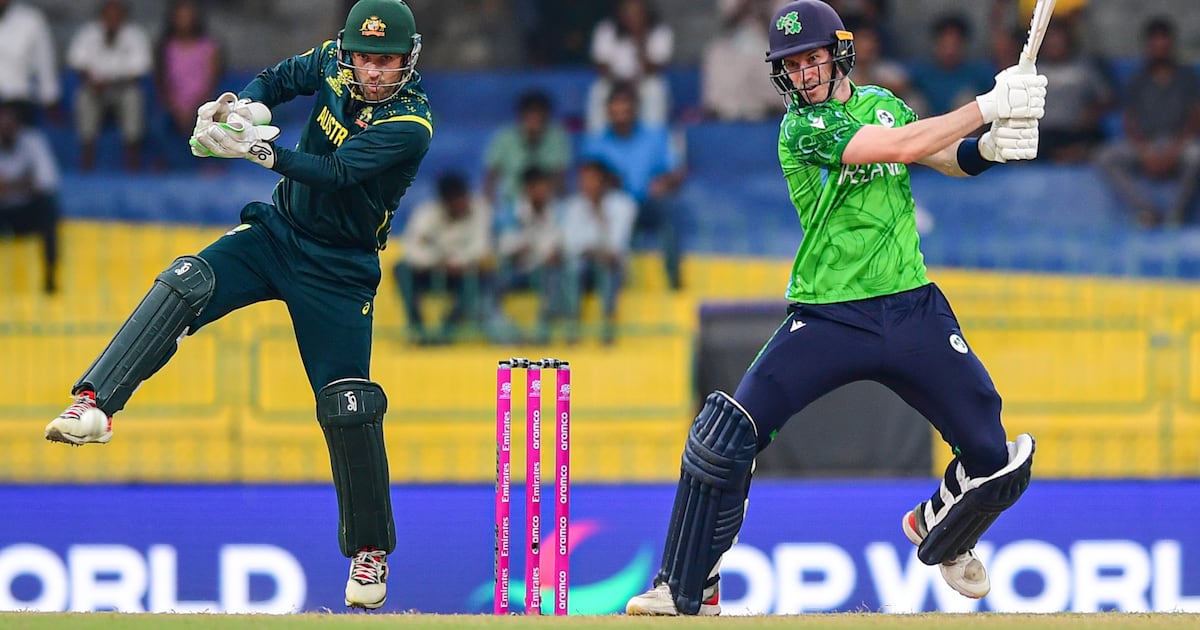
Australia (182-6, 20 overs) (Josh Inglis & Matt Renshaw both 37; Mark Adair 2-44) beat Ireland (115-9, 16.5 overs) (George Dockrell 41; Nathan Ellis 4-12) by 67 runs.
Collapses can happen in T20 cricket. One-sided defeats to Australia, 50-over World Cup champions, are no great embarrassment. Everyone loses to the Aussies at ICC events.
None of which made Ireland’s 67-run hammering in Colombo any easier to watch. Defeat alone leaves Ireland needing favours elsewhere to keep alive hopes of progressing from their group. The nature of this shellacking damages net run rate (cricket’s equivalent to goal difference) to such an extent that extending a stay on the subcontinent would require a miracle.
The mood emanating out of the Irish camp 24 hours ago was that if ever there was a good time to play Australia, this was it. They left arguably their most in-form T20 batter, Steve Smith, at home for some reason. They were also shorn of red ball stalwarts Josh Hazelwood and Pat Cummins due to injury, while Tim David, Australia’s most destructive power hitter, had a bad hamstring.
Ireland also had the advantage of already playing on this surface when they should really have beaten Sri Lanka. More familiar with the slightly slow conditions, they backed themselves to catch Australia on the hop.
To label such thinking as delusional would be to unfairly rely on hindsight. Still, Ireland never looked competitive.
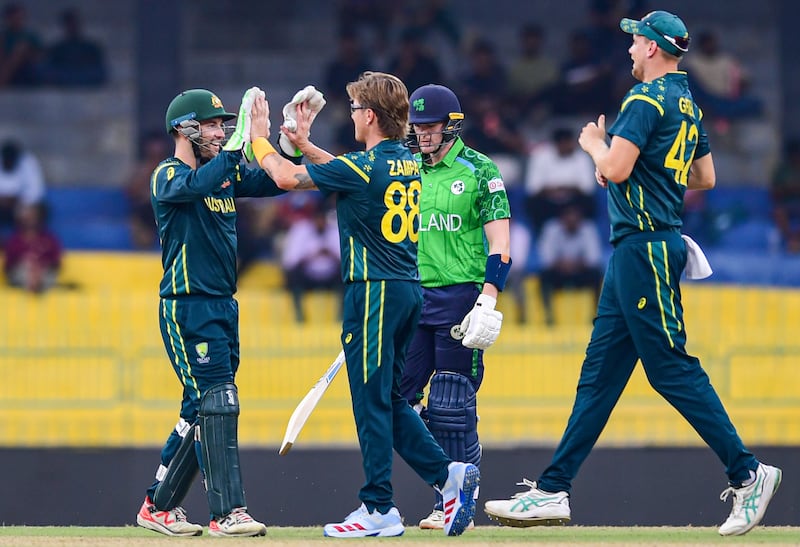 Australia’s Adam Zampa (centre) celebrates during the match against Ireland. Photograph: Pankaj Nangia/Inpho
The bowling execution failed to match the highs of Sunday’s excellence against Sri Lanka. Whenever pressure threatened to be built as the Australian middle order struggled to find consistent boundaries against spin, a poor delivery would offer a release.
Then there was the fielding. Again. Three further dropped catches against Australia brought Ireland’s total to 10 across two games. Given disadvantages in facilities, playing numbers, and resources, Ireland have to reach the ceiling of their talent to even be competitive in these games. Putting down catches, the part of the game that requires the least talent, is a galling failure.
This game was won and lost in the respective power plays, the opening six overs of each innings. Despite losing their Ashes icon Travis Head in a calamitous run out early doors, Australia blitzed their way to 64 for the loss of two wickets. Ireland, by contrast, limped to 28-4 in the opening stages of their batting effort. It was, in reality, five down given Paul Stirling lasted just one ball before retiring with a knee injury suffered when earlier taking a good diving catch.
Nathan Ellis outfoxing Ross Adair with a slower ball was a suitable image for the gulf in class between these two sides.
It’s now four years (two T20 World Cup campaigns) since Ireland took a scalp on the world stage. Wins against Zimbabwe and Oman may well come in the next six days, but the plucky upsets which gave the sport some modicum of prominence back home have dried up. The sport is all the poorer for their absence.