
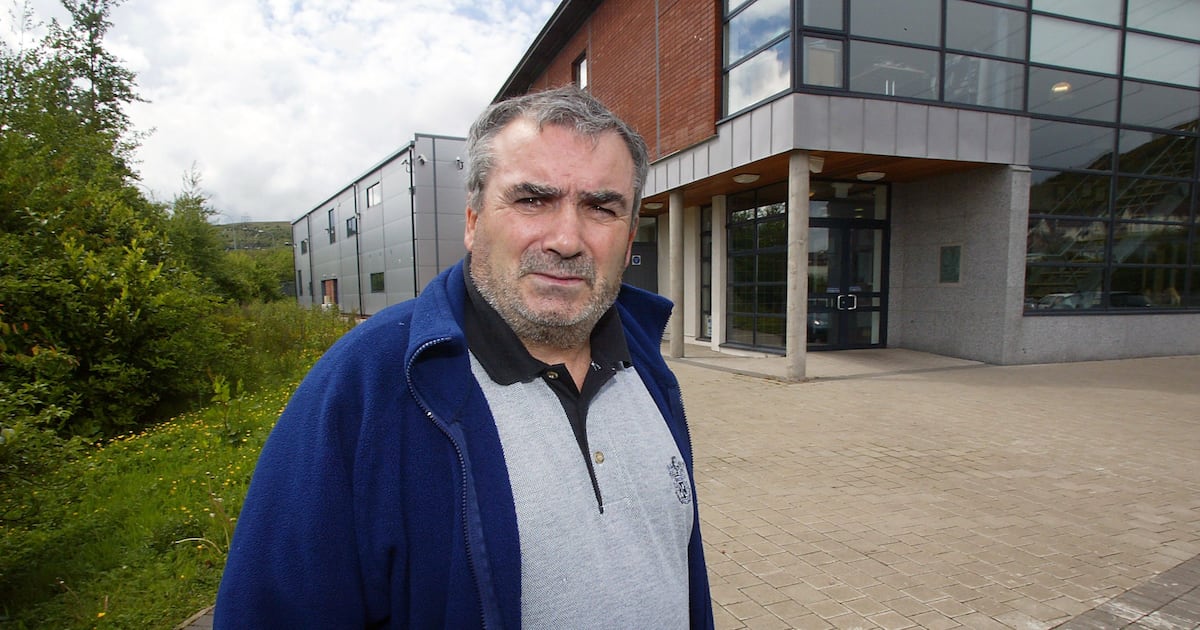
Taoiseach Micheál Martin has named the former British agent Stakeknife as Freddie Scappaticci in the Dáil on Wednesday.
Martin said the identity of Stakeknife was “clear to everybody here” and that he should be officially named by the British government, particularly because of his close relationship “with those who like to refer to themselves as the republican movement”.
“It is widely known that Stakeknife was Freddie Scappaticci,” he told the chamber on Wednesday afternoon.
He added: “We should have an apology from Sinn Féin in respect of the activities of the Provisional IRA as documented in this report. It is long past time for that apology and renunciation of what happened to occur.”
Scappaticci was 77 when he died in 2023.
The Fianna Fáil leader was speaking during statements on the report of Operation Kenova, an investigation into potential criminal offences committed by the agent known as Stakeknife.
Martin outlined how Scappaticci was recruited by the British army and was a “prized informant” between the late 1970s and 1990s.
“During this period, the British army dedicated a 24-hour phone line within its intelligence section to his calls,” he said.
“Throughout this time, Stakeknife was implicated in what were by any measure, grotesque and serious crimes committed for and with the provisional IRA, and this included 14 murders and the abductions of 15 individuals.
[ UK government should formally name Stakeknife, Westminster committee urgesOpens in new window ]
“The details uncovered by the investigation are harrowing, pointing towards shocking acts by the Provisional IRA, including torture, inhumane and degrading treatment and murder, to quote from the Kenova report itself.”
Operation Kenova, an investigation that examined the activities of Stakeknife, who has been linked to at least 14 murders and 15 abductions, concluded that more lives were probably lost than saved through the operation of the agent.
 The brutal crimes of IRA double agent Freddie Scappaticci
Podcast: Hosted by Bernice Harrison. Guests Gerry Moriarty and Kevin Winters. This episode was originally published in April 2023.
However, it was unable to confirm Stakeknife’s identity in its final report in December after the UK government refused its authorisation to do so.
Martin said the Kenova investigation extensively documented the “fact that MI5 had sight of Stakeknife’s role within the Provisional IRA” and its internal security unit, and were “involved from the outset in briefing Stakeknife through the force research unit of the British army”.
“In setting out the activities of Stakeknife, it sheds essential light on the harrowing pain and loss caused to individuals, to their families, and through the systematic exercise of terror, to communities at large by the Provisional IRA,” he added.
“It shows the complicity of British state forces in allowing this to happen.”
The Taoiseach said many of the details of the Operation Kenova report were “uncomfortable” and relate to “a terrible period in the history of our island”.
“But my position, the position of my party and the position of the Government as a whole is that the past must not be hidden,” he said.
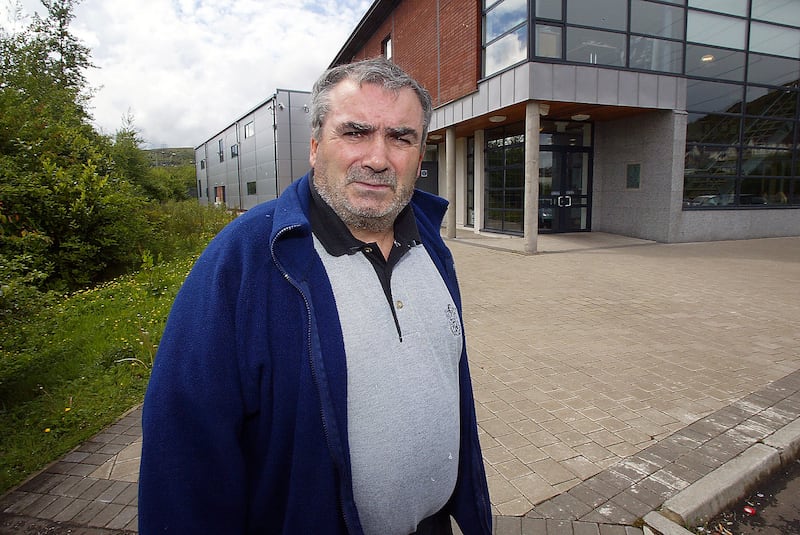 Fred Scappaticci pictured in Belfast in 2003
“It must not be allowed to be a forum where different groups present not just their own narrative on the past, but also their own set of facts.”
Speaking at the outset of her statement, Sinn Féin leader Mary Lou McDonald said: “I wish to say this clearly and directly: to all those that suffered such grievous loss, I am sorry for all the lives lost during the conflict and for the hurt and loss endured without exception.
“Those words reflect a genuine sense of sorrow and regret for everyone who was hurt and harmed during those years of violence.
“By that I mean civilians, combatants and families whose lives were forever changed.”
McDonald said the findings of the Kenova report were “stark and deeply disturbing” and that “a senior British agent was involved in killings”.
[ Stakeknife: The inside story of IRA double agent Freddie ScappaticciOpens in new window ]
“The British state knew and it protected him, and it allowed violence to continue in order to preserve operational advantage.”
The Dublin Central TD said the report confirmed that “collusion was not an aberration but a defining feature of British state policy during the conflict”.
Labour leader Ivana Bacik said Scappatici was a “serial killer” who was protected to the same level as the British Royal Family in some instances.
Bacik said she welcomed the fact “that we’re naming him here in this House” and speaking openly about his activities. She said to this day, neither the “IRA nor the Republican leadership” have issued an apology to Scappaticci’s victims.
The Dublin Bay South TD said she backed a call by the Taoiseach for Sinn Féin to make an apology.
“We all know that he [Stakeknife] killed, abducted, tortured and maimed. He was, in effect, a serial killer,” she said.
“He was a serial killer protected and even paid by the British state to terrorise and murder his own community – all done under the direction of the self-appointed, so-called Army Council of the Provisional IRA.”
In response to the Dáil remarks, a UK government spokesman described the behaviour outlined in Operation Kenova’s final report as “deeply disturbing” and said it “should not have happened”.
“The Government is not yet in a position to formally respond to the request by Operation Kenova to name Stakeknife as there remains ongoing litigation, and consideration of the recent judgment in the Thompson Supreme Court case,” referring to a case in which the UK’s highest court upheld a UK government appeal against a decision to release sensitive security information.
“The Secretary of State has committed to updating Parliament on the matter as soon as he is able to,” the spokesman added.