
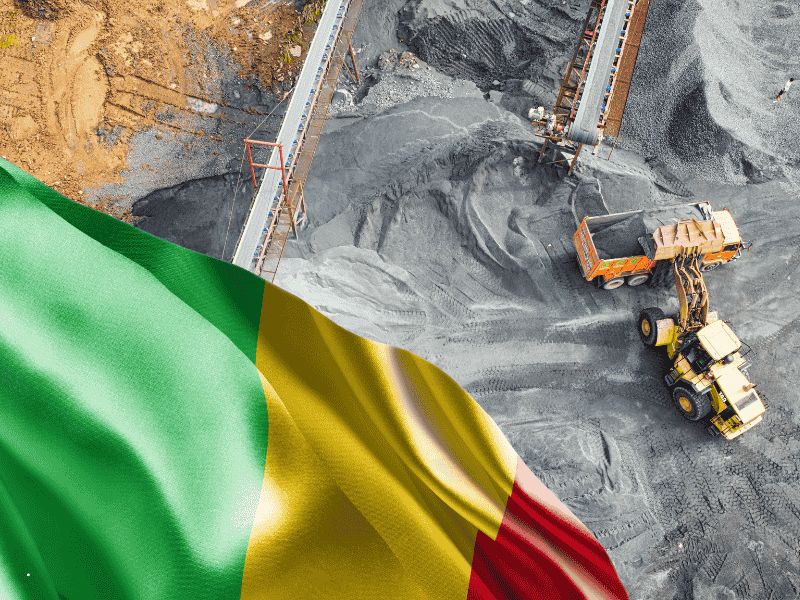
The Republic of Mali has achieved a milestone in its mining sector and economic diversification strategy, with two new lithium mines now operating and exporting, Soussourou Dembélé, Secretary-General at Mali’s Ministry of Mines announced on Wednesday.
Dembélé said lithium projects position Mali among the world’s spodumene exporters and attributed the milestone to the implementation of Mali’s 2023 Mining Code, which introduced five new mining funds designed to mobilize capital across the value chain.
“The impact of these reforms is already visible. Over the past two years, two lithium mines have reached production, enabling Mali to export spodumene and rank among the top five globally. This is the diversification we aim to advance with our partners,” he noted, adding that the country aims to increase its mineral production base with lithium, rare earths and other emerging critical minerals on demand on the global market.
Unlocking Capital in Critical Minerals
Five funds were established under the 2023 Mining Code that aim to strengthen financing mechanisms across the sector. These include a Local Mining Development Fund to support projects at community levels, ensuring local companies embark in critical mineral exploration.
Other funds aim to support hydraulic, transport and energy infrastructure, ensuring energy security and affordability as well as efficient logistics for miners.
Additional funds support geological research, capacity building and workforce training, ensuring Mali identifies and maps its critical minerals while ensuring the local workforce is equipped with skills required to mine the energy transition metals, according to Dembele.
From gold dominance to critical minerals
Mali has historically been one of Africa’s leading gold producers, with annual output of approximately 60 tons, ranking as the continent’s second-largest gold producer. For 40 years, Mali’s mining sector has been largely centered on gold exploration and production.
However, rising global demand for energy transition minerals has prompted Mali to reposition itself as a diversified critical minerals producer.
“Through the 2023 Mining Code, we are ensuring that national entities take their place alongside international companies in developing critical minerals,” Dembélé said. “We want a more dynamic mining sector that contributes directly to national development.”
Regulatory reforms and value addition
Beyond diversification, the new code introduces measures to enhance regulatory transparency, investor confidence and environmental and social performance.
The establishment of a commission overseeing mining utilities and operators aim to improve transparency in permit allocation, revenue management and local value addition.
For instance, in 2025, Mali began construction of a 200-ton-per-year gold refinery in partnership with Russian conglomerate Yadran Group, signaling further ambitions to expand downstream processing capacity.
“We are using these reforms to address industry challenges, integrate mining more effectively into the broader economy and combat illegal exploitation that could threaten national interests,” he noted.