

The first solar eclipse of 2026 will be a dramatic annular solar eclipse on Feb. 17. The downside for most of us is that the stunning ‘ring of fire’ will be witnessed by more penguins than people.
Stretching 2,661 miles (4,282 kilometers) long and 383 miles (616 km) wide, the path of annularity — where the ‘ring of fire’ will be visible — cuts across western Antarctica and skims the Davis Sea coast of the Southern Ocean.
Path of annularity
The eclipse will rise over mainland Antarctica and set off the Davis Sea coast of the Southern Ocean.
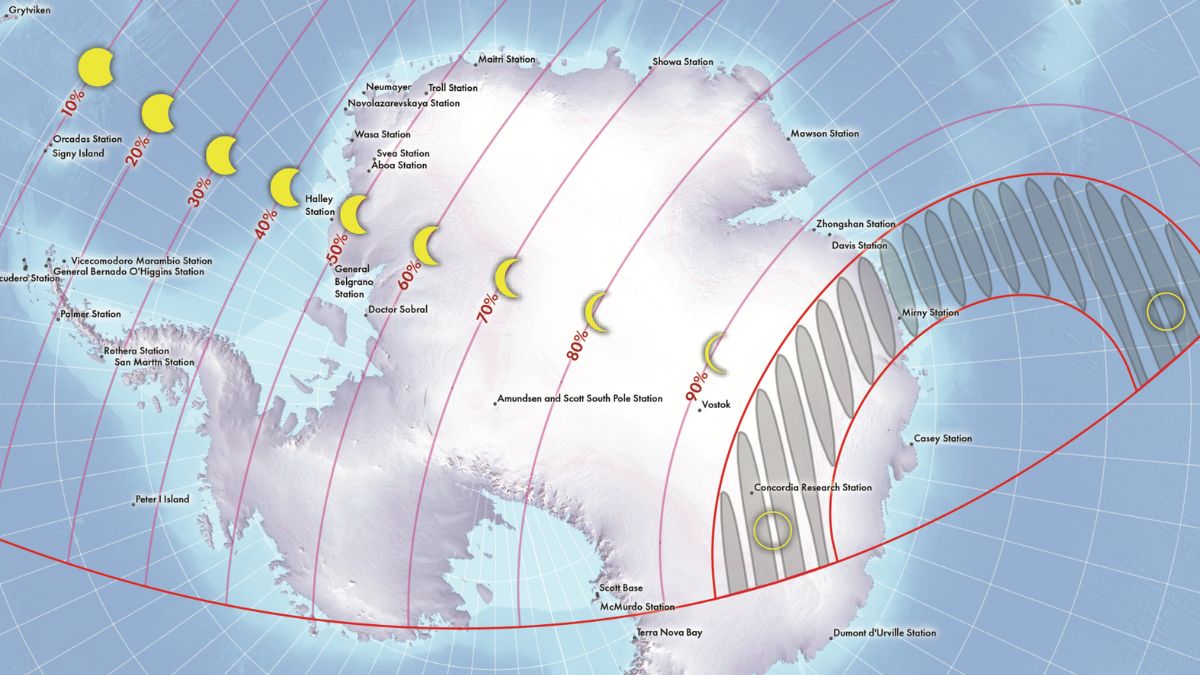
The path of the annular solar eclipse on Feb. 17, 2026. (Image credit: Michael Zeiler/EclipseAtlas.com)Where to see the partial solar eclipse
A far greater number of people will be able to witness the partial stage of the annular solar eclipse during which the moon appears to take a ‘bite’ out of the sun.
Remember that it’s unsafe to look directly at the sun during the partial phases of a solar eclipse. At all times, you must wear solar eclipse glasses. Read our guide on how to observe the sun safely.
Swipe to scroll horizontally
Location
Percentage of the sun’s disk covered
Heard and McDonald Islands, Australia
88%
French Southern and Antarctic Lands, France
88%
Mascarene Islands, Mauritius/France
35%
Port Louis, Mauritius
32%
Saint-Denis, Reunion, France
31%
Antananarivo, Madagascar
20%
Durban, South Africa
16%
Maputo, Mozambique
13%
Maseru, Lesotho
11%
Gaborone, Botswana
4%
Harare, Zimbabwe
3%
Ushuaia, Argentina
3%
Next eclipse
Just two weeks after the annular solar eclipse, Earth will experience a total lunar eclipse on March 3-4, when Earth’s shadow will turn our lunar neighbor blood red.
The blood moon will be visible for about 58 minutes across western North America, Australia, New Zealand and East Asia.
Unlike the few people who will witness the annular solar eclipse, nearly 31% of the world’s population — around 2.5 billion people — will be able to see the eclipse in totality, when the moon turns blood red.
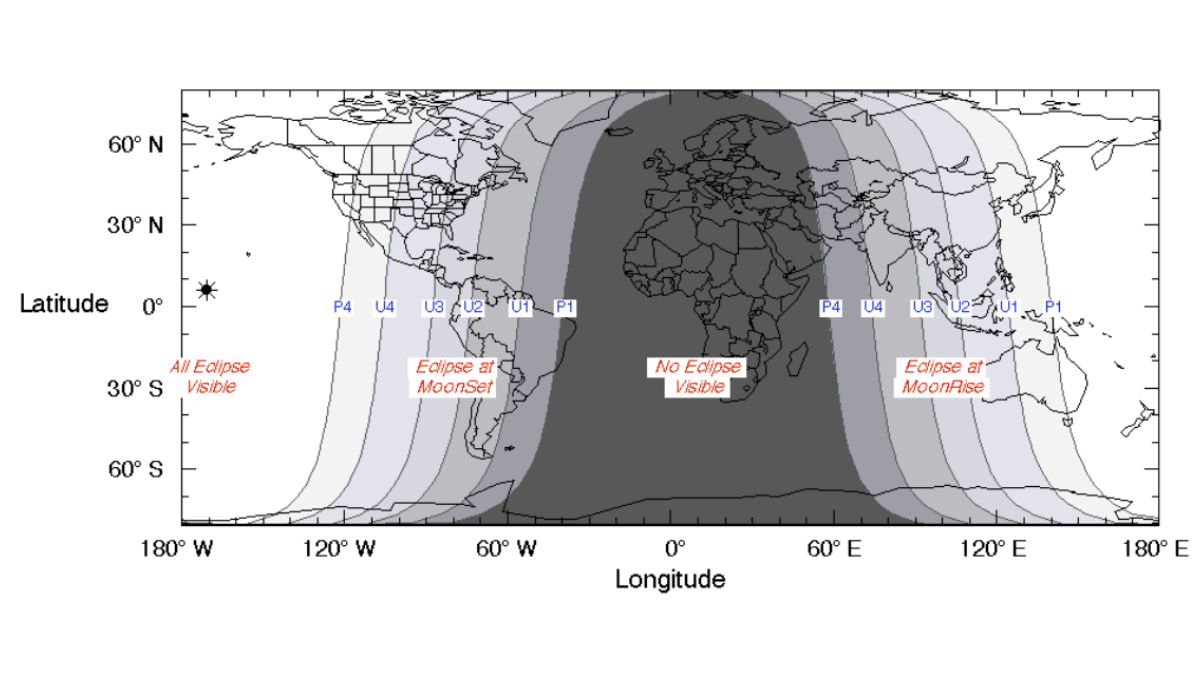
A map of where the March 2026 total lunar eclipse will be visible. (Image credit: F. Espenak, NASA’s GSFC)
After the Feb. 17 ‘ring of fire’, the next annular solar eclipse will occur on Feb. 6, 2027, and will be visible from locations in Chile, Argentina, Uruguay, Brazil, Cote d’Ivoire, Ghana, Togo, Benin and Nigeria.