
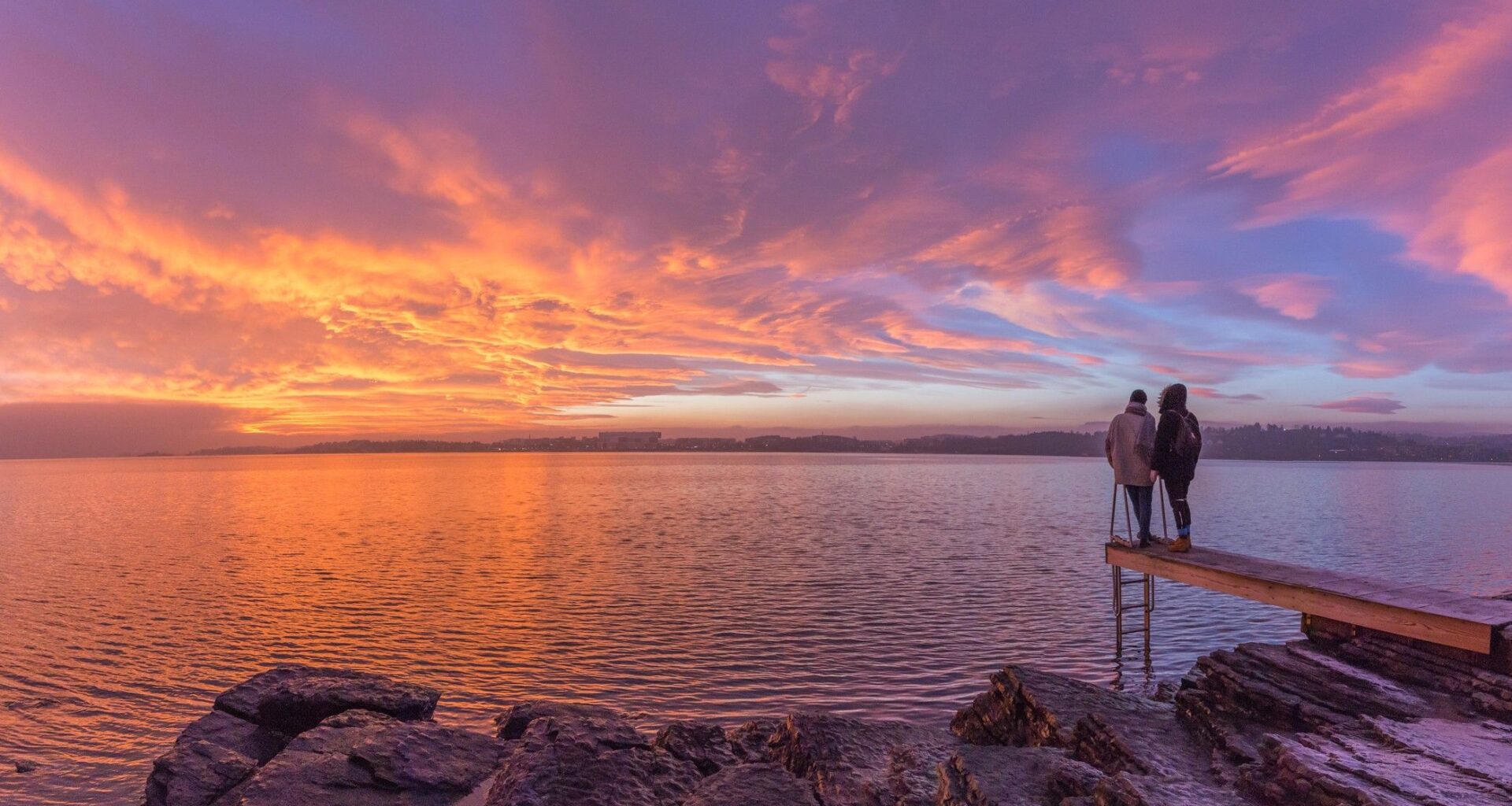
Have you ever found yourself glancing out a window or driving home on a winter’s evening, only to be stopped in your tracks by a sky awash with vivid pinks, fiery oranges and soft golds like something lifted straight from a painting? Or maybe you’re an early bird who has caught a breathtaking sunrise as the dawn chorus welcomes a brisk new winter’s day.
So are sunrises and sunsets really more spectacular in winter, or do we simply notice them more when our daily routines line up better with the beginning and end of daylight?
You may like
Winter light looks different
The colors we see at sunrise and sunset depend on how sunlight interacts with Earth’s atmosphere. Sunlight contains every color in the spectrum, but as it travels through the atmosphere, tiny air molecules (mostly nitrogen and oxygen) collide with it, scattering the shorter-wavelength blue and violet light much more effectively than the longer-wavelength reds and oranges. This process, known as Raleigh scattering, is why the daytime sky looks blue but the sky around sunrise and sunset turns warming shades of red and orange when the sun is low in the sky, according to the U.K. Met Office.
During the winter, the sun‘s path stays lower above the horizon than in summer, meaning sunlight has to travel through more of the atmosphere before it reaches your eyes. More atmosphere means more chances for shorter wavelengths of light to scatter away, and we just see what’s left — the longer wavelengths of red and orange.
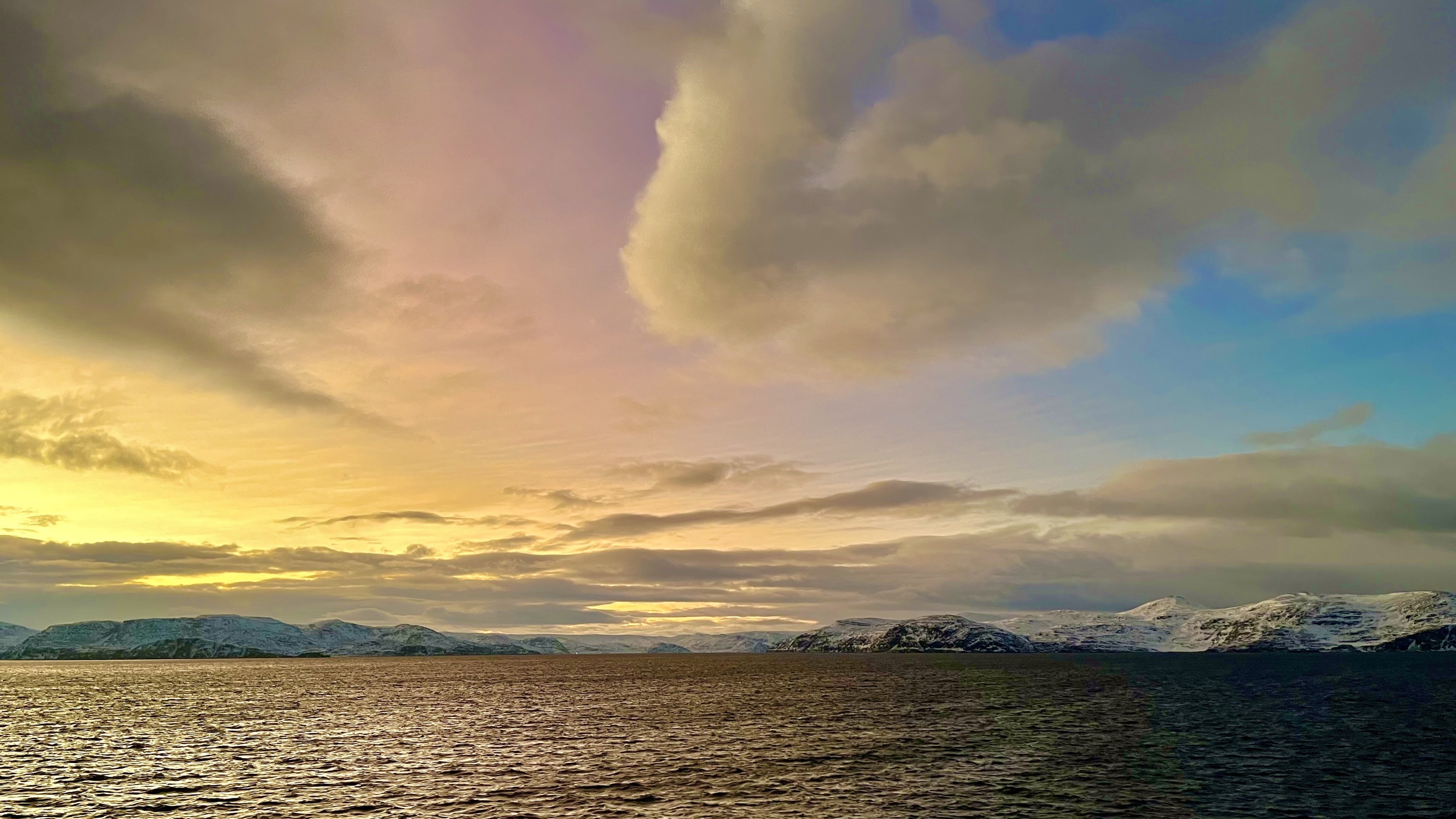
Raleigh scattering painting the Arctic Norwegian sky yellow, lilac and blue. (Image credit: Daisy Dobrijevic/Future)The role of colder, drier air
Seasonal changes in the atmosphere can also affect how colorful sunrises and sunsets appear.
One important factor is humidity. Warmer air typically holds more water vapor. Tiny water droplets can scatter light, washing out the vivid reds and oranges. In winter, especially in colder climates, the air tends to be drier and less humid, meaning there is less water vapor to diffuse the incoming sunlight. In those conditions, the longer-wavelength reds and oranges that remain after blue light is scattered can appear crisper and more vibrant.
Another factor is air quality. After a rain or snowstorm clears dust and pollution from the lower atmosphere, the sky can be significantly “cleaner”. With fewer large particles to scatter light indiscriminately, the colors that reach your eyes can appear richer.
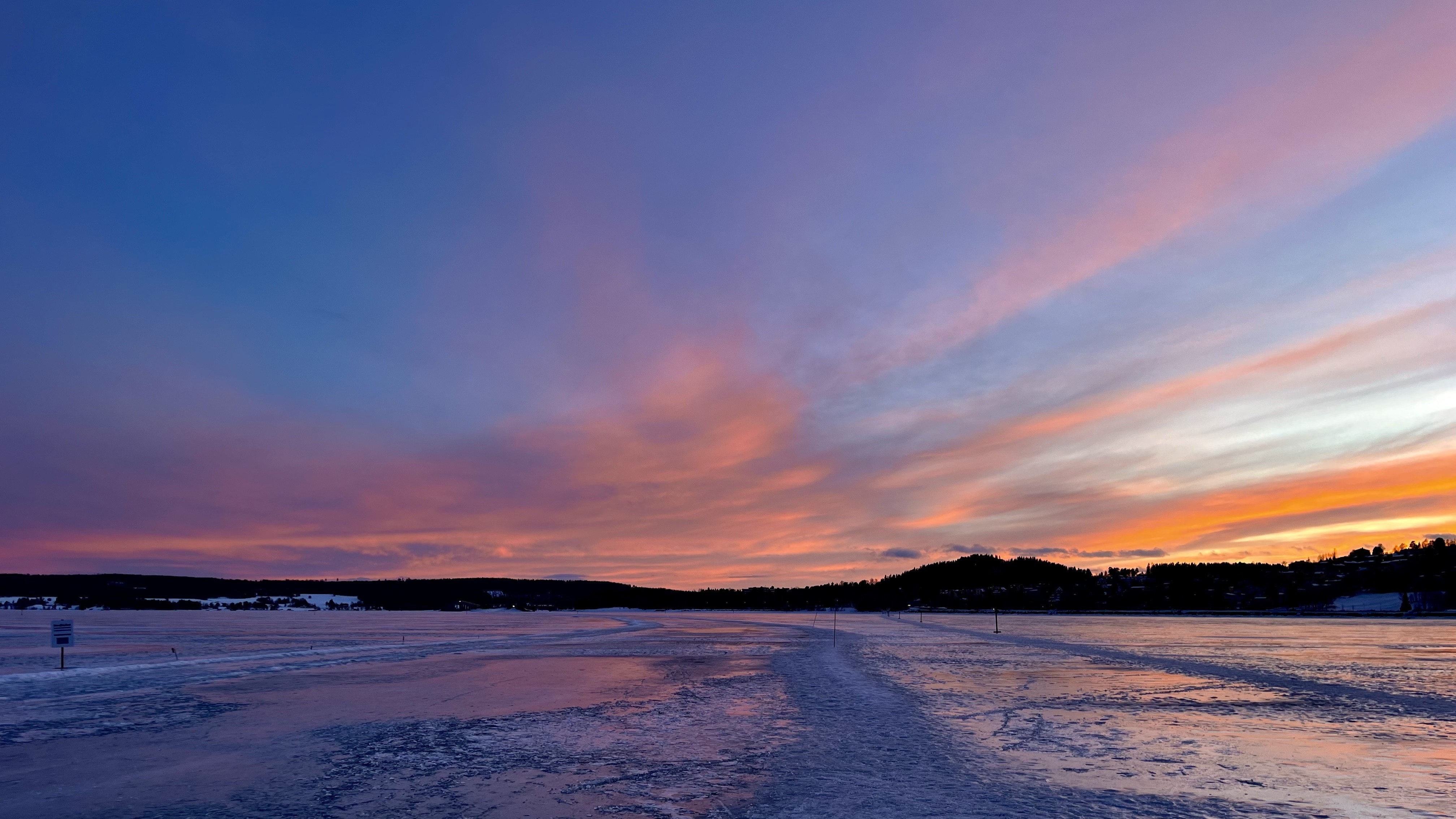
A vivid sunset above the Medvinden ice skating track on Lake Storsjön in Östersund, Sweden. (Image credit: Daisy Dobrijevic/Future)Do winter sunrises and sunsets last longer?
Winter sunrises and sunsets can also appear more spectacular because we simply have longer to soak them in. Because Earth‘s axis is tilted by about 23.5 degrees, the sun moves to different locations in the sky in different seasons, and follows a shallower arc through the sky during the winter. This means the sun spends more time near the horizon at both sunrise and sunset than it does in summer. The longer horizon-hugging bath gives those warm hues more time to develop and persist across a broader swath of sky.
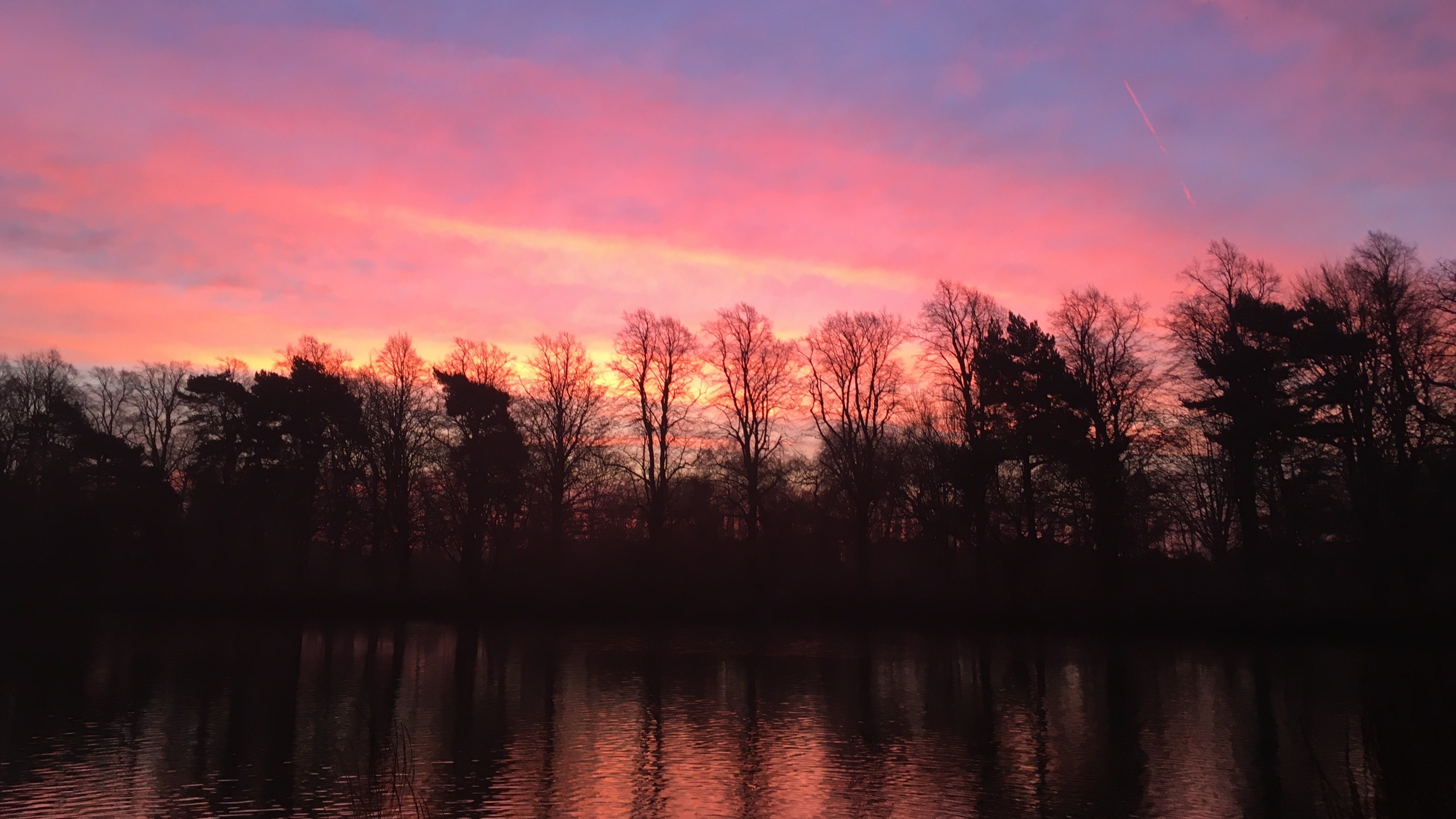
A fiery sky at sunrise over Highfields Park, Nottingham, U.K. (Image credit: Daisy Dobrijevic/Future)Or do we simply notice them more?
Perhaps winter sunrises and sunsets appear to feel more spectacular simply because we see them more.
In summer, sunrise often happens while many of us are still asleep and evening sunsets can occur well after the workday is over. But in winter, sunrise and sunset tend to fall squarely within typical waking hours, particularly around commutes to and from work or school. This timing alone increases the chances we’re going to be looking out a window, in a car, or walking home just when the sky is at its very best.
In the end, there’s no single reason winter sunrises and sunsets can look so spectacular. When low angles of the sun, atmospheric conditions and timing line up, they can deliver truly striking displays and in winter, and more of us are awake to catch them.