
Toyota has not confirmed a DC charging rate, only a 10-80 per cent recharge time of ‘under 30 minutes’, so not exactly BMW iX3 levels of speed.
What the Highlander BEV has on its side, though, is space, because the seven-seater layout has generous accommodation for all three rows. Most will feature a 2-3-2 seating layout, but higher-spec models will also offer a six-seater format with central captain’s chairs, which are a popular option in the US.
The new model also introduces Toyota’s latest interior design language and user-interface design. All Highlanders get a new 14-inch touchscreen, plus a 12.3-inch driver’s display and features such as extended ambient lighting and a glass roof.
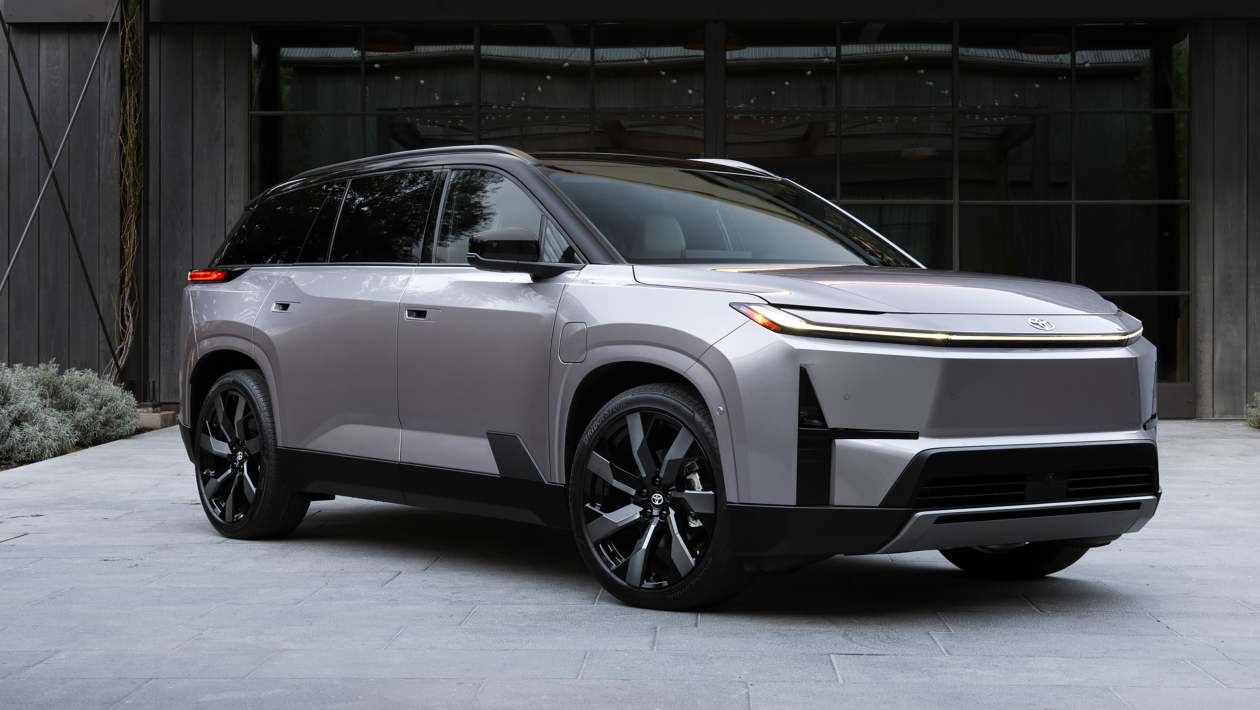
The exterior design is an evolution for the company, with sharper lines and more chiselled surfaces. Up front are a set of Toyota’s now trademark boomerang lights, but it’s the side and rear which feature more dramatic new design elements for the brand. These include flush door handle openings, flared wheelarches and a distinctive two-tone roof design.
The company has no immediate plans to bring the new model over to the UK though, which some people might be disappointed to hear, because there’s not a huge variety of seven-seat EVs currently available. We suspect the Highlander would be a key rival for the Hyundai Ioniq 9, Kia EV9 and Volvo EX90, all of which are pretty pricey. There’s also the Peugeot E-5008, and the all-new Skoda Peaq being unveiled in June, but these smaller European-focused models aren’t quite as roomy.
If Toyota could bring the Highlander over at a reasonable price, it could well appeal to British buyers looking for a spacious family car that’s also tax friendly.
Did you know you can sell your car through Auto Express? We’ll help you get a great price and find a great deal on a new car, too.