
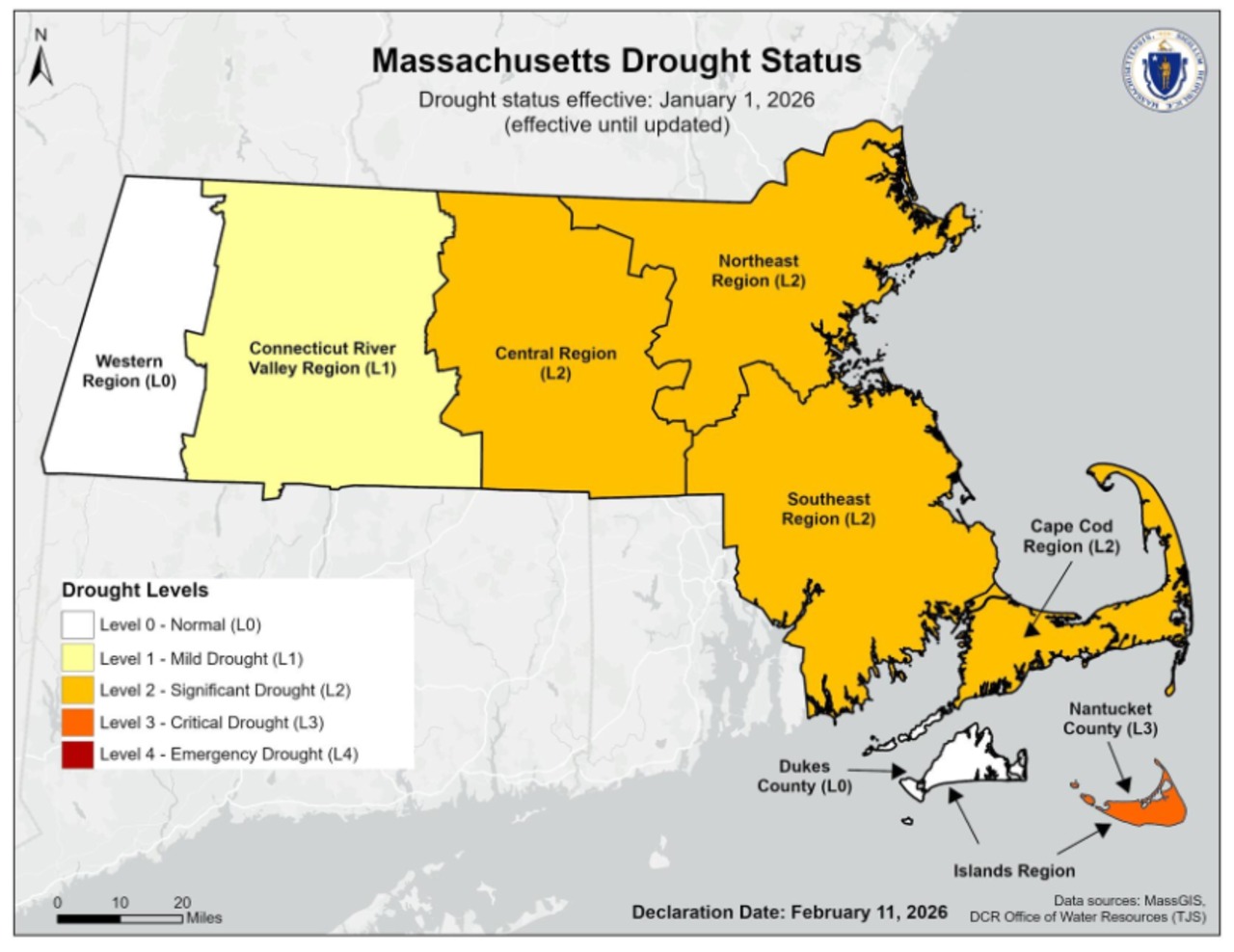
Three regions of Massachusetts are experiencing significant drought conditions, and one is experiencing critical drought conditions, officials announced Wednesday.
Energy and Environmental Affairs Secretary Rebecca Tepper has declared that water conditions in the state’s southeast region (Norfolk, Bristol and Plymouth counties) have worsened to a Level 2 Significant Drought — the third out of five drought levels, according to a press release from Massachusetts’ Drought Management Task Force.
Massachusetts’ Central Region (Worcester County), Northeast Region (Middlesex, Essex and Suffolk counties) and Cape Cod Region (Barnstable County) were already at Level 2 drought conditions, according to the drought task force. Nantucket County remains in a Level 3 Critical Drought — the fourth of the five levels.
The Connecticut River Valley Region (Franklin, Hampshire and Hampden counties) is still in a Level 1 Mild Drought — the second of the five levels, and the Western Region (Berkshire County) and Dukes County are not experiencing a drought.
Despite the ample snowfall Massachusetts saw last month, precipitation deficits remain, according to the drought task force. Additionally, record low temperatures and frozen ground have prevented the snow from melting and soaking into the soil, limiting groundwater recharge and stream replenishment.
“The current drought, which began in 2024, has continued to have significant impacts on the natural environment, including low streamflow, decreasing water levels in lakes and ponds, and declining groundwater in nearly all regions,” the release reads.
Local water supplies are currently stable, but the drought task force recommends that Massachusetts residents continue to conserve water while the drought persists. It also asks that residents report dry environmental conditions to help monitor the situation via the Massachusetts Water Impact Reporter.
Water conservation tips from the drought task force:
Use the MA Home Water Use Calculator tool to evaluate household water useCheck household and business water bills for sudden increases, which can indicate leaksFix any leaks in your home or businessAvoid handwashing dishes and only run dishwashers when they are fullTake showers instead of baths and use a shower timerTurn off the faucet while brushing teeth or shavingReplace old water fixtures and appliances that don’t have the WaterSense label, which indicates high water efficiency