
VULNERABLE:
Chinese smartphone vendors such as Xiaomi and Transsion would see deeper corrections given their larger exposure to entry-level models, TrendForce said
By Lisa Wang /
Staff reporter
Surging memorychip prices are expected to curtail global smartphone shipments by as much as 15 percent this year, with Chinese phone vendors suffering the brunt due to their larger exposure to entry-level models, TrendForce Corp (集邦科技) said in a report yesterday.
Global smartphone shipments are projected to drop to 1.061 billion units this year in the worst-case scenario, from the 1.254 billion units estimated previously, reversing last year’s 2 percent growth, the Taipei-based researcher said.
That comes as smartphone vendors face escalating supply constraints and rising memory prices, it said.
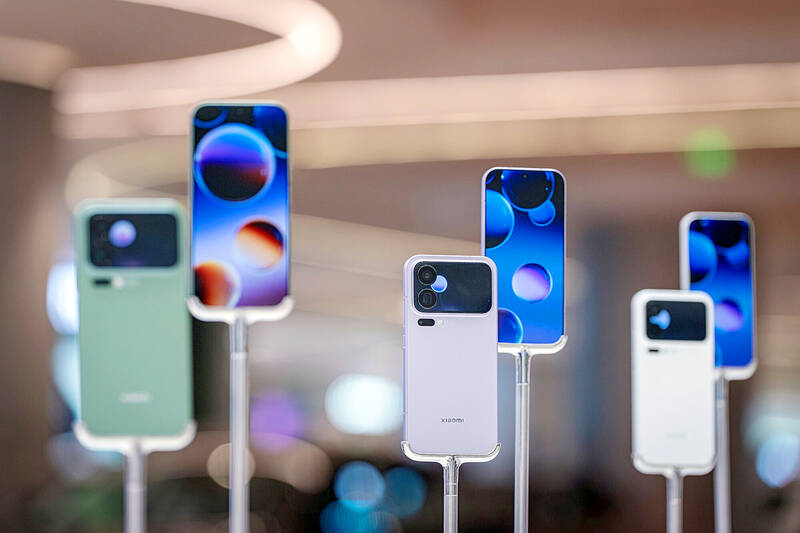
Photo: Bloomberg
Contract prices of mainstream 8-gigabyte RAM + 256-gigabyte SSD chips would soar 200 percent year-on-year this quarter, it added.
Memory chips are estimated to account for 30 to 40 percent of a smartphone’s bill of materials, compared with about 10 to 15 percent in the past, TrendForce said.
Consequently, smartphone vendors are expected to raise retail prices and adjust product lineups to safeguard profitability, it added.
Chinese smartphone vendors Xiaomi Corp (小米) and Transsion Holdings Co (傳音控股) would see a deeper correction in shipments this year than their peers, given their greater exposure to the low-end market segment and lower cost tolerance, TrendForce said.
Their targeted buyers are more price sensitive, it added.
Growing competition from Huawei Technologies Co (華為) would add to the pressure on Xiaomi and other Chinese vendors, including Vivo Communication Technology Co (維沃), Oppo Mobile Telecommunications Corp (歐珀) and Honor Terminal Co (榮耀), it said.
Huawei aims to offer its Harmony operating system to more phones this year as an alternative to the Android system, ensuring greater flexibility in retail prices, TrendForce said.
As a result, Huawei is likely to suffer the least from the unfavorable environment among Chinese smartphone brands and could even buck the broader downtrend, it said.
Thanks to its supply chain integration, Samsung Electronics Co, the world’s largest smartphone brand by market share and the biggest maker of memory chips, is expected to see a milder decline in shipments than its Chinese competitors, TrendForce said.
Apple Inc, which enjoys a 20 percent market share globally, could be less affected by chip price hikes, given its larger exposure to the premium segment and less-price sensitive customers, it said.