
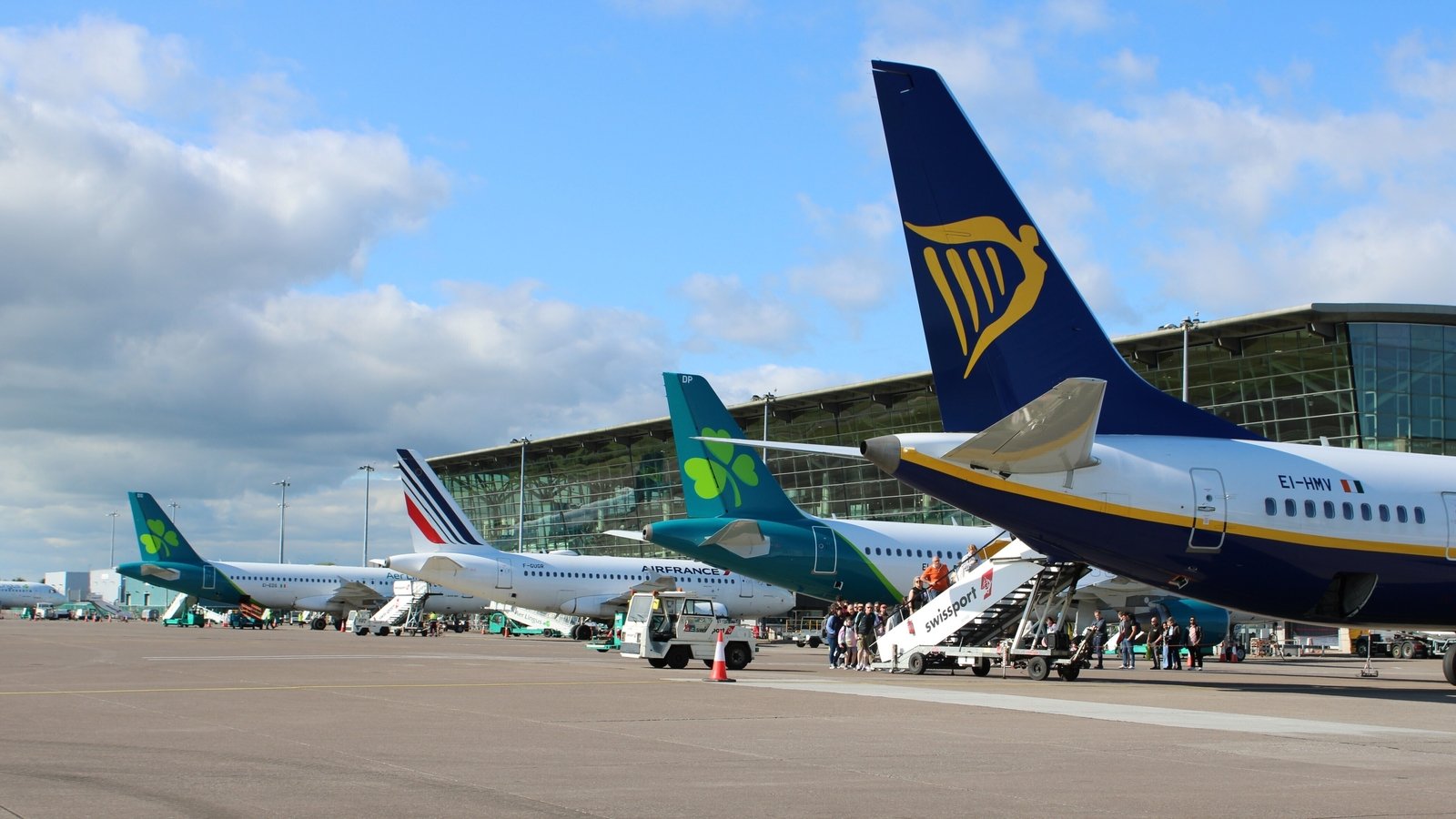
Airline flights were restricted at Cork Airport for seven hours yesterday morning, leading to disruption for five flights.
AirNav Ireland, which is responsible for Irish air traffic control, said in a statement that it had “temporarily restricted the flow of arriving and departing flights at Cork Airport to ensure safety was fully maintained” due to “short-notice sick leave overnight”.
The organisation said the restrictions were in place between midnight and 7am on 11 Feb, which led to disruption to normal flight schedules.
“Cork Airport regrets the impact this disruption by AirNav Ireland has had on our passengers and we appreciate their patience and understanding,” the statement continued.
“Safety is always our number‑one priority. AirNav Ireland worked closely with our airline customers, Cork Airport and the Irish Aviation Authority throughout.”
A spokesperson for Cork Airport confirmed today that a Ryanair flight from Tenerife to Cork had to be diverted to Shannon as a result of the restriction.
They also said that Ryanair flights to Manchester and Gran Canaria, a KLM flight to Amsterdam, and an Aer Lingus flight to Malaga were all delayed as a result.
All other flights operated as normal yesterday.
Ireland experiencing shortage of air traffic controllers
An airport safety and security auditor has said Ireland is experiencing a shortage of air traffic controllers due to well qualified staff moving to work in airports across the world.
Speaking on RTÉ’s News At One, Kevin Byrne said: “It looks like the number of staff suitable to do the job weren’t there. It fell below the minimum numbers required.”
Mr Byrne said although one diversion does not seem like much, it is “quite expensive”, costing €30,000 for a wide body aircraft and €20,000 for a smaller plane.
He said the late departures the following morning is also bad news for European Union air traffic controllers.
Mr Byrne said the shortage of air traffic controllers is everywhere in Europe.
He said in his own location where he used to work in the Air Corps, a lot of air traffic controller were lost last year.
As a result, a flight information service is being provided by a civil company after dark, Mr Byrne said, adding that “they do not have enough air traffic controllers”.
“A lot more people want to go flying after Covid, so this caught the air traffic control system on the hop… and they hadn’t trained up people in that regard,” he said.