

Guaranteed ways to make a classroom full of American college freshmen guffaw. Ask them how many newspapers they subscribe to. They have never. Most will never. To them, the idea of paying for journalism is preposterous and prehistoric. You might as well inquire if they have spare change for the payphone.
Forking over money to read a considered take on something, anything, written by a trained professional with decades of experience is an alien concept. Too many easier, freer alternative ways to access information. Never mind the inferior quality, feel the social media bandwidth.
So, there was no keening from the youth of the United States when cultural vandal Jeff Bezos laid off 300 people from the Washington Post last week. Among other atrocities, he shuttered for good a vaunted sports section often regarded, with some justification, as the nation’s finest, albeit one that shamelessly shilled for Lance Armstrong throughout his fraudulent pomp.
Most people under 30 didn’t even notice its demise and could care less that the place once housed luminaries like Tony Kornheiser, Tom Boswell, Michael Wilbon and John Feinstein.
To most Gen Z and millennials, demographics afflicted through no fault of their own with ever-shrinking attention spans, the Post, same as the New York Times which closed its own sports department in 2023, are relics of a bygone age. Like glossy magazines, landlines and handwritten letters. To be filed under quaint, strange artefacts their parents sometimes get misty-eyed and talk wistfully about. These kids can’t grasp there was simple pleasure in spreading a broadsheet across a table, immersing yourself in a lengthy profile or getting ink on your fingers imbibing excellent reportage. How could they? They are as much products of their digital age as we were of ours.
I can measure out my early life in reading habits. Cutting my teeth on Roy of the Rovers and Tiger comics, before graduating to Shoot! and Scoop! Saturday morning visits to my uncle Bobby’s at the top of Blarney Street meant sifting through fraying copies of Ring magazine and, when nobody was looking, the racier True Detective too.
In my teens, the sports pages of The Cork Examiner and Evening Echo were my daily ritual. Occasionally my father brought home a dishevelled copy of Magill from work, a glamorous sliver of 1980s exotica where I discovered the unique literary stylings of the late Kevin Cashman, hurling writer nonpareil.
Upon enrolling in UCC, I started to buy The Irish Times at the subsidised price of 18p because I thought attempting the crossword and wondering why rugby took up so much space was what a serious-minded undergraduate was supposed to do.
I was in thrall to the power of the written word then. In an era when televised sport was a rarity, newspapers and magazines granted vital access to our heroes and their exploits, to otherwise unavailable injury updates and crucial team news. In the absence of highlight reels, match reports were matters of supreme importance. How else to savour victories or pore over the entrails of defeats?
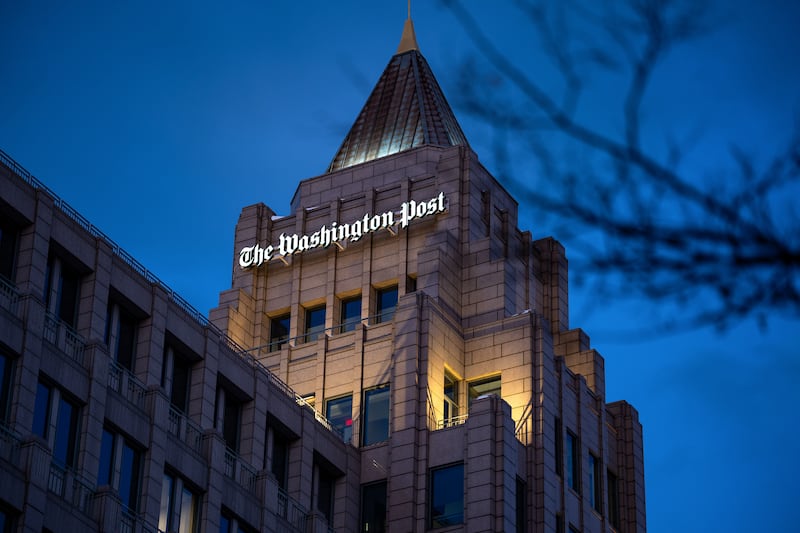 The Washington Post ran a vaunted sports section often regarded, with some justification, as the nation’s finest. Photographer: Kent Nishimura/Bloomberg via Getty Images
My 15-year-old son is every bit as sports-mad now as I was then. Obsessed with the Boston Celtics, he knows everything that goes on with the team. Yet, he hasn’t once visited the Boston Globe or Boston Herald websites. I’m not sure he even knows they exist. Like all who have made a living from journalism, this saddens me greatly but his is a different childhood than mine. His impressive knowledge of the greatest soccer players from times past has been entirely gleaned from the Fifa video game, not, as it was for my generation, from Brian Glanville’s History of the World Cup.
I can’t condemn the child for this. I suspect I would never have read the sports pages so avidly if I had access to a constantly updating library of video clips on a hand-held device. My youthful appetite for accounts of games would have been seriously diminished had I possessed the technology to see every score with my own eyes. Almost instantaneously. And there would have been little need to plough through interviews with my heroes had I been able to follow them directly on Instagram for daily bulletins about their lives.
Richer than Croesus, the classless Bezos could and should have underwritten the Post for decades for the common good. But this case only emphasises the crisis point the newspaper industry and society have reached. The readers are dying off, young people don’t read the sports sections any more and haven’t for some time. Indeed, too many young men, in particular, don’t read at all, partly due to dunderheads in the blokeosphere convincing them books are unnecessary and uncool.
This relentless dumbing-down is, inevitably, where technological advances and trends have led us. Trundling down a road that, with ChatGPT dimming more and more young minds each day, is only getting darker.
During a recent bout of attempted decluttering, I came upon a treasure trove of yellowing articles carefully clipped from newspapers in the early 1990s. Among them was Hugh McIlvanney on Riddick Bowe, Paddy Barclay’s obituary of Bobby Moore, and Paul Kimmage’s portrait of Neilstown for The Sunday Tribune. Deemed too good to throw out, rereading them the other night transported me back 30-odd years, reminding me why they moved a wannabe young sports journalist in the first place.
The kids of today will never know that thrill. And they won’t care a jot.