
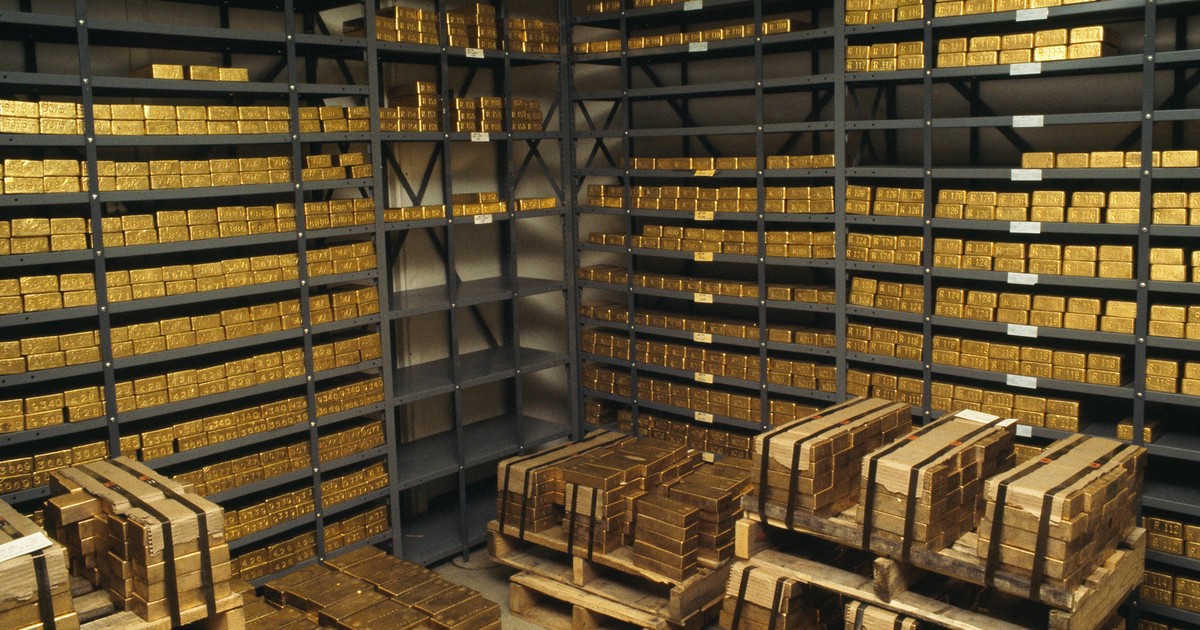
On the other hand, central banks are purchasing gold to strengthen national reserves and reduce exposure to dollar volatility showing how gold has become both a fiscal lifeline and a monetary shield across Africa.
For several African economies, gold remains a critical export and a major source of hard currency. Ghana, Africa’s top producer, mined 140 tonnes in 2025, earning roughly $20.9 billion in export revenues.
Mali produced 100 tonnes despite industrial disputes affecting output, while South Africa maintained its longstanding presence with 98.1 tonnes. Burkina Faso recorded a historic 94 tonnes, and Sudan exceeded its production target with 70 tonnes, generating approximately $1.8 billion in public revenue.
Other notable exporters include Tanzania, Guinea, Côte d’Ivoire and Zimbabwe. For these countries, rising gold prices translate directly into stronger foreign exchange inflows, improved fiscal revenue, and greater external stability.

According to the World Gold Council, Egypt emerged as the continent’s largest buyer in 2025, using the metal to stabilise reserves amid fiscal pressures.
Nigeria and Zimbabwe have added to their holdings in recent years, with Zimbabwe linking gold accumulation to its currency stabilisation strategy.
Namibia, Rwanda and the Democratic Republic of Congo have also recently topped up reserves.
According to central bank data, Kenya’s reserves stood at 5.4 months of import cover as of 9 February, comfortably above the four-month benchmark often used for emerging markets.
The announcement came shortly after the Central Bank of Kenya cut its benchmark lending rate by 25 basis points to 8.75%, signalling a balancing act between stimulating growth and safeguarding external buffers.

Not all central banks are moving in the same direction. In late January, the Bank of Ghana reduced its gold holdings by 51%, equivalent to 18.6 tonnes, after the metal’s share in reserves rose above 40%, well beyond what many central banks consider comfortable.
For Ghana, diversification meant increasing foreign-currency assets. For Kenya, diversification means increasing gold. The difference lies not in the gold price but in reserve structure. Kenya is buying gold because its holdings remain low, while Ghana sold to reduce concentration risk.
Gold does not generate interest income and can be volatile. However, it is not tied to any single currency or monetary authority.
In a world of dollar strength, sanctions risk and global policy shifts, that independence matters. For African economies, gold now plays two roles: it remains a revenue driver through exports, and it serves as a defensive asset through reserve accumulation.
The key challenge for policymakers is finding balance. Too little gold leaves reserves exposed to currency concentration risk, while too much reduces liquidity and potential returns.
What is emerging in 2026 is not a uniform gold rush but a more sophisticated approach to reserve composition. African central banks are no longer simply accumulating assets; they are actively managing structure, exposure and resilience.
In this sense, the real story is not whether gold is rising, but how Africa is positioning itself on both sides of the trade.