
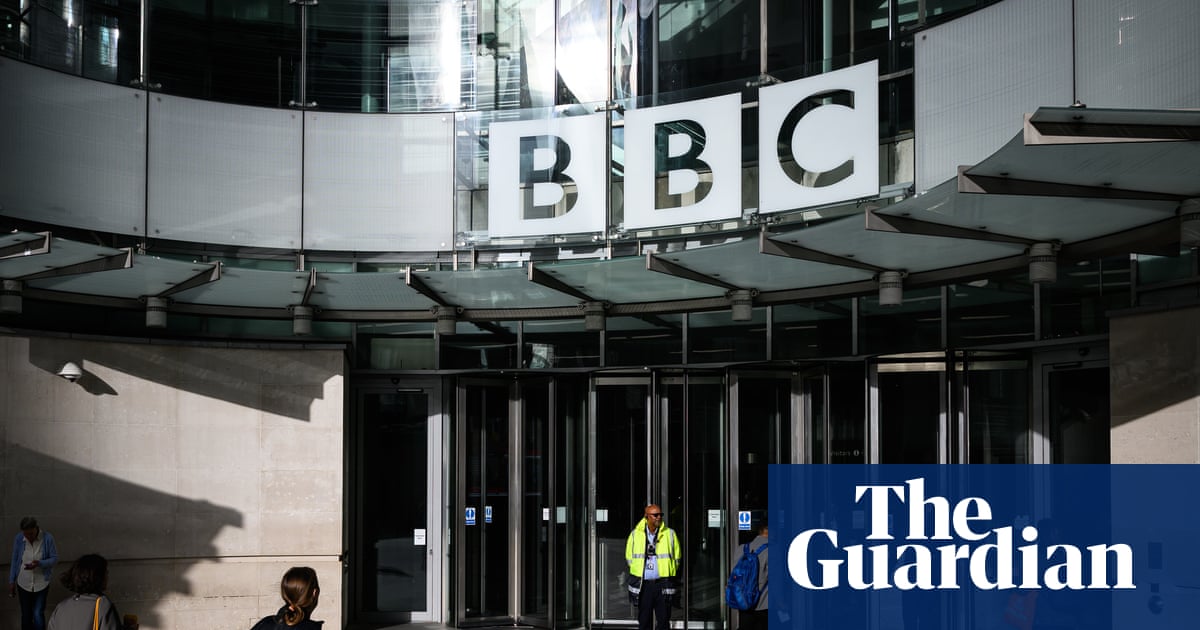
The BBC is to pursue cuts of up to £600m that will result in job losses and the end of some programming, amid concerns at a decline in the number of households paying the licence fee.
Tim Davie, the outgoing director general, told staff that the broadcaster was not a “protected species” and that 10% of the BBC’s costs would have to be cut over the next three years.
It is understood the savings are sufficiently steep that job losses and changes to output will have to form part of the plans.
Davie said the broadcaster was “holding our own” despite huge changes in the media world with the rise of digital platforms such as YouTube and TikTok, and of streaming platforms. He said the BBC was more needed than ever as media groups around the world cut back their coverage.
However, he said it now had to be “quite aggressive” in reshaping its public service broadcasting, and that it was “a tough environment for households”. Savings are expected to amount to between £400m and £600m.
Leigh Tavaziva, the BBC’s chief operating officer, told staff that the number of people paying the licence fee was declining faster than the corporation had forecast. The BBC’s last annual report showed 300,000 more households had stopped paying the fee.
The Guardian broke the news of a major BBC cuts programme last year. All departments will have to find savings, while sources said outsourcing of some functions could also be involved.
A BBC spokesperson said: “Over the last three years we have delivered more than a half a billion pounds’ worth of savings, much of which we’ve been able to reinvest into our output across the BBC. In a rapidly changing media market, we continue to face substantial financial pressures. As a result we expect to make further savings over the next three years of around 10% of our costs.
“This is about the BBC becoming more productive and prioritising our offer to audiences to ensure we’re providing the best value for money, both now and in the future.”
Philippa Childs, the head of the Bectu union, which represents people in the creative industries, said: “Additional cuts of this scale will inevitably damage its ability to perform its vital national function. BBC staff will be deeply worried by this news, and Bectu will be engaging urgently with the BBC to understand the implications.”
It came as it emerged that a hearing of Donald Trump’s multibillion dollar lawsuit against the BBC over the editing of one of his speeches had been set for a year’s time. In a blow to the corporation, a Florida judge has rejected the BBC’s attempt to put off disclosing internal documents relating to the episode of Panorama that contained the spliced version of Trump’s 2021 address.
Trump made the speech in Washington before supporters stormed the US Capitol. The BBC has apologised for cutting together two parts of the speech without making the edit clear to viewers, but it denies it defamed the president.
BBC lawyers in the US had argued that the process of disclosing documents relating to the legal action should wait until the judge decided whether the court even had any jurisdiction to rule in the case. The lawyers said the programme, Trump: A Second Chance?, was never broadcast in Florida and that they would attempt to have the case dismissed at an early stage.
They said the process of revealing documents, known as discovery, would be an “unusual step” given the questions over whether or not the episode was actually broadcast in the state. The judge rejected the argument.
Court documents from the US district court for the southern district of Florida confirmed that Judge Roy K Altman had set a trial date of 15 February 2027.
The BBC is in the process of trying to find a replacement for Davie, whose resignation formed part of the fallout from the row. The Panorama edit, which used two sections of Trump’s speech almost an hour apart, suggested he told the crowd: “We’re going to walk down to the Capitol and I’ll be there with you, and we fight. We fight like hell.”