
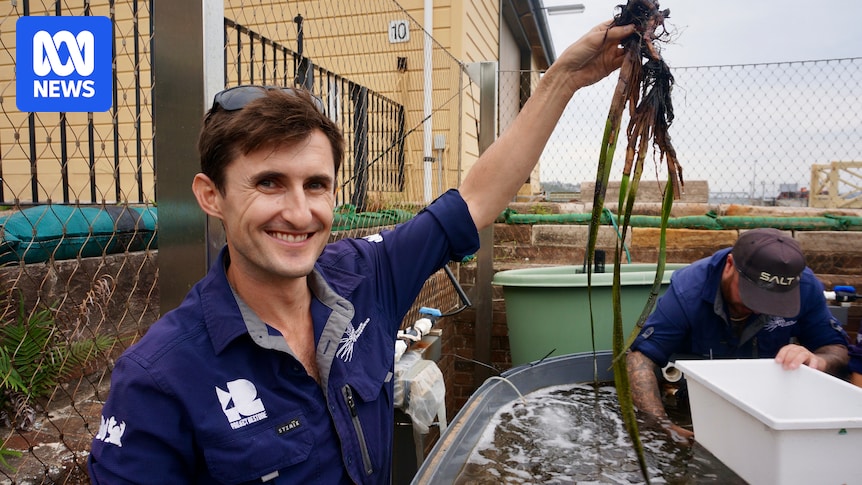
A centuries-old nautical technique is being redesigned within a small Sydney cove in a bid to save a tiny remnant population of a dying species.
Posidonia australis is a slow-growing plant native to the southern Australian coastline but is endangered in all six estuaries across New South Wales.
The seagrass, which provides a safe and critical habitat for many juvenile fish, improves water quality, stabilises sediments and acts as a carbon sink by capturing and storing carbon dioxide, is struggling for survival.
It has been in decline across much of southern Australia but population loss has been particularly severe along the NSW coast, from Port Hacking south of Sydney up to Lake Macquarie, where it is listed as endangered.
Marine biologist Tom Burd told ABC News Sydney Harbour was once full of the seagrass in shallow, sheltered coves.
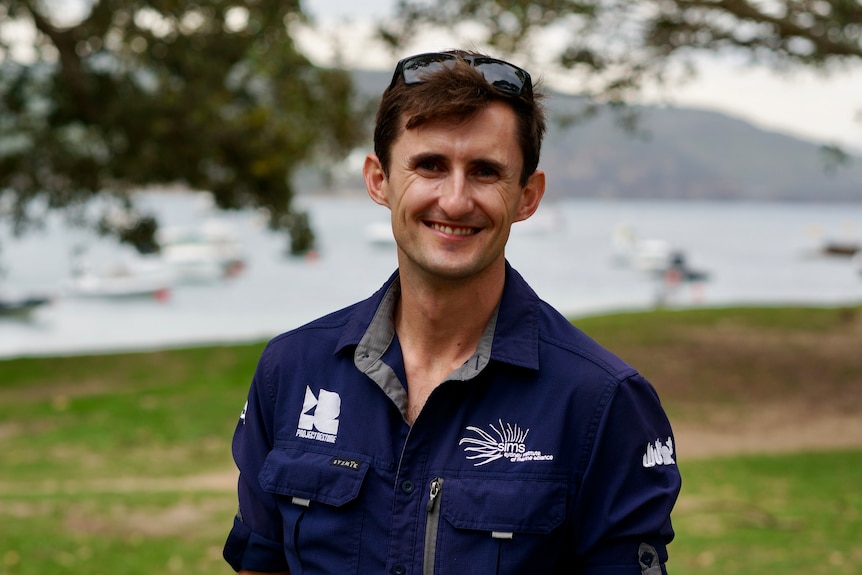
Mr Burd says boat traffic and pollution pose the biggest threat to seagrass. (ABC News: Gavin Coote)
“We find tiny little patches, but not much left, and the majority of that is due to the change that the harbour’s undergone over the past two centuries,” he said.
“We’ve had a lot of shipping, a lot of boat traffic, construction, pollution.”
Boaties team up with scientists
The improvement Sydney Harbour’s water quality in recent years has provided the opportunity for a new restoration project.
Researchers from Project Restore at the Sydney Institute of Marine Science (SIMS) are installing modern environmentally friendly moorings (EFMs) at Balmoral that float up from the seabed.
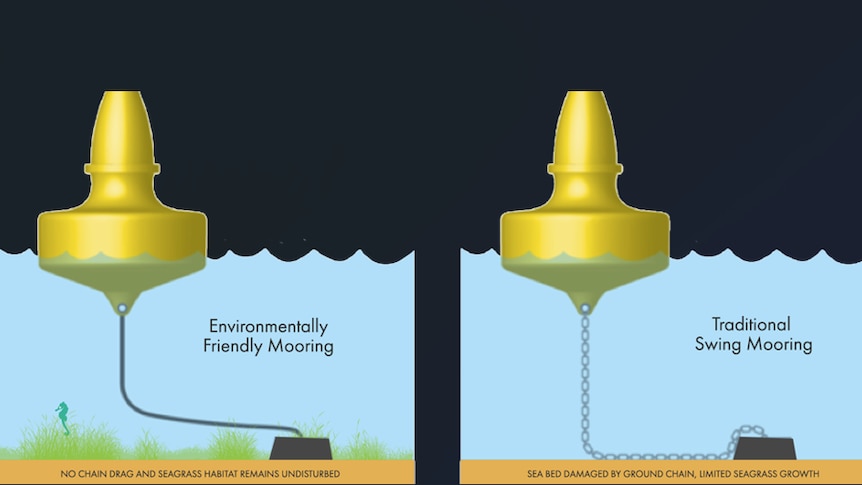
The new moorings do not drag on the seabed, allowing seagrass to thrive. (Supplied)
The purpose-built moorings are designed to remain buoyant, removing the need for traditional heavy chains dragging along the seabed, disturbing the seagrass.
“They don’t touch the seabed at all, and it means that this seagrass can live happily underneath it,” Mr Burd said.
The Balmoral Boat Shed has embraced the new European-designed technology.
“Putting these first 10 moorings down was a great learning curve for us… because if it’s successful, this will become the standard,” Balmoral Boat Shed’s owner Steven Hedge said.
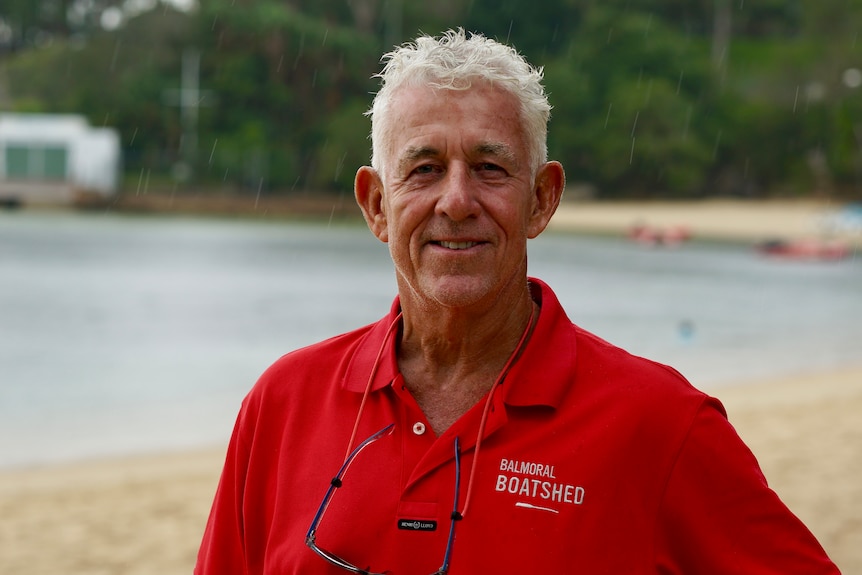
Steven Hedge welcomes the use of the floating moorings. (ABC News: Gavin Coote)
The moorings were installed late last year and scientists have grown the plants in a laboratory for three months.
The seedlings are now being planted at Balmoral to begin monitoring the growth survival rates of the grass.
Backed by science
Adriana Verges, University of New South Wales professor in marine ecology, said it was the first time the seedlings were being planted in the harbour beneath the new technology.
“Unfortunately, the damage in Sydney Harbour has been so great that natural recovery is just not going to happen,” she said.
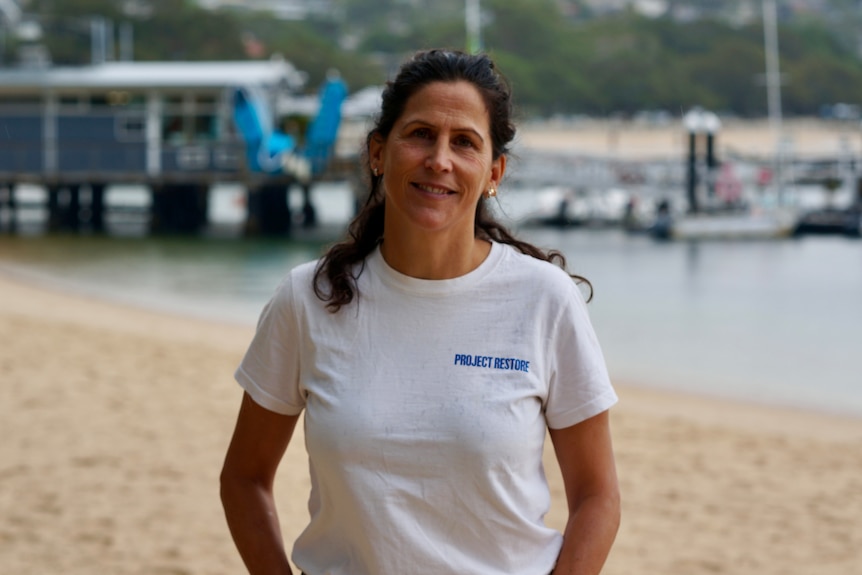
Professor Verges says the species needs a helping hand to recover. (ABC News: Gavin Coote)
“Unless we step in and give nature a little bit of a helping hand, it’s just not going to recover.”
Professor Verges said Balmoral was chosen as a location because there were signs the seagrass could survive there and prove it was possible for nature and people to coexist “even in one of Australia’s largest, busiest cities”.
“It’s nearly gone, but not quite, and that’s the kind of beautiful thing about this moment … we know we can turn things around,” she said.
If successful, the team hope to take their project to other harbours.