
Former US president Barack Obama has warned that Donald Trump’s decision to repeal a landmark scientific finding underpinning climate regulations would leave Americans “less safe, less healthy”.
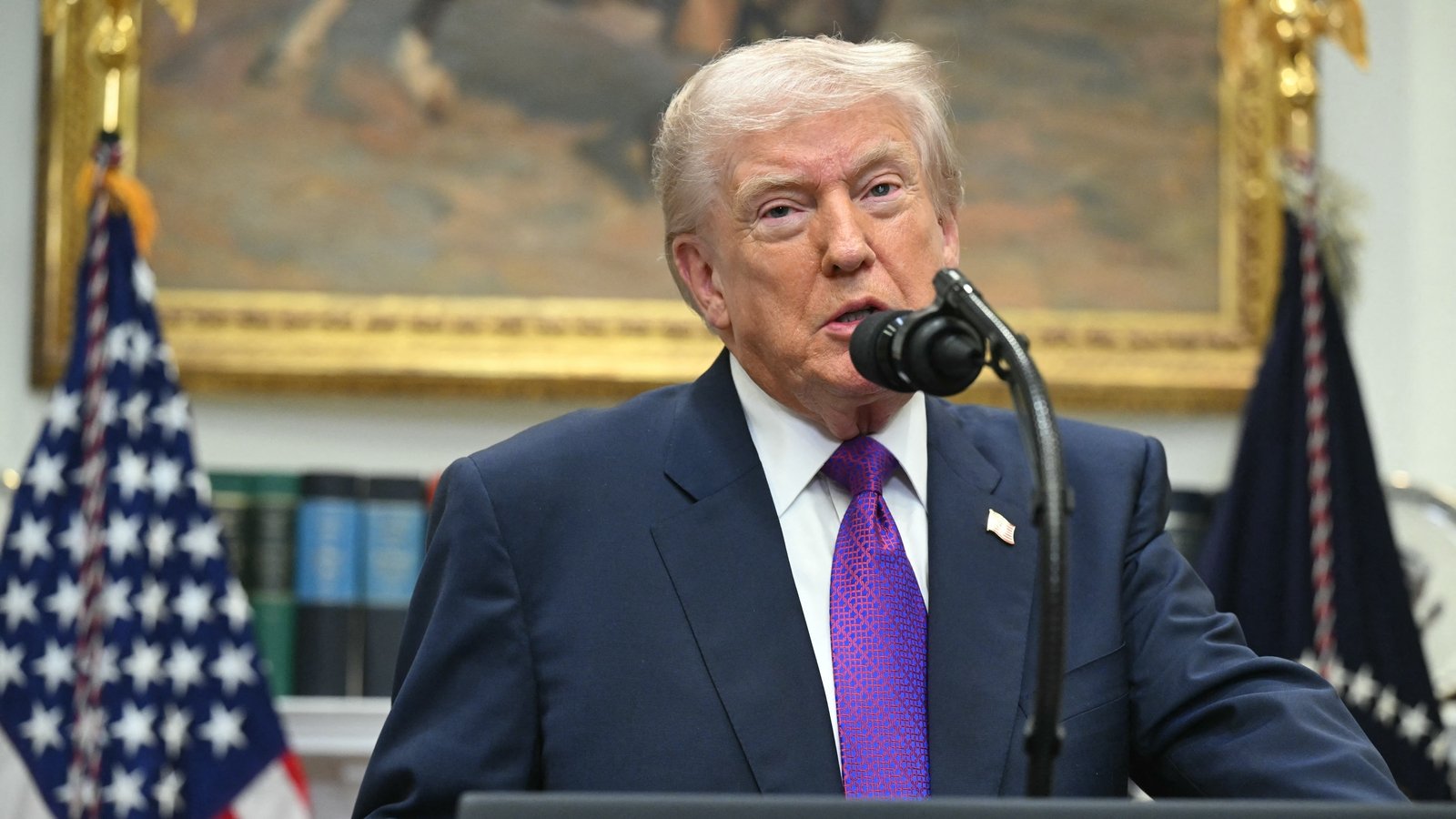
Mr Trump has announced the repeal of a scientific finding that greenhouse gas emissions endanger human health, removing the legal basis for federal climate regulations.
It also ended subsequent federal greenhouse gas emission standards for all vehicles and engines of model years 2012 to 2027.
“Without it, we’ll be less safe, less healthy and less able to fight climate change – all so the fossil fuel industry can make even more money,” Mr Obama wrote on X.
The move represents the most sweeping climate change policy rollback by the administration to date, after a string of regulatory cuts and other moves intended to unfetter fossil fuel development and stymie the rollout of clean energy.
“Under the process just completed by the EPA [Environmental Protection Agency], we are officially terminating the so-called endangerment finding, a disastrous Obama-era policy that severely damaged the American auto industry and drove up prices for American consumers,” Mr Trump said, announcing the repeal beside EPA Administrator Lee Zeldin and White House Budget director Russ Vought, who has long sought to revoke the finding.
Mr Trump has said he believes climate change is a hoax, and has withdrawn the United States from the Paris Agreement, leaving the world’s largest historic contributor to global warming out of international efforts to combat it in addition to killing Biden-era tax credits aimed at accelerating deployment of electric cars and renewable energy.
The so-called endangerment finding was first adopted by the United States in 2009, and led the EPA to take action under the Clean Air Act of 1963 to curb emissions of carbon dioxide, methane, and four other heat-trapping air pollutants from vehicles, power plants and other industries.
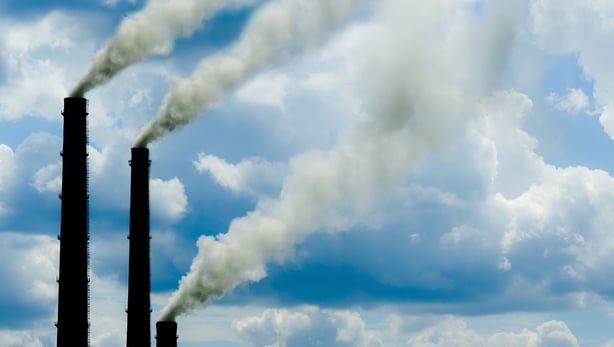
The transportation and power sectors are each responsible for around a quarter of US greenhouse gas output, according to EPA figures
Its repeal would remove the regulatory requirements to measure, report, certify, and comply with federal greenhouse gas emission standards for cars, but may not initially apply to stationary sources such as power plants.
The transportation and power sectors are each responsible for around a quarter of US greenhouse gas output, according to EPA figures.
The EPA said the repeal will save US taxpayers $1.3 trillion, eliminating both the endangerment finding and all federal GHG emission standards for vehicles.
While many industry groups back the repeal of stringent vehicle emission standards, they have been reluctant to show public support for rescinding the endangerment finding because of the legal and regulatory uncertainty it could unleash.
Legal experts said the policy reversal could, for example, lead to a surge in lawsuits known as “public nuisance” actions, a pathway that had been blocked following a 2011 Supreme Court ruling that GHG regulation should be left in the hands of the Environmental Protection Agency instead of the courts.
“This may be another classic case where overreach by the Trump administration comes back to bite it,” said Robert Percival, a University of Maryland environmental law professor.
Environmental groups have slammed the proposed repeal as a danger to the climate. Future US administrations seeking to regulate greenhouse gas emissions likely would need to reinstate the endangerment finding, a task that could be politically and legally complex.
The Environmental Defense Fund said that the repeal will end up costing Americans more, despite EPA’s statement that climate regulations have driven up costs for consumers.
“Administrator Lee Zeldin has directed EPA to stop protecting the American people from the pollution that’s causing worse storms, floods, and skyrocketing insurance costs,” said EDF President Fred Krupp.
“This action will only lead to more of this pollution, and that will lead to higher costs and real harms for American families.”
Concept of international cooperation under attack – UN chief
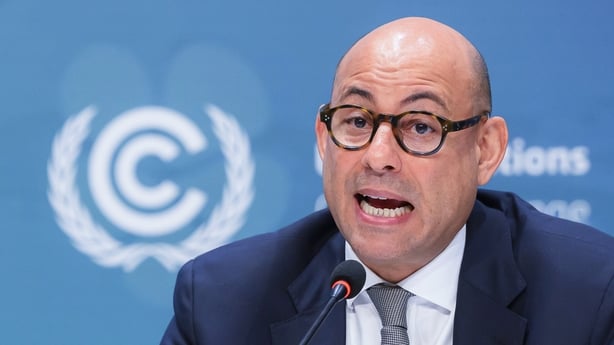
Simon Steill, said challenges are undeniably strong, but that they need not prevail
Meanwhile, the UN Climate Change Executive Secretary, Simon Steill has said global climate co-operation is an antidote to chaos and coercion, instability and insecurity, in a new world of disorder.
Speaking in Istanbul in Turkey, where planning for the next big global climate change conference, COP31, is taking place, Mr Steill said the very concept of international cooperation is under attack.
He said the threat is coming from those determined to use their power to defy economic and scientific logic, and increase dependence on polluting coal, oil and gas – even though that means worsening climate disasters and spiralling costs for households and businesses.
That was a clear reference to the United States and the Trump Administration.
Mr Steill, said these challenges are real and serious and undeniably strong, but that they need not prevail.
He insisted that climate action can deliver stability in an unstable world.
“There is a clear alternative to this chaos and regression and that is countries standing together, building on all we have achieved to date, to make it go further and faster, working more closely with businesses, investors, and regional and civic leaders – to deliver more real-world results in every country,” he said.
Addressing the press in Istanbul, Mr Steill insisted that climate cooperation is an antidote to geopolitical instability, and clean energy is the obvious solution to spiralling fossil fuel costs, both human and economic.
He said it is a fact that renewable energy sources are the clearest, cheapest path to energy security and sovereignty – shielding countries and economies from shocks unleashed by wars, trade turmoil and the might-is-right politics that leave every nation poorer as climate impacts get rapidly worse.
“As climate disasters hit food supplies and drive inflation, resilient supply chains are crucial for the price stability populations are demanding. And they are increasingly unforgiving of governments who don’t deliver it.
“So more than ever, climate action and cooperation are the answer: not despite global instability, but because of it,” he said.
Global investment in renewable energy was more than double that of fossil fuels last year and continues to grow strongly.
Renewables overtook coal as the world’s top electricity source in 2025.
Mr Steill said ramping up climate co-operation is indisputably in every nation’s interest and can deliver on the top day-to-day concerns of citizens everywhere.
He highlighted benefits including lower energy and household bills, far less pollution enabling billions to breathe easier and safer, many millions of new jobs, and the provision of power to hundreds of millions of people for the first time.
He warned that growing greenhouse gas pollution would result in escalating climate extremes, wreaking havoc on every population and economy, fuelling famine, displacement and war.
“The good news is there is now a very clear alternative. Because climate cooperation is an antidote to the chaos and coercion of this moment, and clean energy is the obvious solution to spiralling fossil fuel costs, both human and economic”, he said.
Additional reporting: George Lee