
On Monday the former Wales outhalf Dan Biggar saw Ireland’s problems through the prism of Wales’ problems. He had a smile on his face. Irish headaches were relative.
Ireland were still afloat while the Wales ship was on the rocks.
There were issues against France, he said, but the Irish system was intact. Ireland can have some hope.
“I’m more than happy if you Irish guys want to come and swap places with us,” said Biggar. “From an outsider’s point of view it feels as if everything is much more aligned in Ireland in terms of the union to the provinces, to the colleges, to the school system.”
Biggar also defended Sam Prendergast. He said Andy Farrell could have partnered Peter Stringer or Jamison Gibson-Park with Ronan O’Gara or Johnny Sexton and they would not have got much change out of France.
O’Gara looked at Ireland’s performance through the spectacles of his position of La Rochelle coach and not from the emotional viewpoint of a former player. He highlighted issues Farrell would have to straighten out being like those he faced in France with his own side – the similarities with an Irish team that was successful and suddenly forced to face hard truths and changing fortunes.
“I’m in a good position to comment on this because I’ve been living this for a longer number of months than the Ireland management have,” said O’Gara. “This is exactly what happens when you’ve had success and you lose it … you lose confidence and it spirals out of control. It’s like the sea and you’re trying to turn the tide.”
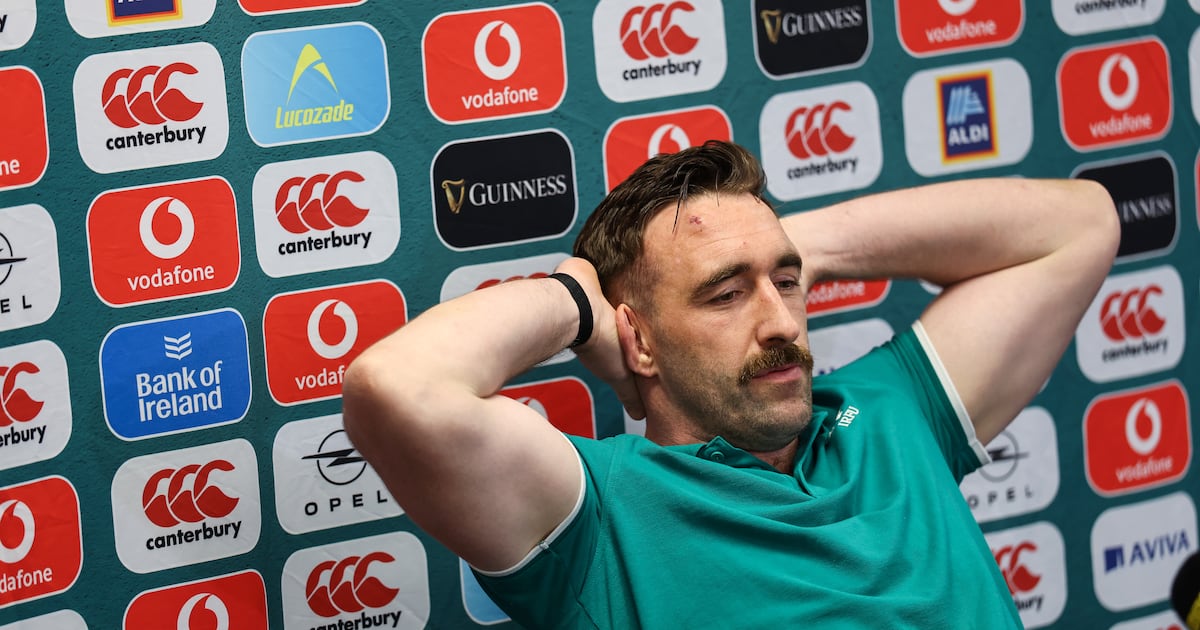
On Tuesday the players rolled into a press conference after training. Some clammed up, slid their bodies down the chair and legs under the table and reached for the safe spaces of cliches and learned responses.
[ Ireland rugby fans are too cynical to emulate raucous Paris atmosphereOpens in new window ]
Not Jack Conan. Throwing his arms back in a physically open gesture, he was chatty and responsive. He said the France game was an aberration, a one-off bad performance. He was certain about that. He spoke about individual ownership and collective responsibility.
Joe McCarthy was in a sombre mood, his bulk making the top table seem like an infant’s school desk.
He was asked about intent, or the lack of it. He used words like sloppy, said the team was now “super hungry” but shed little light on what went wrong in Paris.
The penalty he gave away in a match where he had two carries was “poor judgment” and “definitely avoidable”.
“When you get a big enough loss like that, you definitely haven’t done a few things right, so it was a tough pill to swallow,” he said.
Bryn Ward was wonderfully wide-eyed, someone who clearly felt the sporting gods had been good to him of late.
Ward was a success story, a good news event, as a 21-year-old who had not been mapped at the beginning of the season, but was now pulled to the bosom of Irish management.
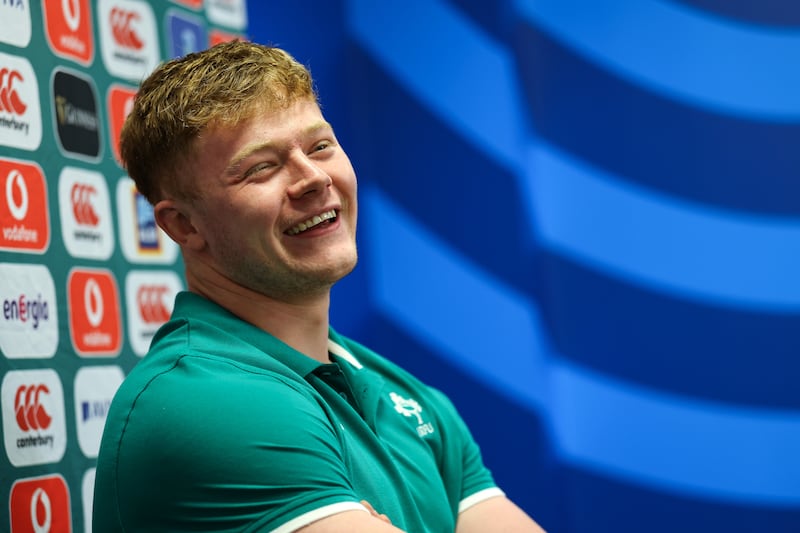 Bryn Ward. Photograph: Ben Brady/Inpho
Likable and articulate, Ward was a distraction and an innocent in many ways. He hadn’t played against France and wouldn’t be involved against Italy. He was there to draw eyes away from the constant thrum of negativity, to deflect from the Irish performance and spin out a positive, breakthrough narrative.
Management also coloured within the lines. Scrum coach John Fogarty was garrulous but defensive.
His words were chosen carefully. Regret and disappointment, sure, but omerta too. Yet it was an innocent remark from Fogarty that probably said most.
“I said it at half-time [against France] that we have [to show] character, that we [have to] represent where we’re from properly,” he said.
Uncharacteristically, Ireland didn’t represent where they are from properly, and that’s the sting. That social contract the Irish team had with their fans was sundered.
The agreed understanding between stakeholders and team involved those things the players said they lacked: conviction, intensity and intent. Those defining qualities of this Irish team were missing. Solemn commitments were broken.
[ Conor Murray: Here’s why the obituaries for Irish rugby are prematureOpens in new window ]
And that triggered outrage in an era where fans have moved from the traditional position of cheerleaders to critics and opinion writers, where their voice and views reach into people’s homes and team hotels.
Filter free, they opined that such and such a player is a coward, that the other a fraud. There’s the forward who can’t catch, and the back who can’t run – ad hominem attacks.
When people put their trust and ambitions into something larger than they are – such as an Irish team – the fall is hard.
A fuming Farrell after the match suggested he knew a line was crossed. The hope is that of all the voices heard this week, Conan’s certainty was on the mark and that the character of this Irish team won’t fail again.