
Former home secretary did not follow her own policies, High Court toldpublished at 11:19 GMT
11:19 GMT
 Dominic Casciani
Home and legal correspondent
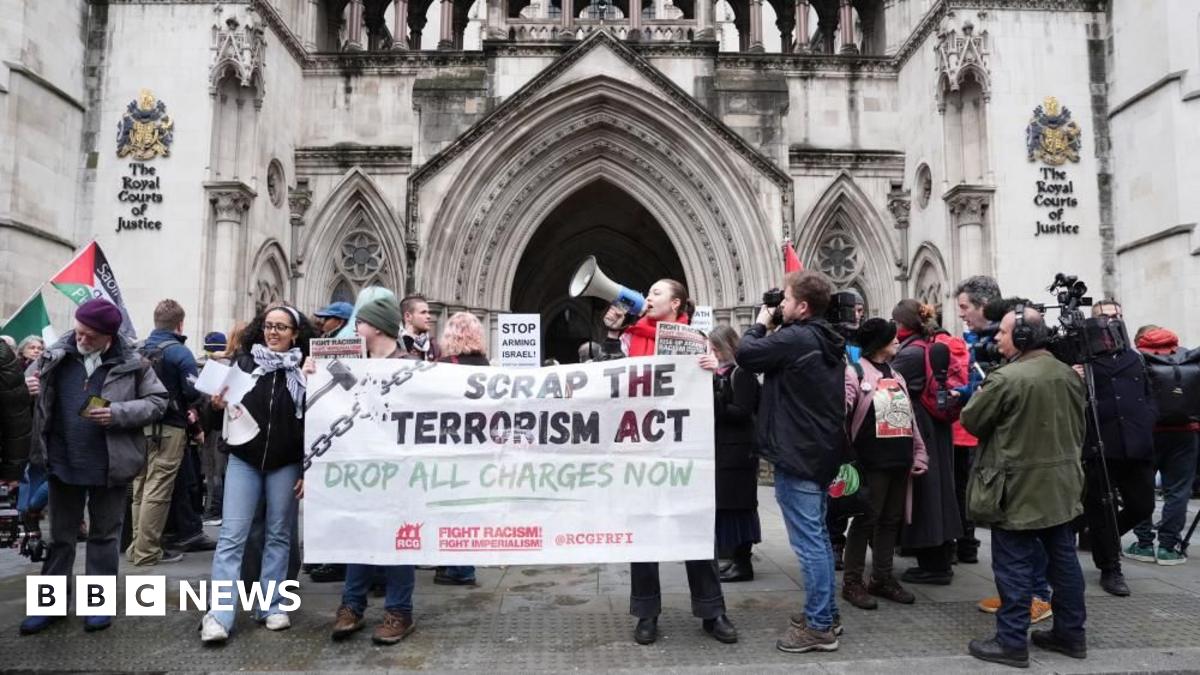
 Image source, PA Media
The High Court said that when the former Home Secretary Yvette Cooper decided to ban the organisation last June, she had failed to first take into account what impact that decision would have on the right to protest.
They also said she had not fully followed her own policies regarding the test for when an organisation should be proscribed under the Terrorism Act.
Prior to the ban, the group’s volunteers had been breaking into arms firms linked to Israel, leading to charges of criminal damage.
Terrorism legislation permits ministers to ban a group which causes serious damage to property in order to further their cause.
The High Court ruled that the organisation had no human rights defence to those incidents.
But the judge said that a critical issue in the case was whether the ban was impacting the rights of others to protest in support of Palestinian issues.
“We accept that the fact of proscription and the heavy penalties for [terrorism offences] will mean that it is reasonable to expect people to be risk averse, to adjust their behaviour and to avoid doing things that run any significant risk that they might commit any of those criminal offences,” Dame Victoria Sharp said.
The judges said that while “a very small number” of Palestine Action’s activities met the legal test for acts of terrorism, the standard criminal law could be used to confront the group.