

What began as a dream of trekking through a wild jungle in search of lost tribes ended with a 66-pound monkey roasting in an iron pot over an open fire. Guy Steinbruch, 32, a geography teacher, returned from the Amazon jungles with stories of giant tarantulas, aggressive snakes, parasitic flies that lay eggs beneath the skin and a near-lynching by a hostile Indigenous tribe near the Brazilian border.
For months, the determined adventurer pushed deep into the heart of the world’s largest rainforest. Guided by Indigenous people, he learned how to survive in the jungle, eat hunted meat and travel by raft along unnamed rivers. Together with his younger sister, Hadar, 28, he lived with a shaman and learned the lesson firsthand: To survive the jungle, there is only one way, to become part of it.
Steinbruch is not a typical post-army backpacker. For more than a decade, he has lived driven by curiosity and an ongoing, demanding journey in search of the roots of human culture and a connection to nature. “My first trip was at age 22,” he recalled in a conversation with ynet. “I hitchhiked alone across Europe. From there it rolled into Africa, and from there to tribes, to the jungle, to places no one reaches.”
For a full year, he worked as an agricultural instructor on the Kenya-Sudan border with the Turkana, a nomadic African tribe. “I lived with them in huts, slept with them, ate with them. I learned how to survive extreme conditions. Every two weeks there were livestock slaughter rituals, and I slaughtered animals myself.”
Steinbruch was part of a complex project in which two Israelis lived with the remote tribe and taught agriculture. “That’s where I felt a strong desire to learn from tribes, connect to nature and understand a simple, basic way of life. It was not a trip. It was total immersion. I remember sleeping with them on the ground.”
13 View gallery
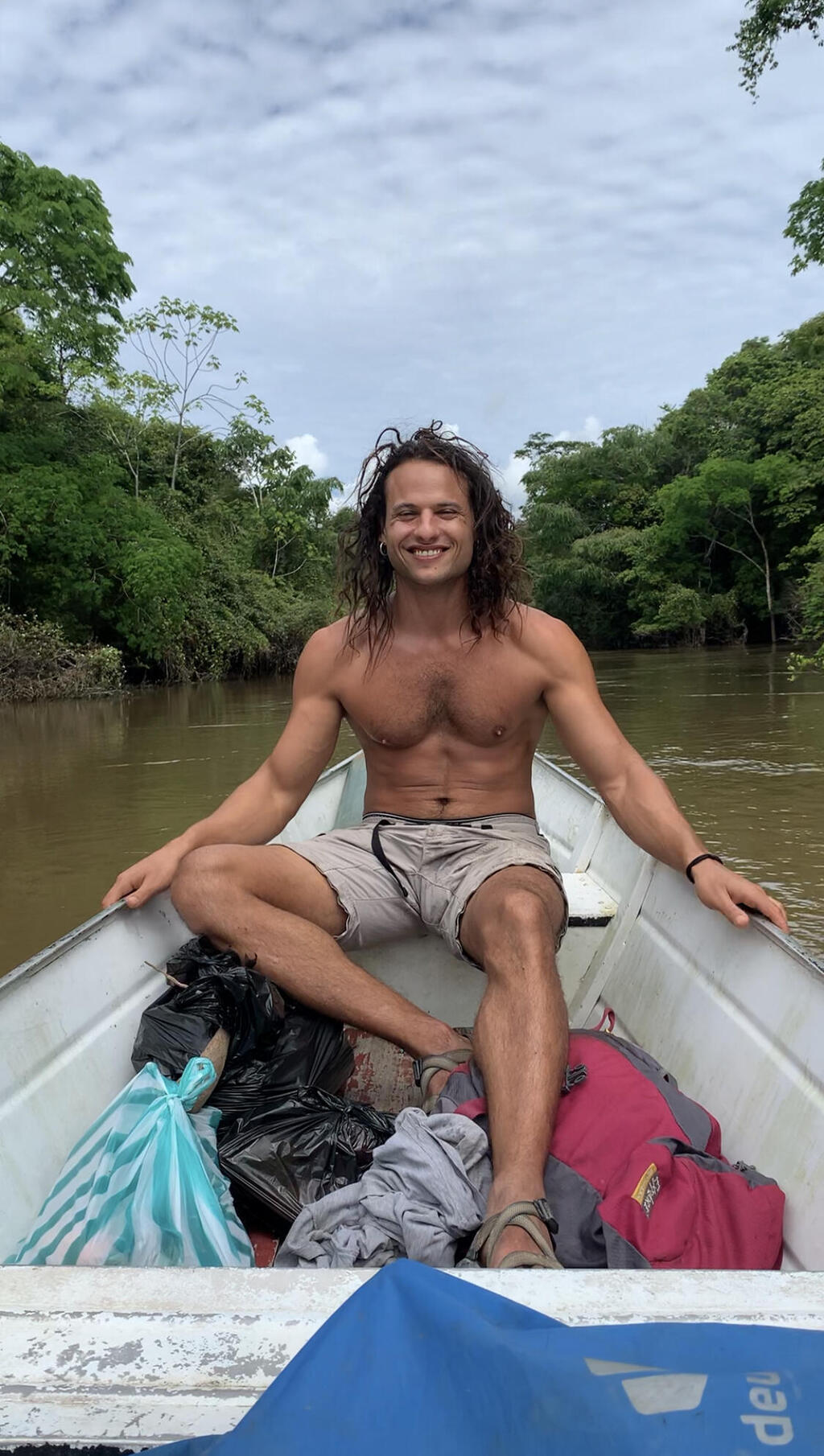
Guy Steinbruch navigating the jungle waterways
(Photo: Courtesy)
Using his German passport, Steinbruch continued moving across the world. In Turkey, Hadar joined him and the two set out on a three-month walking journey to the eastern border with Iran, Syria and Iraq. “We wondered where to go next and ended up in Iraq, in the Kurdish region. We stayed with locals through couchsurfing apps and hitchhiked for a full month. There were also unpleasant moments.”
Still, he was constantly searching for something even more extreme, places where humanity still exists in a primeval form. “I’ve always been drawn to the edges, as far from civilization as possible,” he said.
Two years of travel across South America in a van brought Steinbruch and his sister, his regular travel partner, into the heart of the Amazon, first in Bolivia.
“We went on a tough jungle journey with a local guide,” he said. “Suddenly you spot tracks of jaguars, tapirs and crocodiles. It was the first time we saw living, dynamic nature, and it blew my mind. I felt I was in the heart of a wilderness with almost no human presence. We realized there were more isolated tribes, some that had never met outsiders. It’s dangerous because they can respond violently. But they exist, and the Amazon may be the last place on earth where this still happens.”
After an extended stay in Bolivia, they crossed into Brazil and from there to the far side of the Amazon in Colombia. “We lived with an Indigenous shaman named Fermin from the Yukuna tribe. My sister still lives with him to this day, for almost a year and a half. She’s three and a half years younger than me, and she’s the real driving force behind these journeys, physically and mentally far stronger than I am.”
13 View gallery
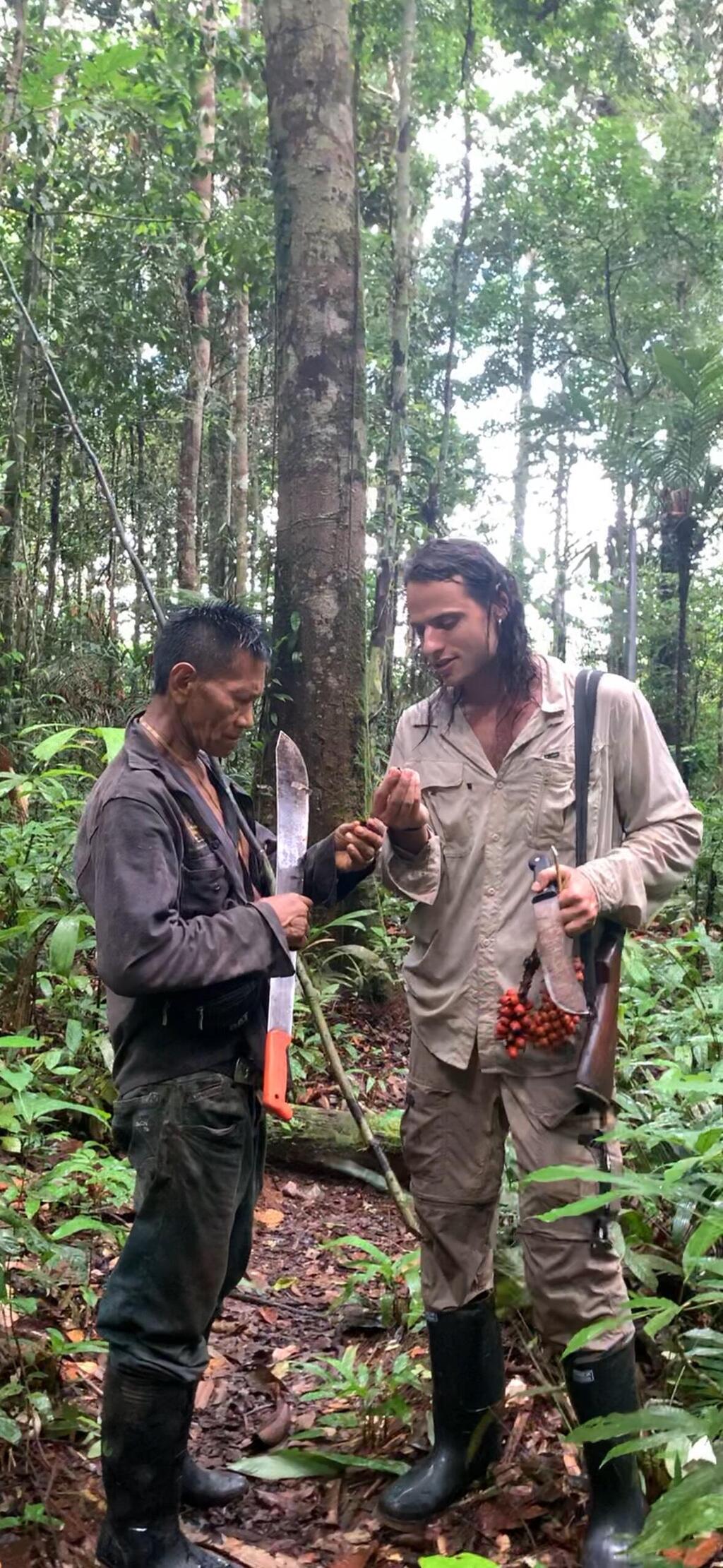
Guy Steinbruch with Fermin the shaman
They lived inside a maloca, a traditional communal wooden house. “That’s where we learned how to prepare mambe, a traditional powder made from coca leaves with natural additives that is chewed throughout the day. It’s an inseparable part of life there. It’s legal, natural and traditional.”
13 View gallery
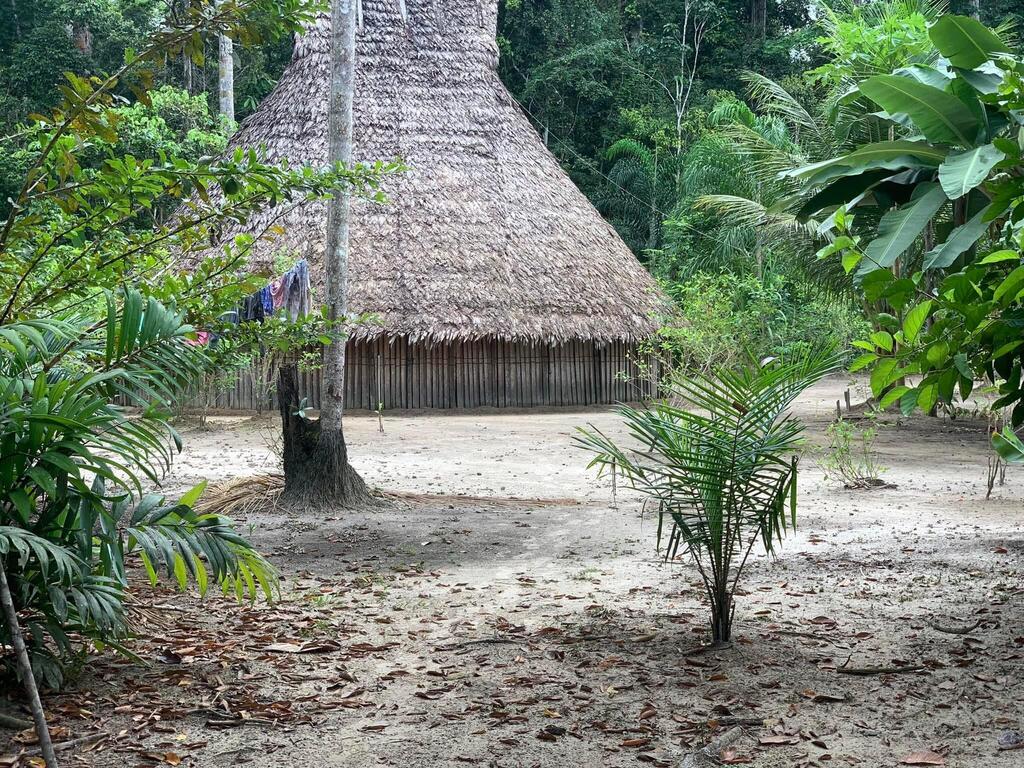
The traditional maloca at shaman Fermin’s
(Photo: Guy Steinbruch)
Daily life in the Colombian rainforest includes food gathering, fishing, farming and using yuca (cassava) root as the main carbohydrate source, along with hunting and butchering wild animals.
“We went on grueling weeklong treks with Alberto, the shaman’s brother. In the thicket, we ran into a group of wild boars. Alberto charged and killed one, and we dragged the body, cleaned it, divided it and carried about 110 pounds of meat on our backs. At night, in heavy rain, he smoked the meat under a makeshift shelter while we, all wet, slept soaked in mud.”
The smoked meat sustained them along the way. “Alberto kept eating it while walking. We also brought rice and some cassava flour. There is a traditional local dish named farinha de mandioca. You pour hot water on the flour and eat it without cooking. It’s the most practical thing.”
Steinbruch described the experience of hunting and killing animals with mixed emotions, before turning to one of the most difficult moments of the journey. “We ate monkeys too, unfortunately,” he said, trying to explain, avoiding Western moral judgment. “It’s a different culture. I have hunting videos I’m not sure I’m ready to upload. You hunt, burn the fur, cook the meat. It’s not about cruelty. That’s how people live there and how generations survived. This is not tourism and you are no longer an observer but part of the experience.”
13 View gallery
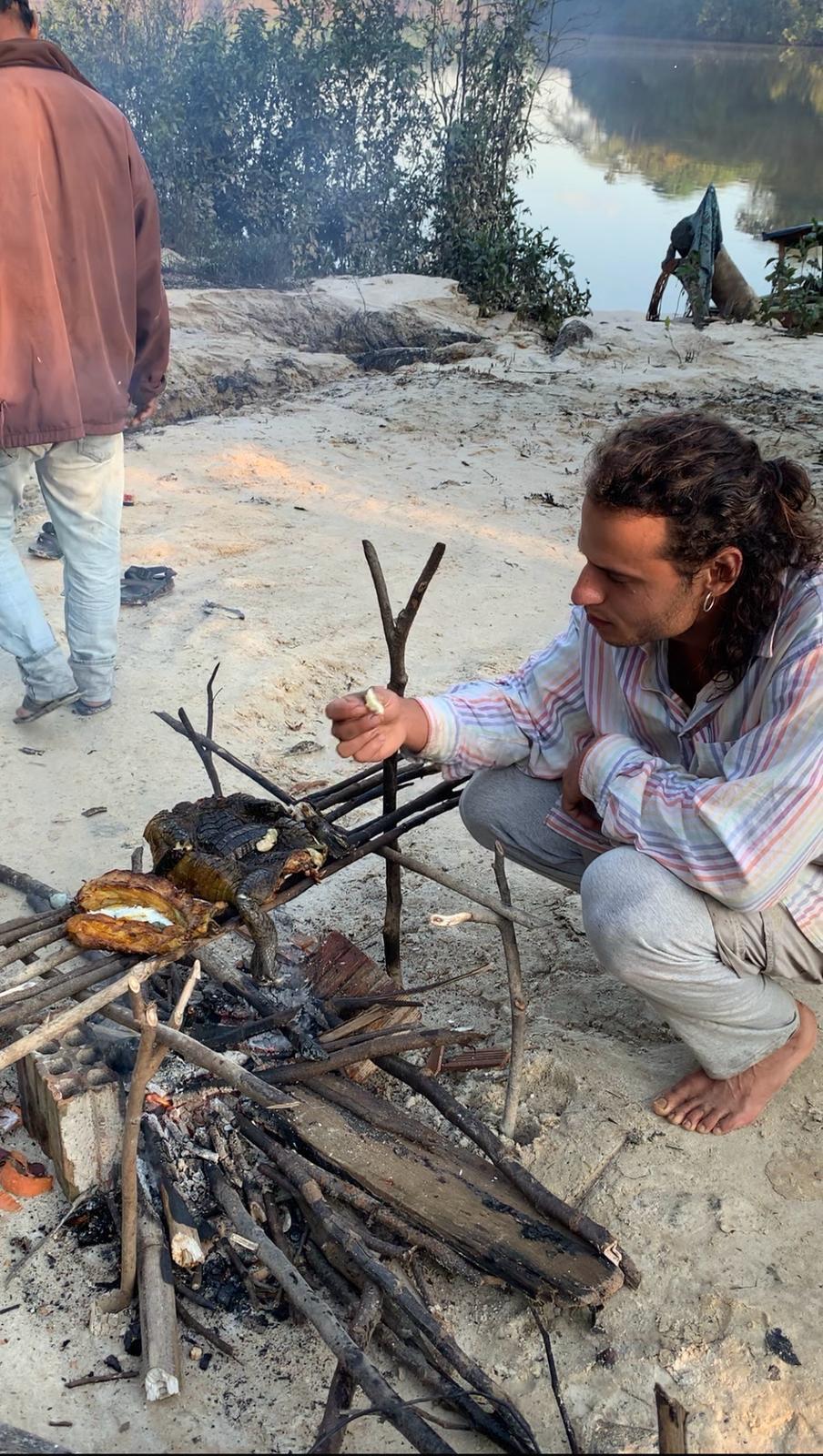
Guy Steinbruch eating crocodile
Thanks to strong ties with the local shaman, Steinbruch and his sister were invited to live with a remote tribe deep in the Amazon. “We stayed with a family from the Bora tribe and went with them for a full week into the forest. When I say the whole family, I mean everyone, the grandmother, siblings, granddaughter and a baby just a few months old. They took everyone into the jungle. To them, it was natural.”
After a nine-mile walk through dense jungle, they reached an old family camp in a completely isolated area. “Within five minutes, one of the brothers came back with a huge monkey, one of the largest in the area, maybe 66 pounds. The granddaughter took it, put it on the fire and cleaned it. The grandmother put it in a pot, and within 20 minutes it was ready to eat, and everyone indulged in it. I watched it with my own eyes; it’s a completely different approach to food and life. I have an incredible video of cooking the monkey, but it’s very graphic. I constantly debate whether to upload those kinds of videos. On one hand, it’s the truth. On the other hand, it’s hard to watch.”
In some journeys, they would build a new camp every night; on others, they stayed in one place for days. “In Peru, for example, we built a roof from palm leaves and branches. On other trips, we brought plastic sheets and built simple shelters.”
Steinbruch pointed out a clear cultural difference. “Everyone sleeps in hammocks, and my sister slept in a hammock like them. I can’t; it’s uncomfortable for me, so I always slept on the ground in a tent. But it’s dangerous because insects, snakes, rodents, and everything come in. Still, I preferred it.”
One of the most intense moments was a five-week journey in a small boat along the Javari River on the Brazil-Peru border. “Every night you dock on the riverbank and look for a relatively open place to sleep, to avoid going deep into the jungle. If you go inside, you need to clear space, cut branches, and make sure there are no snakes. It’s an entire project.”
13 View gallery
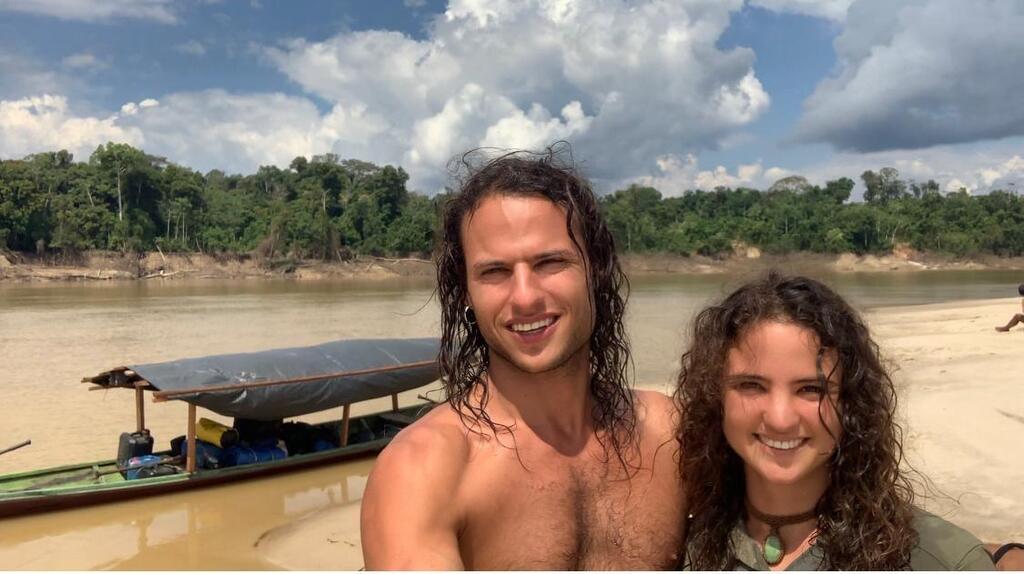
Steinbruch and sister Hadar on the banks of the Javari River
(Photo: Guy Steinbruch)
13 View gallery
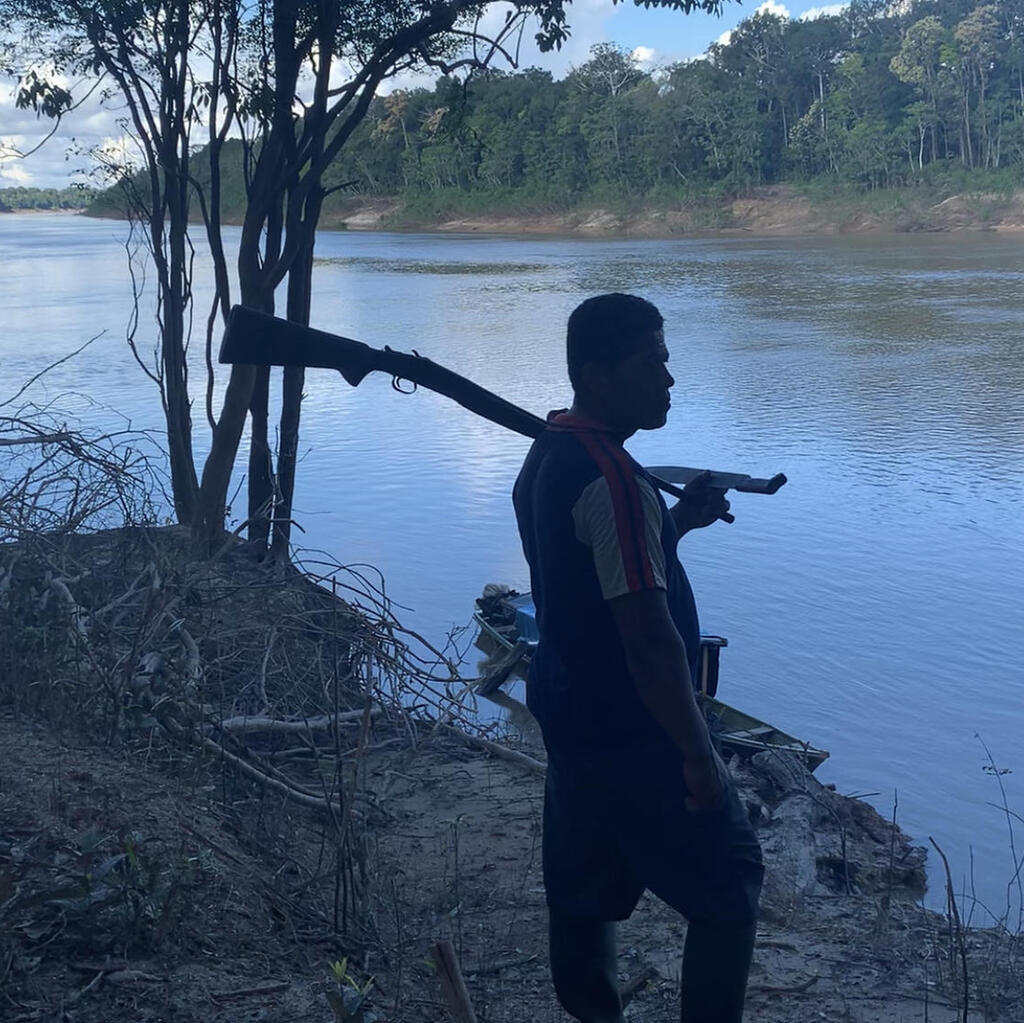
A machete in one hand and a rifle in the other: Life in the Amazon
(Photo: Guy Steinbruch)
13 View gallery
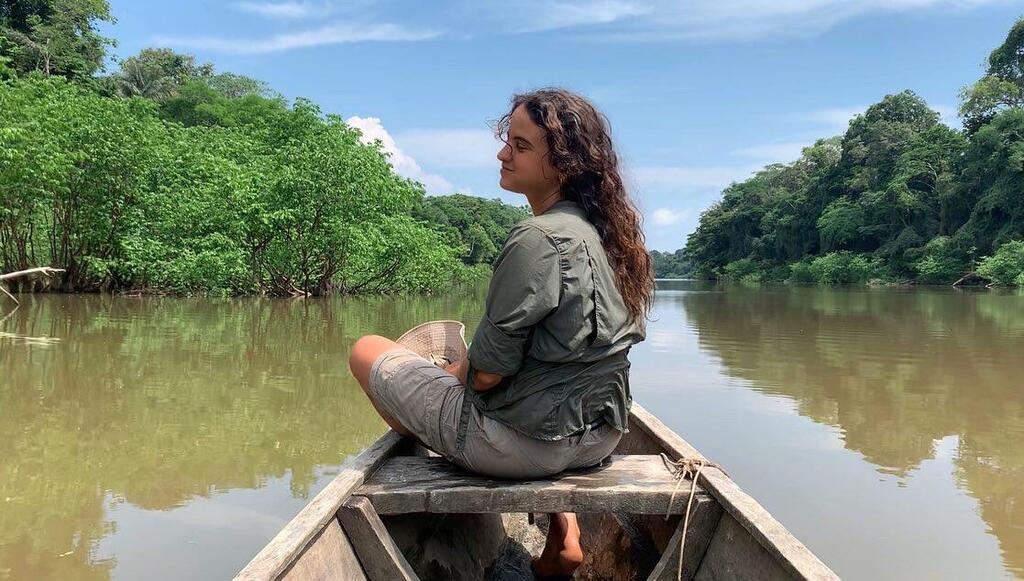
Hadar deep in the Peruvian Amazon
(Photo: Guy Steinbruch)
It turned out Steinbruch had not read the best-selling book “Back From Tuichi,” only seen the film, and that did not deter him from his plans. “A journey on a wild river is a full-scale operation,” he said. “You bring about 40 kilograms of rice, 300 liters of fuel, fishing gear, ammunition for the rifle and plastic sheets for sleeping. Beyond logistics, the most important thing is the people, finding locals you can trust, experienced and armed, who know what they are doing. It takes days of searching, interviews and getting to know them, and then you set out with no way to turn back.”
“Snakes are the biggest risk there, more than anything else,” he said. “There are very aggressive species that attack without warning. Locals don’t hesitate; any snake they see, they kill. People die there from snake bites all the time. It’s a real danger. You’re walking, and suddenly there’s a snake in front of you.”
Then there are the insects. “Mosquitoes are a constant nightmare. There isn’t an hour without them, rain or sun, day or night. I got dengue fever in Costa Rica and malaria in Africa. Since then, I have trauma from mosquitoes. Every trip I hope it won’t happen again, but there’s no full protection, it’s Russian roulette.”
He also described parasitic flies. “They lay eggs inside your skin. You scratch, think it’s a mosquito bite, and then realize there’s a larva living under your skin. You have to cut yourself and pull it out.”
They ate snakes and crocodiles as well. “They taste like rubbery chicken. You eat what there is.”
Despite defining himself as secular, Steinbruch said a form of belief developed and helped him survive mentally. “In the jungle, you’re so small and you control nothing, not the weather, not animals, not disease. You have to believe, not necessarily in God, but in good, that things will be OK. Otherwise you live in constant fear. You have to let go. That’s the only way to survive mentally.”
Certainly, not everything was idyllic. One of the hardest moments came during an encounter with the isolated Mayoruna tribe in Brazil. After seven exhausting days of sailing some 250 miles with a dubious local guide who promised contact with the chief, they reached the village.
“We docked near the lagoon, tried to make contact, offered gifts, and they almost violently rejected us and chased us away. It was a huge disappointment, physically and mentally. Not only were we not welcomed, but they also didn’t understand us.”
13 View gallery
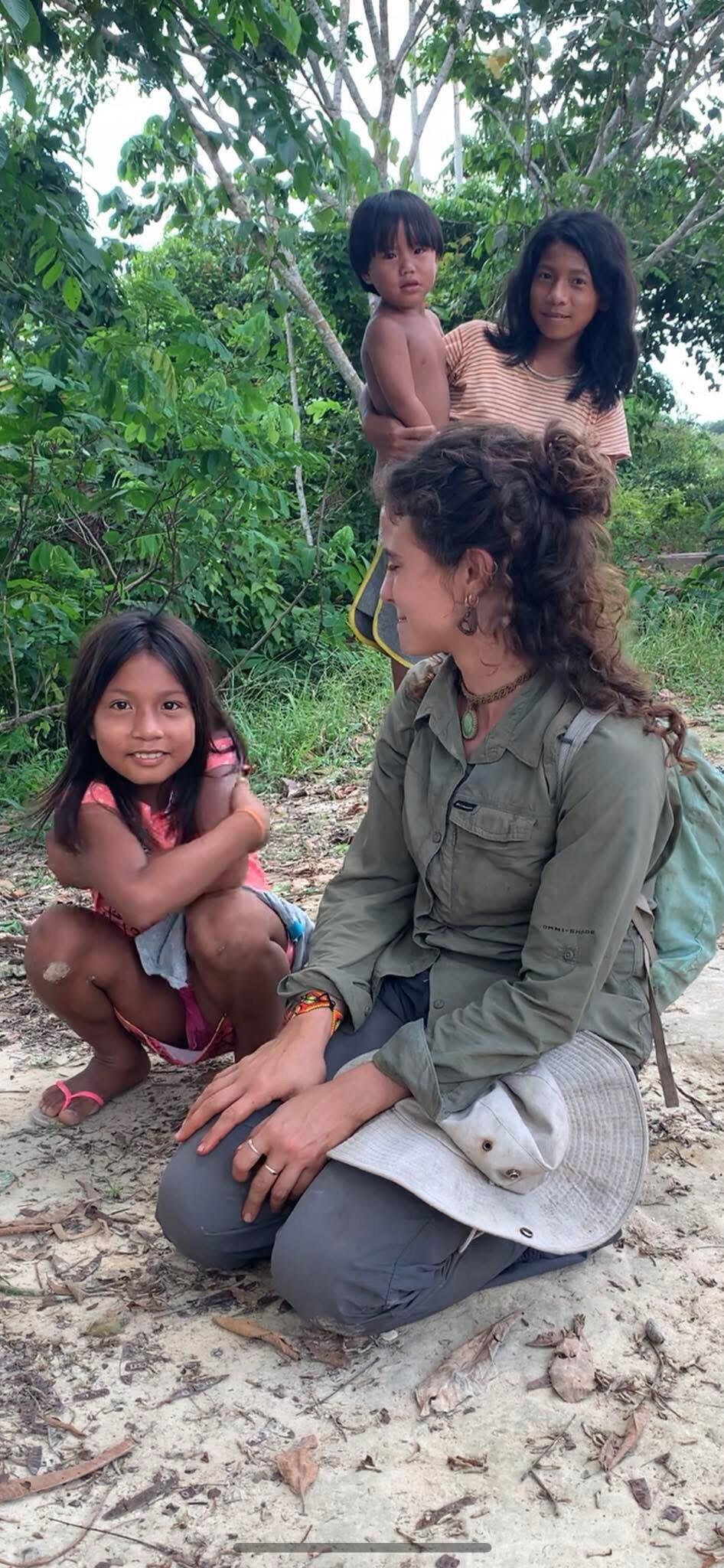
Hadar with girls from the Mayoruna tribe
(Photo: Guy Steinbruch)
13 View gallery
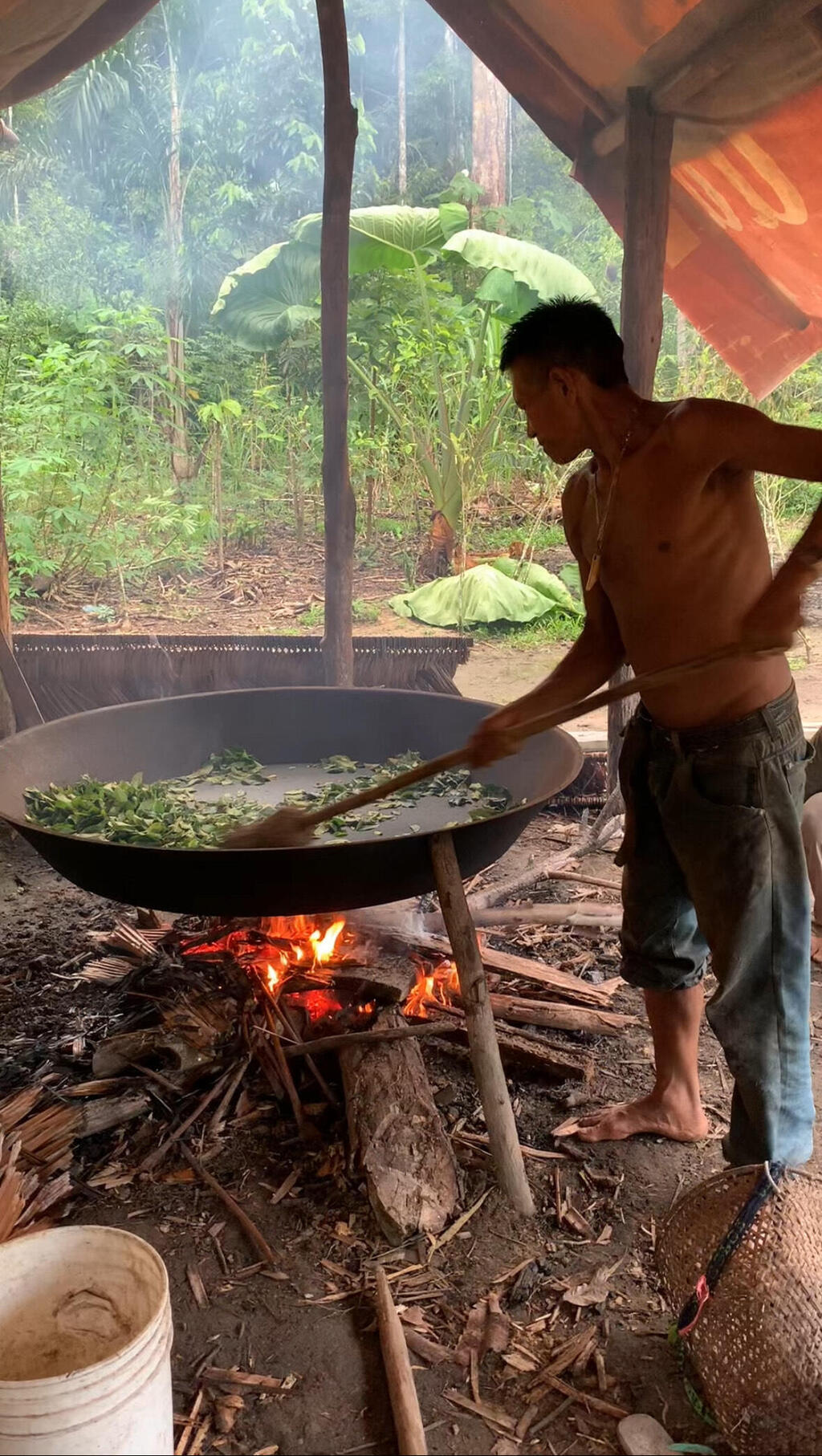
Fermin cooking coca leaves to prepare mambe powder
(Photo: Guy Steinbruch)
13 View gallery
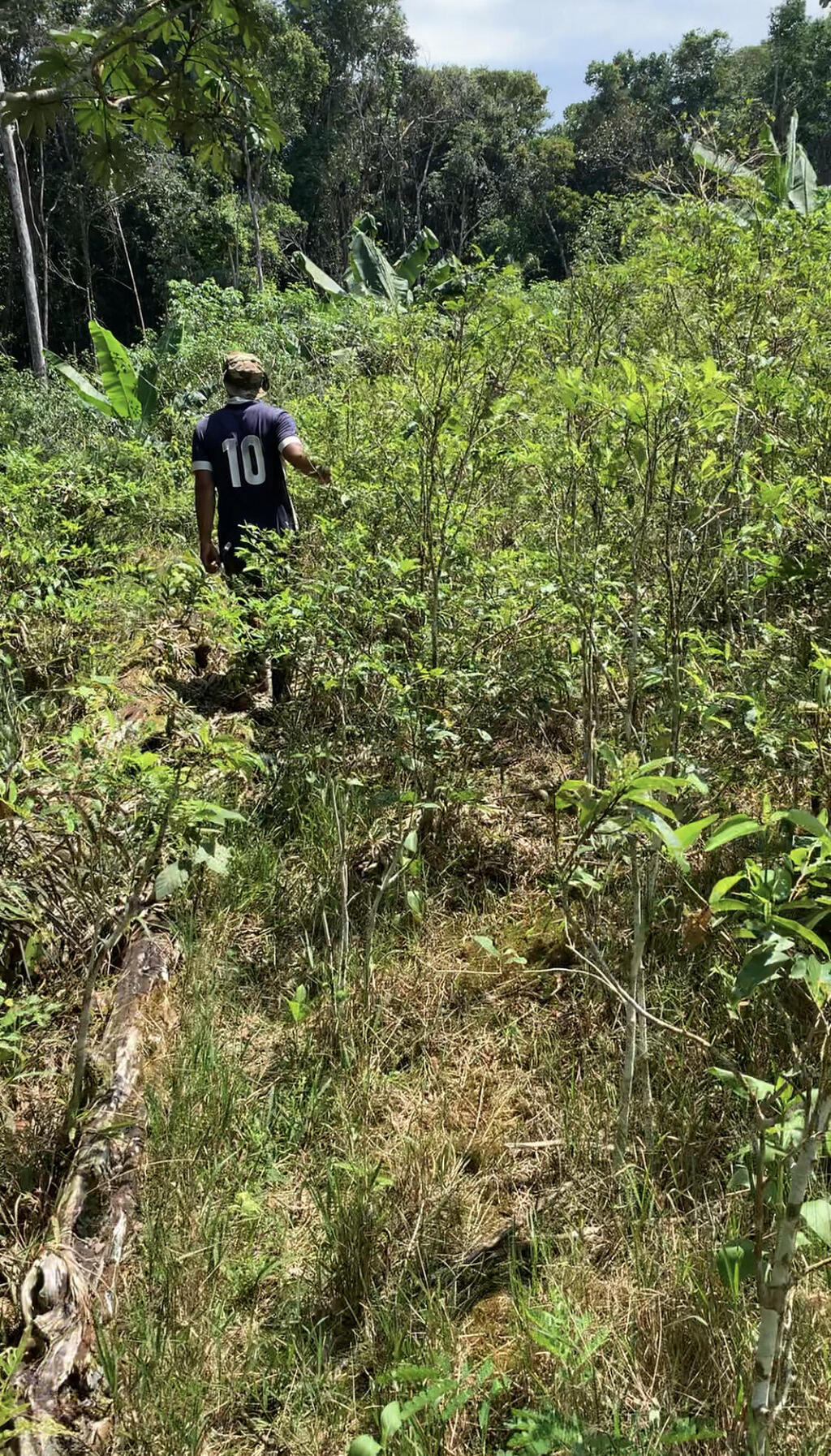
A coca field
(Photo: Guy Steinbruch)
13 View gallery
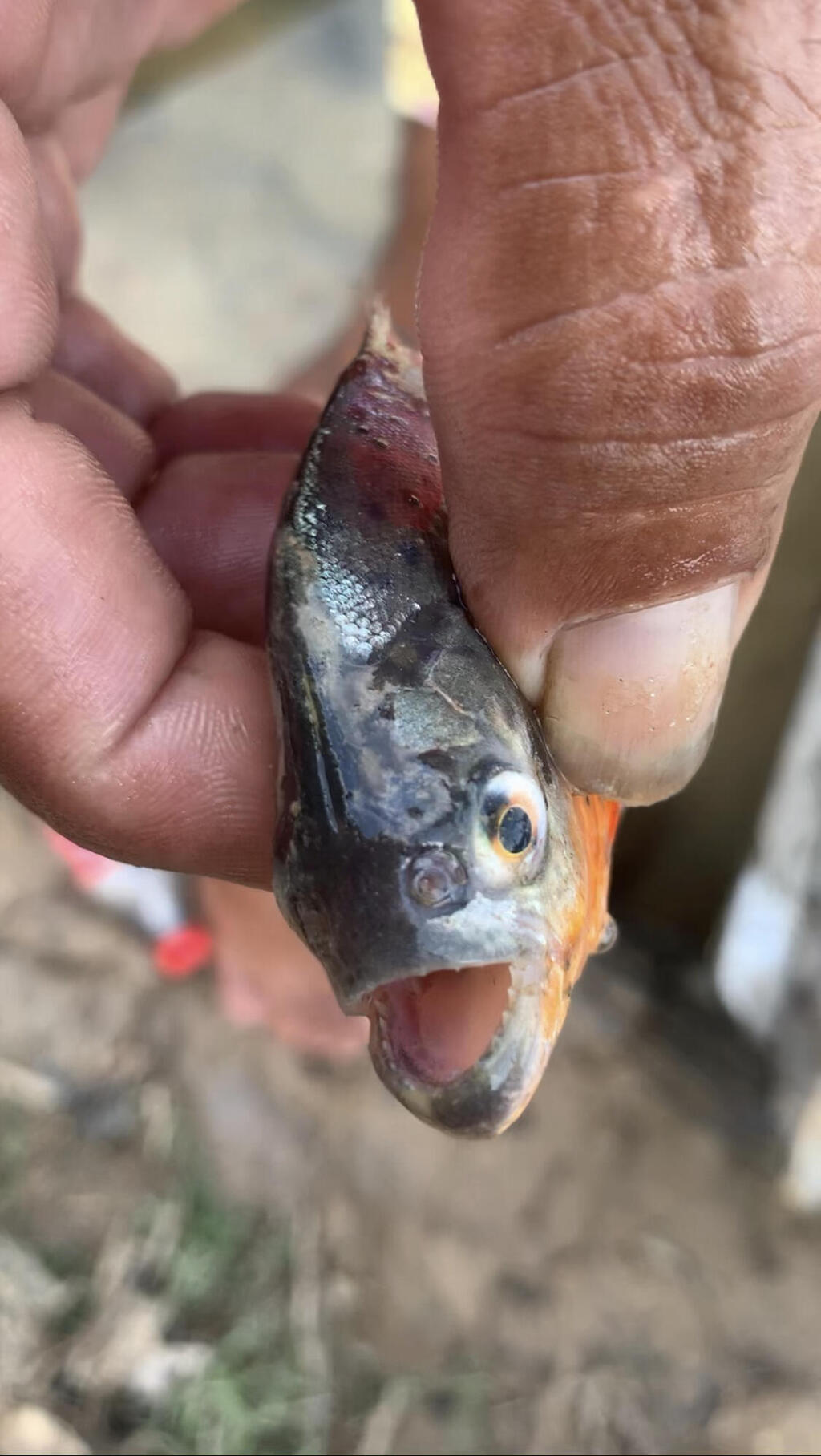
A piranha
(Photo: Guy Steinbruch)
13 View gallery
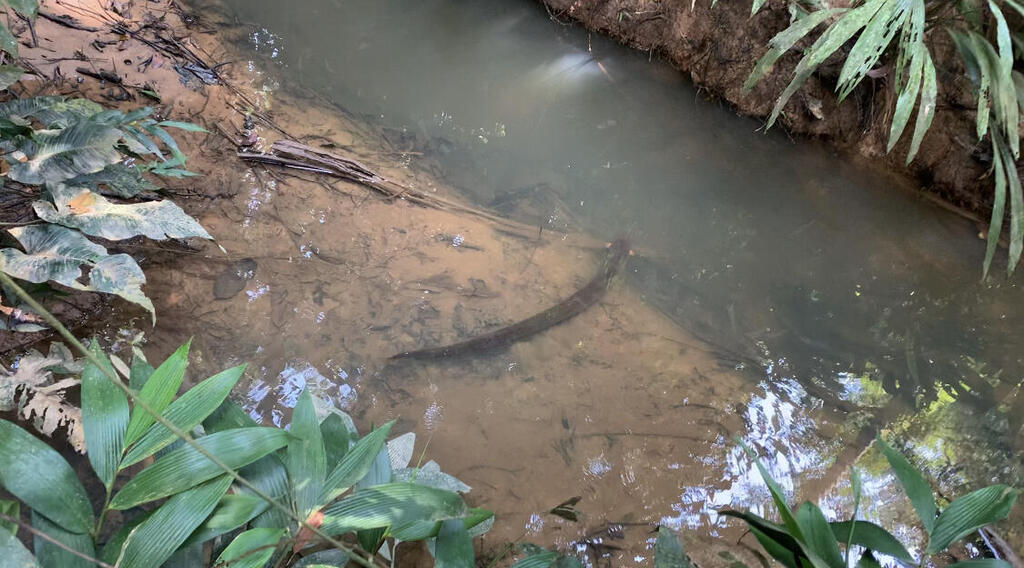
An electric eel, a highly dangerous animal
(Photo: Guy Steinbruch)
13 View gallery
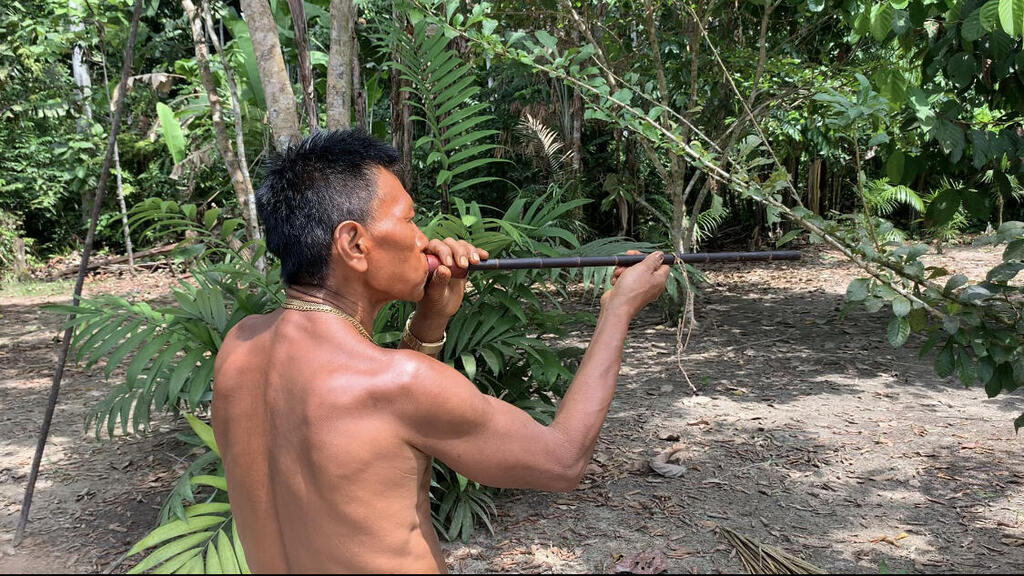
Fermin teaching how to hunt
(Photo: Guy Steinbruch)
How do you survive such harsh conditions?
“The jungle breaks you at first. If you rush in, you collapse. It took me three months to feel comfortable walking alone, and I even got lost once. You disappear into the forest in seconds. The key is not to arrive with commands but with listening. To behave like a child. To learn quietly. You have no control, and you have to believe things will be OK.”
How much does a deep jungle journey cost?
“Everyone thinks it costs thousands of dollars. The truth is the opposite. A five-week journey cost us about 2,000 shekels (about $647). It’s a partnership with locals, not a service you buy.”
After years among ancient tribes, Steinbruch’s conclusions are far from romantic. “There’s alcoholism, pressure from civilization, shrinking living spaces and restrictions on hunting. Behind the “noble savage” fantasy is a harsh reality,” he said.
“These are not easy lives. But there’s also envy. They’re far more self-reliant than we are. To disappear for weeks in the jungle without a phone, without Google, and survive, that’s a human strength we’ve forgotten.”