
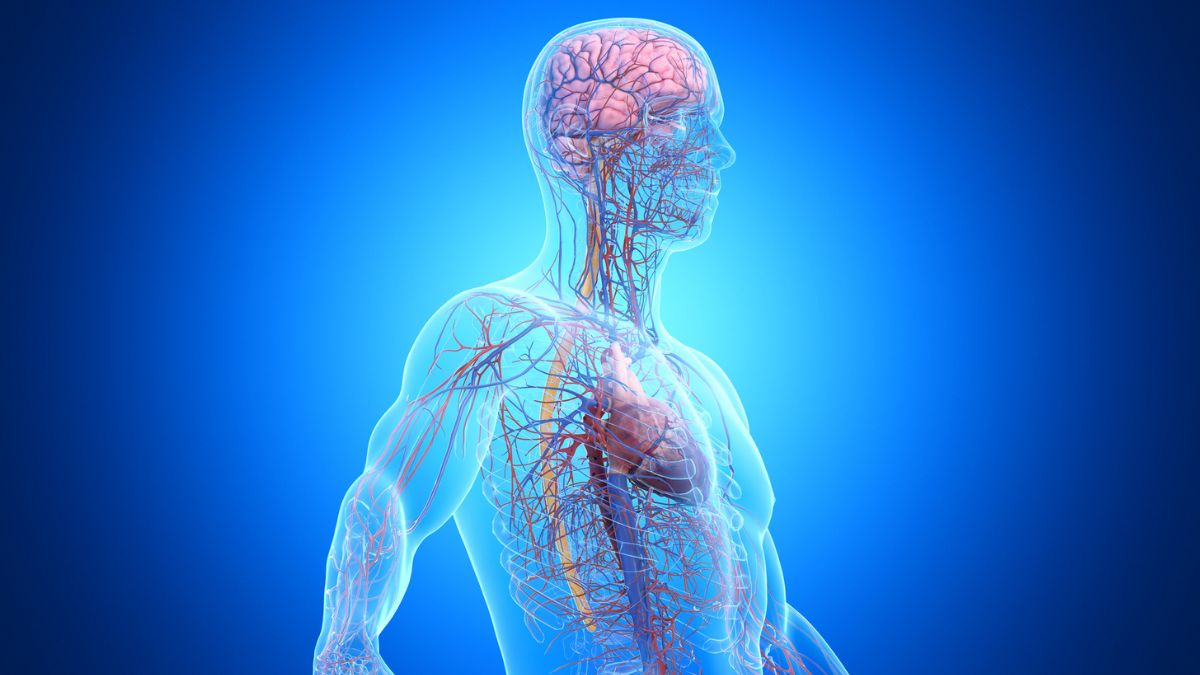
Some forms of dementia may not be confined to the central nervous system; they may not even begin in the brain.
A systematic review of more than 200 studies has now found that as many as a third of all dementia cases are tied to diseases outside the brain.
That’s nearly 19 million dementia cases globally.
The findings join growing evidence that suggests there are many distinct subtypes of dementia and not all of them necessarily originate in the brain.
There’s a chance that some peripheral diseases are actually playing a role in cognitive decline.
The recent global review, led by scientists at Sun Yat-sen University in China, identified as many as 16 culprits using data from all over the world.
The top five peripheral diseases that most strongly correlated with increased dementia risk were gum disease, chronic liver diseases, hearing loss, vision loss, and type 2 diabetes.
Slightly weaker correlations were observed for osteoarthritis, kidney disease, cardiovascular disease, chronic obstructive pulmonary disease (COPD), and immune-mediated inflammatory diseases, like multiple sclerosis and inflammatory bowel disease.
The review does not prove causality; however, the authors say that their findings “indicate the potential to mitigate dementia incidence by proactive prevention of peripheral diseases.”
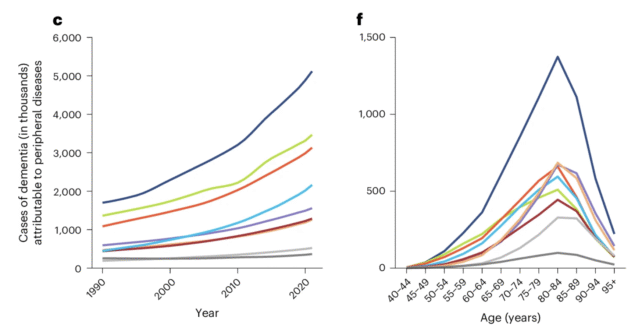 Temporal trends in cases of dementia from 1990 to 2021 (c) and variations across age groups (f). Dark blue = audiovisual disorders; green = periodontal diseases; pink = cirrhosis and chronic liver diseases; light blue = type 2 diabetes; purple = chronic kidney disease; red = osteoarthritis; light grey = COPD; dark grey = immune-mediated inflammatory diseases.
Recently, studies have found that dementia is closely tied to a whole host of peripheral health issues, including blood sugar spikes, type 2 diabetes, hearing loss, vision issues, gut inflammation, and gum disease.
Initial research even suggests that hearing aids may help prevent dementia, and treating liver cirrhosis might help patients avoid cognitive decline.
Some drugs for diabetes or insulin issues have even shown they can unexpectedly impact the brain, potentially boosting cognitive health.

Scientists aren’t fully sure why dementia is linked to these other peripheral health issues, or why treating one may help the other, but they are keen to learn more.
Even though the brain is kept in a sort of protected ‘ivory tower’, largely isolated from the rest of the body, it is still connected to peripheral organs in crucial ways, many of which we are just beginning to understand.
Given the brain-gut axis, the brain-bone axis, the brain-immune axis, and the brain’s connections to the liver, heart, kidneys, skin, fat, lymphs, and muscles, it’s harder than ever for neuroscientists to stay in just one lane.
The recent systematic review from China initially included 26 common peripheral diseases, all of which have been associated with higher dementia risk in the scientific literature.
According to meta-analyses, only 10 of those peripheral diseases lacked a significant link to dementia risk in the current systematic review, including hypertension, obesity, high cholesterol, depression, and thyroid disease.
Related: A Single Molecule May Explain How Blood Flow in The Brain Triggers Dementia
“Overall, these insights illustrate the multidimensional burden of dementia related to a wide range of peripheral diseases at the population level,” write the review authors, “highlighting the potential role of peripheral organ function in brain health and the possibility to target those influential peripheral diseases to mitigate the growing dementia burden.”
If that turns out to be true, then it may explain why so far, many dementia treatments focused on reducing markers of disease in the brain have failed in clinical trials.
Perhaps the assumption that cognitive decline starts in the brain has led drug researchers to focus on the wrong targets.
In 2022, neuroscientist Donald Weaver from the University of Toronto in Canada wrote a piece for The Conversation about how his lab, among others, was focused on a new theory of Alzheimer’s, which characterizes the disease as an immunological disorder at its core.
The immune system is found in every organ in the body, which means that if it were to fail for whatever reason, its impact on the body would be immense and diverse, much like the symptoms of dementia.
Other scientists have also suggested that dementia stems from a metabolic issue, caused by faulty energy production within cells, leading to widespread problems.
Even if dementia does start in the central nervous system, to define it solely as a neurological disease seems to miss a big part of the picture.
No brain is an island.
The study was published in Nature Human Behavior.