

Image © Adobe Images
The pound is heading for its biggest weekly loss against the euro since early December, as economic and political headwinds continue to weigh.
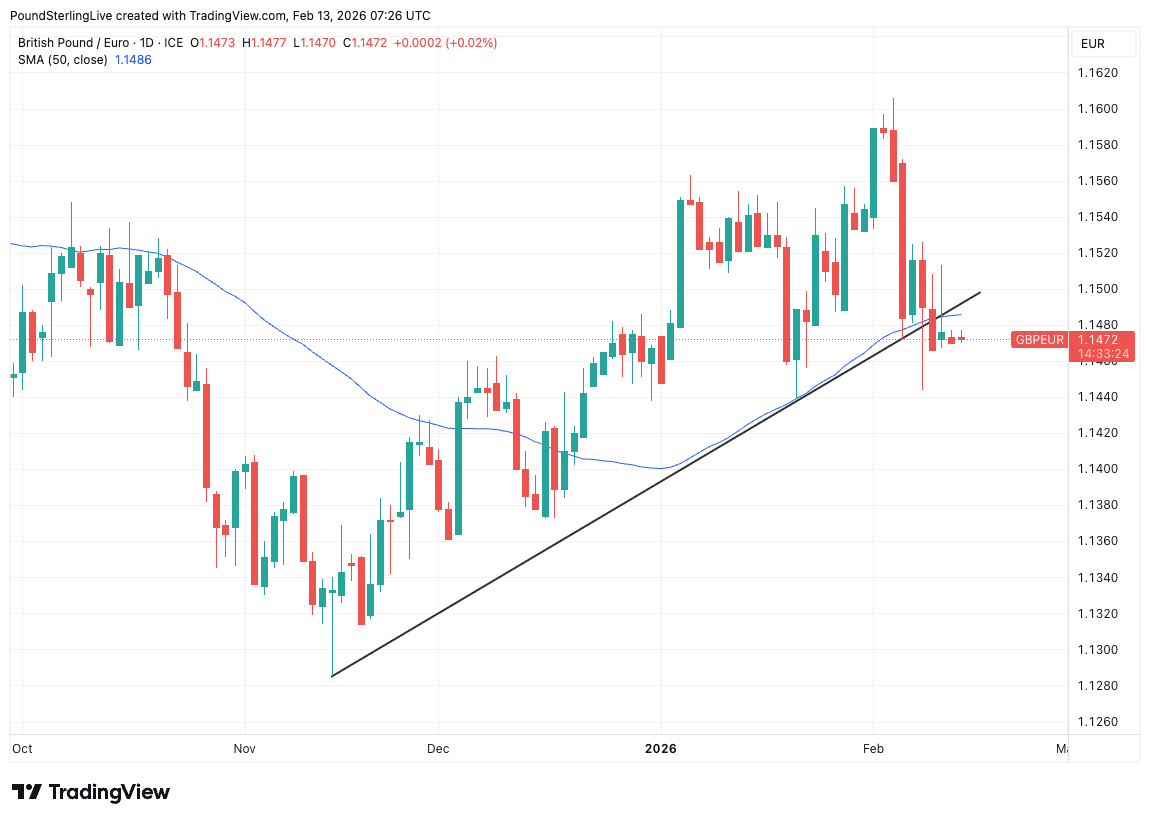
GBP/EUR edged down to 1.1466 on Friday, taking the week’s decline to 0.43% and marking a second consecutive weekly loss.
After a volatile start to the week, the pair appears to have found some footing in the mid-1.1460s and could consolidate around current levels into the close of play.
Compare Currency Exchange Rates
Find out how much you could save on your international transfer
Amount
From GBPUSDEUR
To EURUSDGBP
Estimated saving compared to high street banks:
£2,500.00
Compare Rates from Leading Providers →
Free • No obligation • Takes 2 minutes
Even so, the broader technical picture has deteriorated.
A second straight weekly fall confirms a turn in the short-term trend, and the pair is now trading below its 50-day moving average.
Technical lore suggests sustained breaks below this indicator increase the probability of follow-on losses, particularly when backed by a shift in fundamentals.
Sterling came under notable pressure on February 05 after the Bank of England acknowledged flat growth and a deteriorating labour market in its latest policy update, signalling it is edging closer to cutting interest rates again.
“So long as the recent weakness in hiring, coupled with the sharp slowdown in wage growth, continues, we expect a March cut from the BoE, followed by another move in June,” says Francesco Pesole, FX Strategist at ING Bank. “Our view remains broadly bullish on EUR/GBP on the back of this.”
ING targets 0.88 in EUR/GBP, implying 1.1360 in GBP/EUR, suggesting scope for further downside in the weeks ahead.
🎯 GBP/EUR year-ahead forecast: Consensus targets from our survey of over 30 investment bank projections. 📩 Request your copy.
Political risks have compounded the repricing in rates. Prime Minister Keir Starmer has survived a turbulent few days, but investors are increasingly wary that he may lean further leftward in policy to consolidate support.
Such a shift risks unsettling bond markets by raising concerns over fiscal discipline and budget sustainability.
“The current concern for markets is who would replace the Prime Minister if he were to go. Angela Rayner and Ed Miliband are amongst the bookies’ favourites – but a lurch to the left wouldn’t go down well with bond markets. In this scenario, we would likely see further downside pressure on sterling and a steepening at the long end of the yield curve amid concerns about increased public borrowing,” says Marc Cogliatti, Head of Markets Risk Strategies at Validus Risk Management.
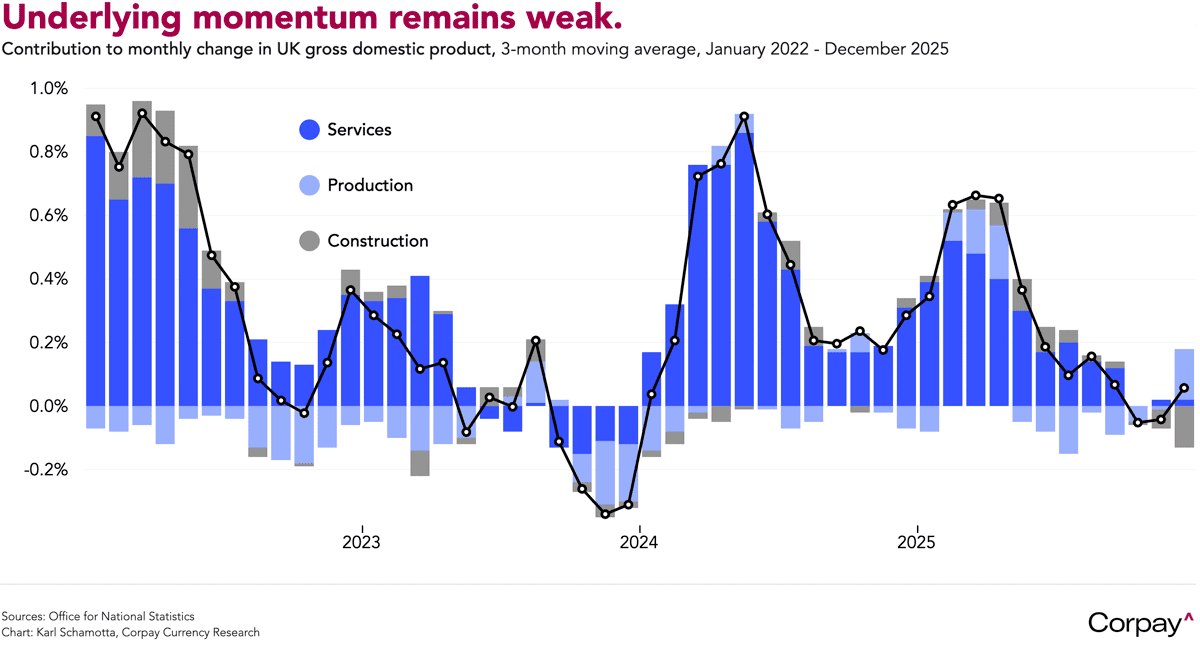
This week’s UK economic figures for the fourth quarter of 2025 confirmed an economy stuck in low gear, with the cyclical rebound required to materially support sterling remaining elusive.
“Optimists are few and far between as the government tumbles into another leadership crisis and global uncertainty levels remain high. The pound’s recent gains look fragile,” says Karl Schamotta, .
Looking ahead, sterling traders will focus on next week’s labour market and inflation releases for fresh direction.
Soft readings would reinforce expectations for further rate cuts from the Bank of England and likely push GBP/EUR lower again, extending what is shaping up to be the pair’s weakest run since the end of last year.
✳️ Secure today’s exchange rate for a future payment. You may also book an order to trigger your purchase when your ideal rate is achieved. Learn more.