
Science news
By James Ashworth
First published 13 February 2026
Ancient wolf bones are revealing how today’s wolves might survive in a warmer world.
Higher temperatures in the past caused wolves to eat harder foods, suggesting major changes for wolf-dominated ecosystems today.
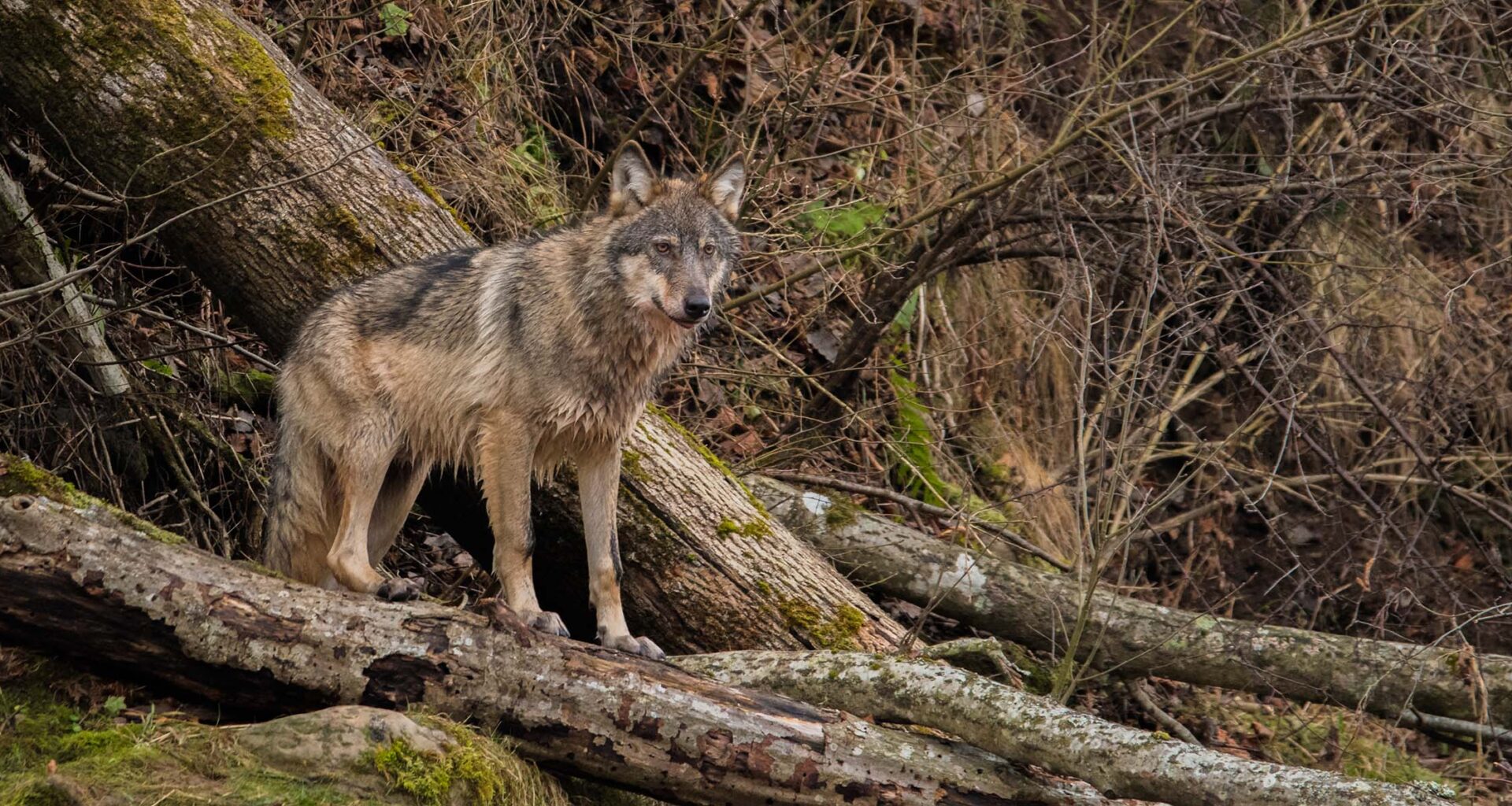
The diets of wolves are changing as temperatures rise around the world.
Researchers comparing the teeth of Ice Age wolves noticed that those that lived during warmer periods tended to eat more hard foods than in cooler times. They suggest this is because as rising temperatures and decreasing snow cover make wolves less successful at hunting, which forces them to eat more of the animals they do catch, including the skeleton.
Comparisons with twenty-first century wolves show that their teeth are worn in a similar way to their ancestors that lived during past warmer periods. It suggests that, as our climate gets even hotter, wolves may find it increasingly difficult to cope.
Dr Neil Adams, our Curator of Fossil Mammals and co-author of the research, adds that this link between wolves and the climate is one that’s previously been overlooked.
“Climate change isn’t listed as a threat to wolves globally,” says Neil, “but new investigations are showing this is unlikely to be true, especially for remote populations.”
“Our research suggests that future conservation and reintroduction strategies need to take snow cover and climate into account to ensure success. Without doing so, wolves may find it increasingly difficult to find food in their natural habitats.”
The findings of the study were published in the journal Ecology Letters.
Ice Age wolves
For hundreds of thousands of years, the grey wolf has been one of the Earth’s top predators. After evolving from a smaller ancestor, Canis mosbachensis, around 450,000 years ago, it spread across the northern hemisphere and subsequently gave rise to the domestic dog.
Over this time, wolves have had to endure numerous changes in the planet’s climate. The cycles of the Ice Ages repeatedly changed their habitat and available prey, providing an insight into how modern wolves might be being affected by climate change today and into the future.
The team turned to museum specimens of Ice Age wolves from the UK to investigate, including some in the fossil mammal collection we look after. They focused on wolves from 200,000 years ago, when average winter temperatures were between 0°C and −5°C, and 120,000 years ago when the UK was warm enough that hippos lived in London!
By taking moulds of the teeth, the team created precise replicas that captured all the fine details. These casts were then scanned on a specialist microscope at the University of Leicester to reduce the risk of damaging the original specimens.
In particular, the team were interested in examining the microwear on the teeth – the microscopic grooves and scars on their enamel surface formed during chewing.
“Studies on modern mammals show that the tooth microwear is strongly linked to what an animal was eating in the last few days to weeks of its life,” Neil explains. “Microwear can’t tell you precisely what it was eating but can tell apart harder or softer diets.”
“Animals that eat bone, for instance, have complex tooth surfaces with deep pits and scratches through chewing on hard material, while animals eating softer foods like flesh have much less complex microwear patterns. Wolves can do both, depending on the food that’s available, so we wanted to see how the climate may have impacted their diets.”
How are wolves adapting to climate change?
Comparing the teeth from Ice Age wolves living during warmer and cooler periods, the team saw clear differences in their microwear.
The study’s lead author, Dr Amanda Burtt from the University of Bristol, says that wolves from cooler periods had less complex tooth surfaces than those in warmer periods, suggesting they were eating more flesh and other soft foods.
“When it’s cold and snow covers the ground, the deer and other herbivores that wolves prefer to hunt can’t access as much plant food so they’re generally weaker,” says Amanda. “They also find it more difficult to get away through the snow and ice on the ground, so wolves are more likely to hunt successfully.”
“When it’s warmer, the reverse is true. Prey have more food and tend to be fitter, making it more likely they’ll get away in snow-free landscapes. To cope with reduced hunting success, wolves can’t afford to just eat the soft parts of the animal. They have to eat the harder parts, such as bone, as well.”
The team then examined the microwear of living wolves. As wolves were driven to extinction in the UK centuries ago they had to turn to animals living in Poland because it has a climate and environment similar to the UK before humans transformed the landscape.
Polish wolves seem to be responding in the same way as their ancestors did in warmer periods, by fully eating carcasses. As wolves play an important role in controlling herbivore numbers, this could drive wider changes in their ecosystem as prey numbers increase.
Wolves may also switch to new ways of finding food as the planet heats up even more. While they may struggle in their natural environments with continued global warming, landscapes altered by humans could provide new opportunities.
“Wolves have coped with changes for hundreds of thousands of years, so they are likely to find new ways to adapt,” Amanda says. “They might hunt growing populations of prey such as deer in agricultural areas, eat roadkill or target smaller animals such as beavers.”
“However, these options won’t be possible for all populations – especially those in more remote areas. These wolves will likely need more targeted conservation support to ensure that these populations, and the ecosystems that depend on them, persist in a warming world.”