
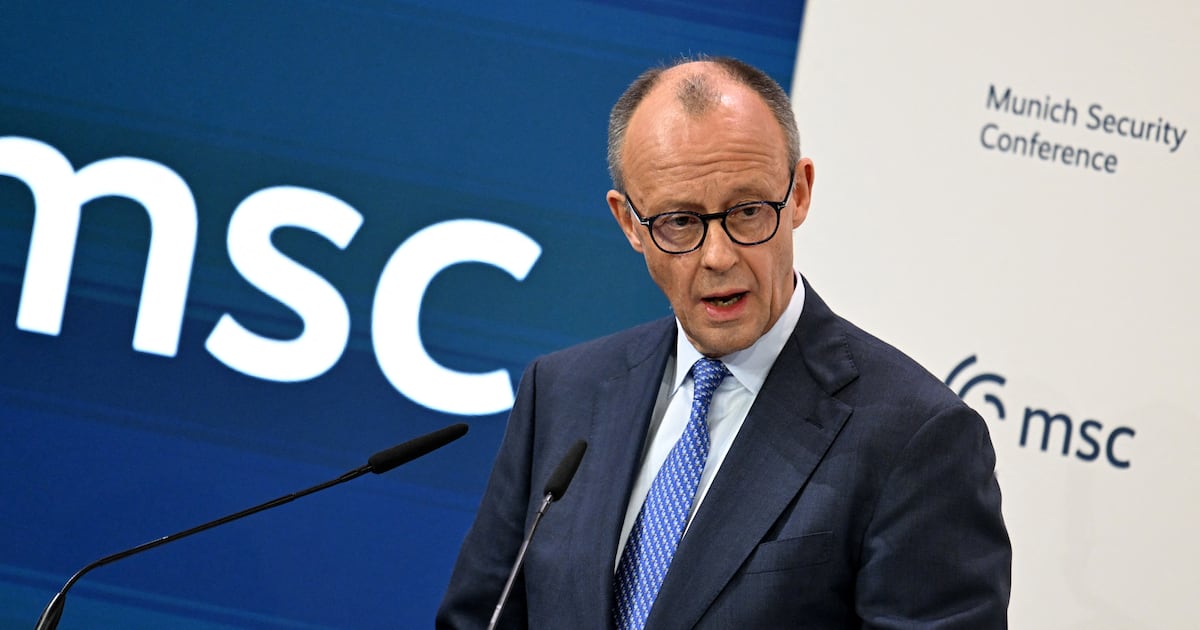
German chancellor Friedrich Merz has called for Europe and the US to “revive and repair” the transatlantic relationship, warning that not even Washington is powerful enough any more to go it alone.
Merz swung from conciliatory to challenging in his Munich Security Conference opening address, warning the US not to overestimate itself by thinking “great power politics” were sustainable in the long term.
A year after a migration broadside against Europe by US vice-president JD Vance, Merz warned that the rise of China meant Washington’s leadership role in the world was no longer unchallenged, “and perhaps it has even been gambled away”.
“Even the US will come up against the limits of its powers if it decides to go it alone,” he said, describing Nato as an asset – not a liability – for even its largest member.
[ Breaking up is hard to do: Europe confronts end of the old orderOpens in new window ]
Merz acknowledged long-running US criticisms of European freeloading in Nato, but insisted his country, and other European alliance members, were now taking their membership obligations seriously.
They had shaken off a “self-inflicted dependency” on the US security shield, he said, and using record military spending to erect a “self-supporting European pillar” for the alliance.
Merz pointed to the recent Greenland crisis, when Europeans united to face down Donald Trump’s annexation threats, as a taste of what this future strategy might hold.
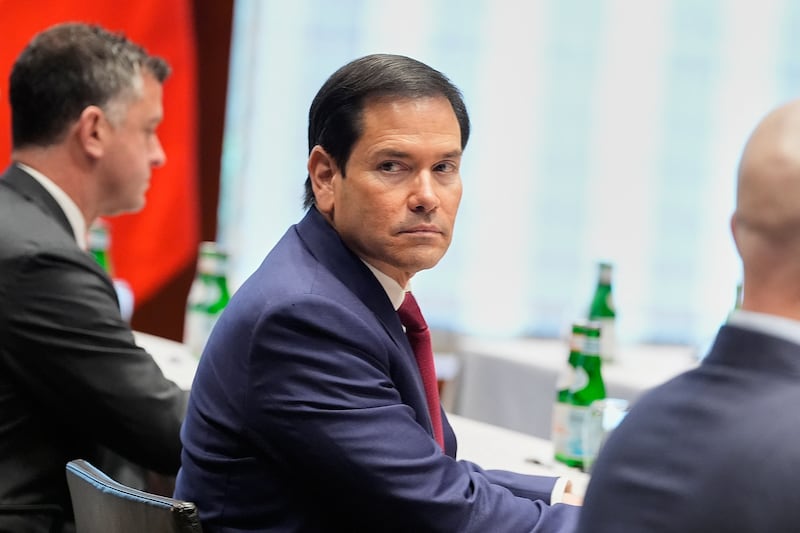 US secretary of state Marco Rubio in Munich on the sidelines of the Munich Security Conference. Photograph: Alex Brandon/AFP/Getty
Nodding to Danish prime minister Mette Frederiksen in the Munich audience, he said: “She knows that she can depend on European solidarity with no ifs or buts.”
With a nod to the fears of eastern Nato members vis-a-vis Russia, in particular the Baltic states, the German leader added that European alliance members would “not accept zones with different levels of security”.
For all its partners’ differences, and with differences in the future likely, Merz pointed out that Nato remained the “most powerful political alliance in history” and was, in turn, part of a postwar order to which European countries remained committed.
Turning to US audience members, he noted that “even strategists in the Pentagon” acknowledged the limits of US power and influence – and the perils of autocracy.
“We Germans know that a world in which only power counts would be a dark place,” he said.
“Our country took this path in the 20th century to the bitter – and evil – end.”
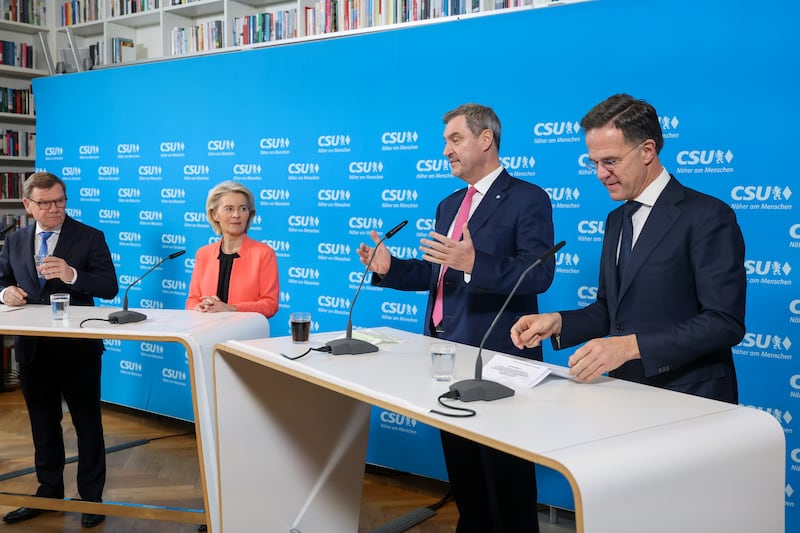 Johann Wadephul, Germany’s foreign minister, Ursula von der Leyen, president of the European Commission, Markus Soeder, leader of the Christian Social Union and Mark Rutte, secretary general of Nato at the Munich Security Conference. Photograph: Alex Kraus/Bloomberg
A year into US president Donald Trump’s second term, the Munich gathering is taking place under the heading “under destruction”.
US secretary of state Marco Rubio will address the conference on Saturday morning, followed by Wang Yi, his Chinese counterpart and Politiburo member.
Rubio will meet Ukrainian president Volodymyr Zelenskiy who, in turn, will meet the German, French and UK leaders.
US analysts expect Rubio to remain consistent on Trump’s policies in Munich but less contentious, seeking areas of co-operation on shared global and regional concerns, including the Middle East and Ukraine.
Representing Ireland is Helen McEntee, Minister for Foreign Affairs and Minsiter for State for European Affairs and Defence Thomas Byrne. They will hold meetings with counterparts and partners from European, the Middle East and North America.
McEntee said Ireland was not immune from “the effects of an increasingly volatile world”.
“Like our EU partners, Ireland recognises the importance of strengthening both our national and collective preparedness across all aspects of security and defence,” she said.
McEntee said she would reaffirm Ireland’s commitment to a just and lasting peace in both Ukraine and Gaza.