
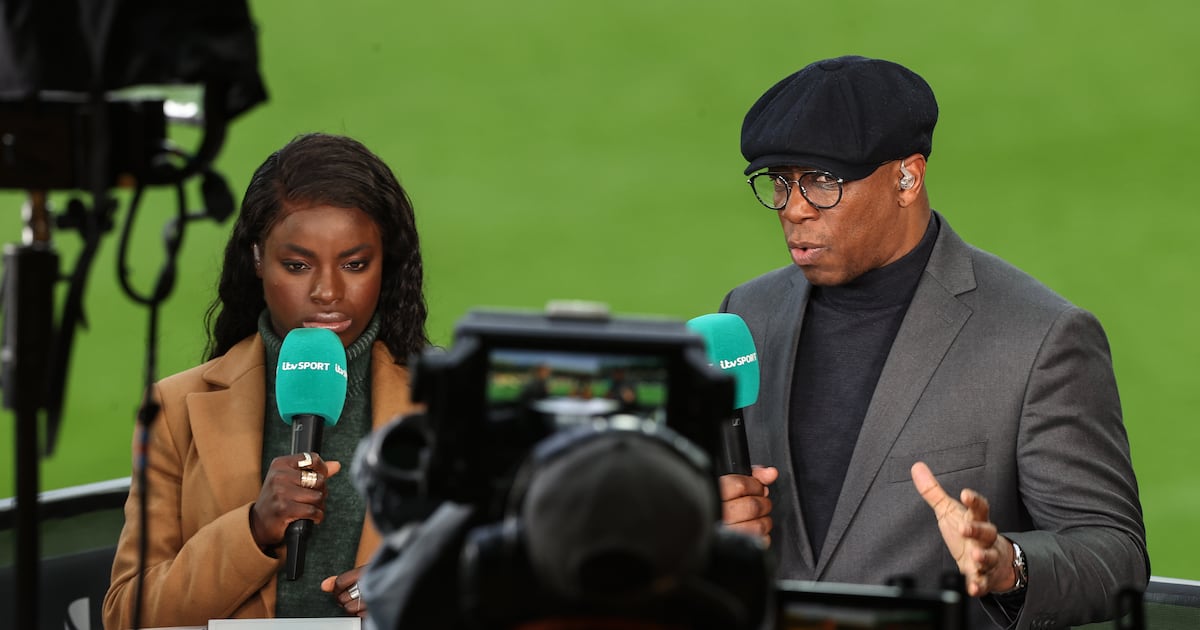
I wouldn’t put myself in the same bracket as Eni Aluko. She won more than 100 caps for England and became one of the first women to work as a football pundit on TV. She helped pave that path. But as a now retired player too, who also does some media work, naturally enough I took an interest in the controversy surrounding her latest remarks on male pundits working in the women’s game. Her argument is that they are reducing media opportunities for female pundits, Aluko seeming to take particular issue with Ian Wright.
There’s really very little in what she has said that I agree with, there’s a complete lack of realism about her complaints, but the pile-on she has received, from all quarters, has been grim. In some senses, it speaks to her grievances, especially those around race and gender, both of which, of course, have been at the centre of so much of the abuse thrown at her.
She became even more high profile when Joey Barton was found guilty last year of abusing her online, that whole ordeal making her a target of the mob among his mass following – so many of whom are basically “incels”. And it’s all kicked off again with her latest comments.
There’s an element too in this of people getting a little bit uncomfortable when a woman is that confident in themselves – and Aluko is a very confident woman. I could only respect her for having the backbone to go on Talksport with Simon Jordan earlier this week to defend her views, when Jordan is someone who could tie you in knots. But even when he was attacking her, she took it and never got heated. And she was very measured.
But I think she’s wrong. Of course there should be a place for men in the women’s game, so long as they know their stuff, as there should be for women in the men’s game, so long as they know their stuff too.
And Wright certainly knows his, having been a champion of women’s football for years. And because of his profile and popularity, media-wise he has probably done as much to promote the women’s game as anyone in England. So often men are asked to be allies in helping our game grow. That is what Wright has been.
You have to put your logical hat on. The women’s game is still in its growth phase, it’s all about capturing people’s interest in it, and you do that partly by using recognisable faces – such as Wright’s. Frustrating as it might be that a woman with 100-plus caps for England isn’t as recognisable, that’s just how it is.
So no, I don’t think he’s taking up a space that should be given to a woman, as Aluko argues. The fact is that we need men to help us grow our game, maybe they even need to be the face of it for now, until it can reach a point where, as Aluko suggests should happen now, they can play more of a supporting role rather than being front and centre.
I agreed with broadcaster Laura Woods when she said we can’t “gatekeep” women’s football. We have to do whatever is necessary to develop it, and for now that certainly means sharing that space with male pundits who are more familiar to the viewers.
Aluko just isn’t seeing the big picture, really. Which is more important: growing the game or getting more air time? She has been too focused on herself in this, on what she sees as a lack of opportunities because of the likes of Wright. You have to care more about the overall picture than your own small part in it.
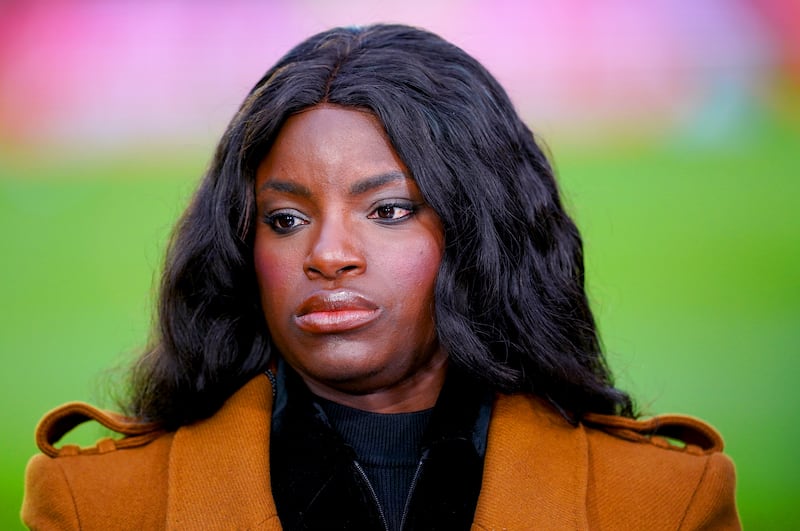 Eni Aluko won 105 caps for England. Photograph: Mike Egerton/PA Wire.
But, again, I do admire her confidence through all of this. I certainly couldn’t cope with what’s been thrown at her, and there is no doubt that black voices in football – and beyond – can often be held to a different standard. We saw what the likes of Raheem Sterling had to put up with when he was coming through with England. There are still barriers for men on that front too.
All I hope is that the bile that has flown around in the last week won’t put off people hoping to work in the media after their playing careers end. The online community, in particular, can be very, very toxic. I wouldn’t be as confident in myself working on a men’s game as I would being a pundit in women’s football. That’s really down to the kind of rhetoric that’s out there, basically asking “why is she there?”. You end up feeling you don’t belong. If you have the confidence to ignore that, that’s brilliant, but I know I maybe soften my opinions for fear of getting something so wrong that it gets someone’s back up.
I’m very privileged to have got the opportunity to work in media. My experience has been mostly positive, especially with male pundits and presenters on RTÉ. I would have leant on Richie Sadlier a lot, he has always been really helpful. I’ve never been made to feel “less”, even when a famous person is sitting beside me.
The only negative comments I’ve had have been ones I went looking for – because I’m not confident and I want to see what people are saying about me. That’s not wise. You should really stay away from all that, just get your feedback from colleagues, friends and family, and be proud of yourself for doing it.
I hope for her own sake, Aluko has done that this week.