
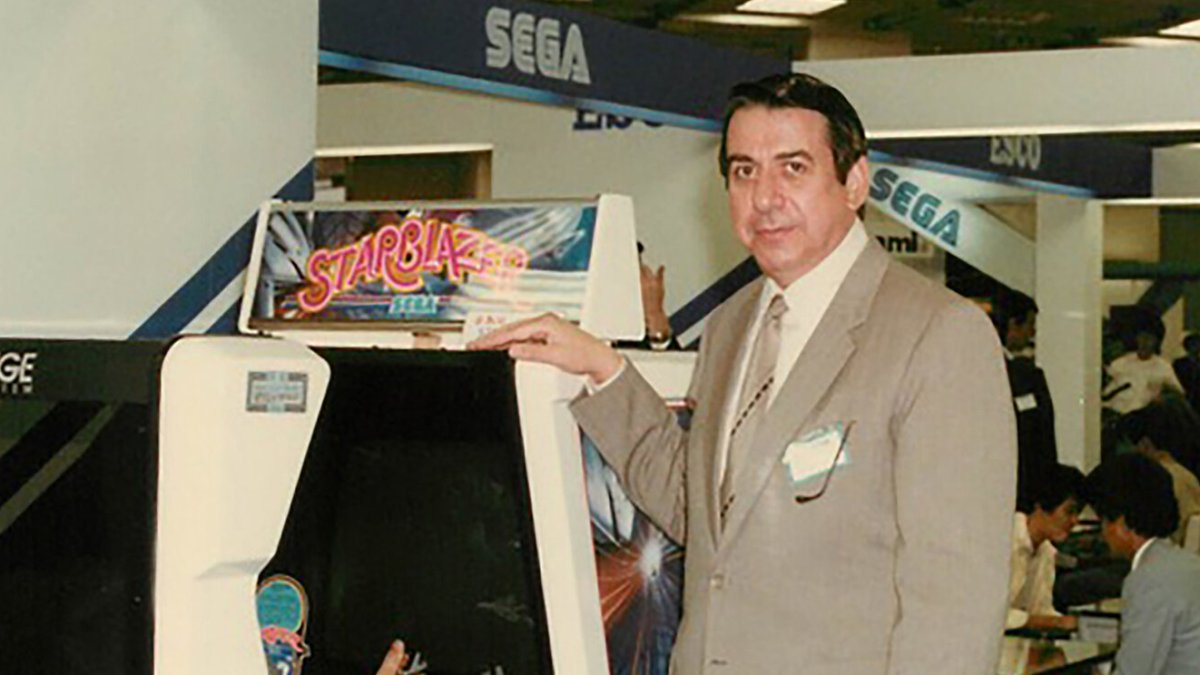
Photographic identification was essential to daily life in postwar Japan, whether citizens were going to work or school or buying rice rations. Yet acquiring a headshot was a hassle.
David Rosen noticed that people had to visit a studio and wait several days for the film to be developed. Surely there was a market for a cheaper, quicker and more convenient option — one that Rosen knew already existed in his native United States in the form of automated instant Photomat booths.
Rosen was familiar with Japan as a result of his tour of duty there with the US air force during the Korean War. He moved to Tokyo in 1954, imported dozens of booths and installed them in cinemas and department stores under the brand name Photorama. Waiting two minutes for photos rather than two days proved popular but Rosen soon had an eye on his next venture. He soon noticed that the struggling Japanese economy was flourishing again and working patterns were changing. People had more disposable income and more leisure time.
The young entrepreneur felt confident there was a demand for the kind of coin-operated arcade games that had been popular in America for years. It was a bet that set him on the path to co-creating one of the biggest video game companies in the world.
The premises hosting his photobooths agreed to allocate him precious space when in 1957 he pivoted to arcade games. As the Japanese market was far behind the US, he could buy second-hand Chicago-made games for the knock-down price of $200 each (about £1,700 today), although it took him more than a year to persuade the Japanese government to issue him an import licence.
“The Japanese had a real desire for hunting and shooting, so I brought from the US an assortment of rifle games,” he said in a 1996 interview. “The profits of a machine are made the same way as the profits of a theatre seat or a plane seat — it depends on occupancy and on the time it’s used … Our machines were constantly going — from morning to night. So the return was excellent.” Rosen soon placed arcade machines in every large Japanese city.
In the Sixties consumers grew more sophisticated and Rosen realised that dated games were no longer good enough: to beat rivals he needed to design and build cutting-edge electro-mechanical diversions. In 1965 he merged Rosen Enterprises with a Japanese company that had a factory and technicians and used the brand name Sega. The word is a portmanteau of Service Games, an enterprise founded by American former servicemen that supplied jukeboxes and fruit machines to international military bases in the Fifties.
He became president and chief executive of the newly formed Sega Enterprises. In 1966 it released Periscope, a submarine battle simulation in which players fired torpedoes at cardboard cut-out ships that moved on chains. Periscope scored a hit in Japan and was exported to Europe and the US, where Rosen boldly set an unprecedented per-play price of 25 cents that became an industry standard.
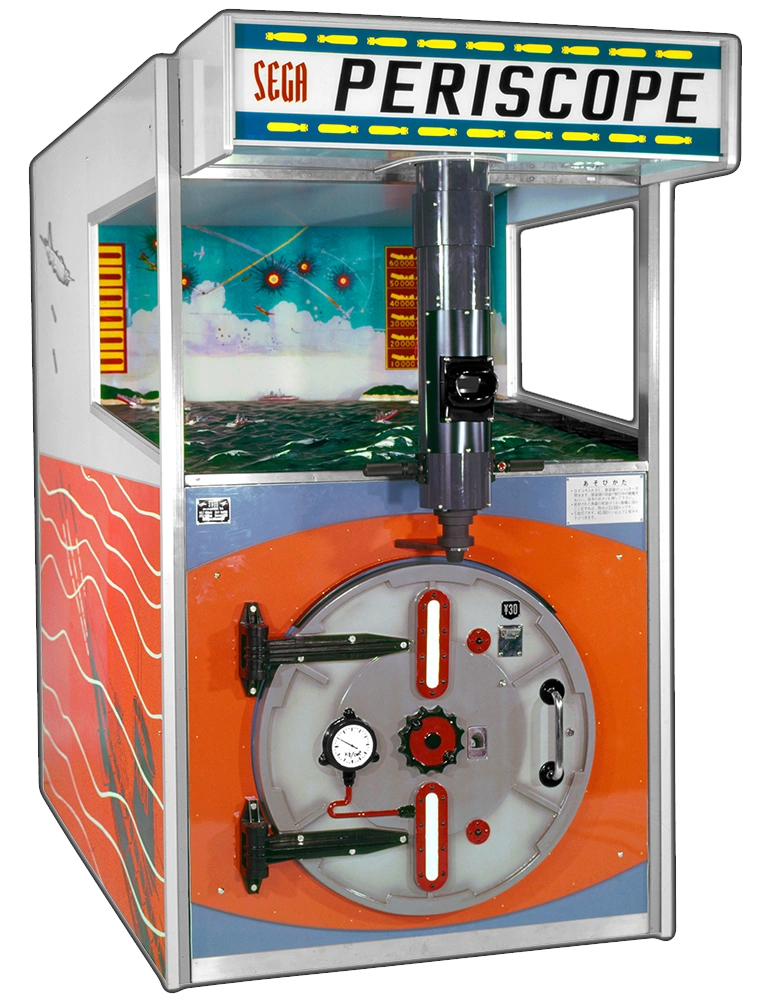
Periscope was one of Sega’s earliest successes
SEGA
It was expensive since most games cost only ten cents. However, Japanese export taxes meant that each machine cost nearly $1,300, roughly twice as much as an American-made game. Rosen persuaded sceptical operators that players would pay a premium for a superior product.
Sega then created eight to ten games a year. Rosen was eager to take the fast-growing company public but concluded it would be too challenging to do so in Japan. As a result, in 1969 he sold a majority stake in the business for $10 million to Gulf and Western, a now-defunct American conglomerate best known for owning Paramount Pictures. Rosen ran Sega from Los Angeles with the Japanese business as a subsidiary.
As arcades pulsated with young people slotting coins into Sega games, including the traffic-dodging Frogger and the scrolling shoot-em-up Zaxxon, as well as rival offerings such as Pac-Man, Donkey Kong and Space Invaders, Rosen’s company reaped $214 million in revenue in 1982. Overall, video games were estimated to be generating in excess of $8 billion in North America — more than the Hollywood film and pop music industries combined.
“It is eminently clear that computer video games are a sign of the times,” he wrote in Play Meter magazine that year. “And by that I mean the games are truly one of the early manifestations of an electronic revolution whose technology will personally touch, on an increasing basis, all of our lives.”
David Rosen was born in Brooklyn in 1930 to Samuel, an importer who also owned a chocolate factory, and Fay (née Sacks) and had fond memories of playing in the penny arcades at Coney Island not far from his home. According to the video game historian Alexander Smith, Rosen dropped out of Columbia University to join the military and worked as a scriptwriter and producer in Asia for the Armed Forces Radio Service, serving from 1949 to 1952.
He then started a US-based business in which Japanese artists painted portraits based on American photographs. After it failed he relocated to Tokyo and set up an import/export firm, dealing in small items such as cigarette lighters.
Rosen had a keen eye for trends, an obsession with staying ahead of the competition in a fast-changing environment and a steely determination cached behind an equable, friendly manner. An indoor golf venture flopped but he opened a successful bowling alley in Tokyo that proved so popular it operated for 22 hours a day.
Photographers angry at losing work to his Photorama machines protested to US diplomats, and import duties were steep, but being a foreigner had its advantages when it came to dealing with the Japanese mafia. “You’re supposed to pay your respects and acknowledge that you are now doing this business in their, erm, domain. And we didn’t. We failed to do this, just out of ignorance,” he said in 1996, referring to opening a booth in a Tokyo neighbourhood. “We didn’t realise that this particular party was so sensitive to the issue. He sent some emissaries to tell us of his displeasure. And so we made an apology, and one of our Japanese managers explained to him that we were, of course, a foreign company and very sorry we didn’t know better.”
In the Seventies and early Eighties, Rosen embarked on ambitious expansion projects, acquiring game developers and distributors and opening Sega arcades in American shopping malls. In 1982 he joined the board of Paramount Pictures. The video game boom abruptly crashed in the mid-Eighties and Rosen stepped down at the end of 1983 but partnered with other investors to acquire Sega’s assets for $38 million and make it primarily a Japanese company once again. Rosen remained in the US as chairman of a subsidiary, Sega of America.
As home computers surged in popularity and amusement arcades waned, it was clear that Sega needed to sell hardware and games directly to household consumers. So began the so-called console wars between Sega and another Japanese giant, Nintendo. Sega boasted the Master System and 16-bit Mega Drive, which Rosen named Genesis in the US. Its rival offered the Nintendo Entertainment System and Super NES.
Nintendo mainly pitched its products at pre-teens, with Sega aiming for older players. Gory graphics provoked a moral panic as politicians and parents fretted about the impact of violent video games such as Mortal Kombat on impressionable youths, but the controversy only seemed to add to the brand’s appeal.
While Nintendo dominated in Japan, Sega also generated billions of dollars in sales and was adept at adapting its advanced arcade games for a home audience. Sega outsold Nintendo in the US for a period in the early Nineties, largely thanks to the success of its Sonic the Hedgehog series.
Younger leaders including the former Mattel chief executive, Tom Kalinske, took the fight to Nintendo in the Nineties with aggressive marketing aimed at the MTV generation, but Rosen remained a senior executive until retiring in 1996. He married Masako Fujisaki in 1954; she worked with him in the early days at Sega and predeceased him last year. They had a daughter, Lisa. No fan of the spotlight, he led a private life in retirement and owned a mansion in Bel Air that was formerly home to Lord White of Hull, the late Hanson tycoon.
Grand ambitions to take on Disney by building dozens of next-generation interactive theme parks, envisioned as virtual-reality amusement centres, did not come to fruition. And when Rosen stepped down, Sega was losing the home console battle to a new combatant, the Sony PlayStation, and would in 2001 exit that sector altogether after the failure of its Dreamcast.
Still, millions of adolescents grew up adoring his company’s games and absorbing frenzied television commercials that screamed the company’s name. Rosen told the writer Keith Stuart that when he walked around Los Angeles, passers-by would sometimes recognise him and yell: “Sega!”
David Rosen, Sega co-founder, was born on January 22, 1930. He died on December 25, 2025, aged 95