
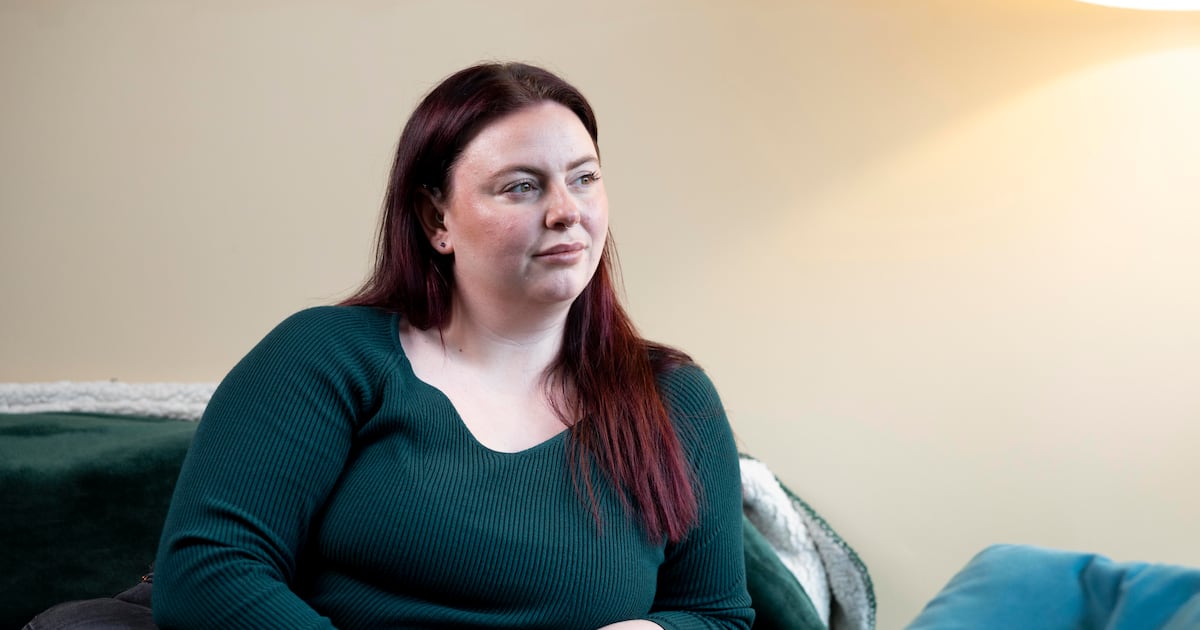
About 30 minutes after placing her first bid on a house in Tallaght in south Dublin last week, Yvonne Healy had already gone almost €30,000 above her budget.
Describing the property – which had an asking price of €360,000 – as being in “turnkey condition”, she was the second to bid on the home within minutes of it going live on the market.
Then, after multiple offers from several bidders in quick succession saw the price shoot up to €390,000, she pulled out.
Checking the online bidding platform again during her lunch break on Tuesday, the 32-year-old noted that bids had climbed to €414,000.
“It’s opened my eyes at just how disheartening this process is possibly going to be for us,” she says. “I’m prepping myself for the worst.”
Healy and her partner Carl have been looking for a house in the area for about the past five months.
A study carried out by the Economic and Social Research Institute (ESRI) published earlier this week found that buyers participating in such auctions are more likely to exceed their original budget and to bid higher than what they believe a property is worth.
Although she hopes to live in Tallaght long term, Healy, who works in finance, says the prices paid for houses in the area are “bizarre” and “sickening”.
“There are houses there to be bought in the second-hand market; it’s just unfortunate that the process that’s now in place isn’t allowing them to be bought at an affordable price, it’s gotten way out of hand.”
[ Explainer: Why home-buying process is so fraughtOpens in new window ]
Describing the commonly used online bidding process as “very easy”, she says she can “understand how people get caught up in it”.
While one in two participants of the ESRI study favoured a visible online bidding platform, which they believed to be fairer, the study found it inflated prices the most.
Sealed bidding systems, whereby single “best and final” offers are made, inflated prices the least, according to the study.
Describing the bidding process as “disheartening”, Healy says: “There’s no humanity any more, and I think everything is just to take advantage or ‘let me get as much as I can from people who are desperate to buy a home’, and I think that’s what’s more upsetting about it.”
Several buyers responded to an Irish Times call-out on their experiences. Some described houses being sold far in excess of the asking price after lengthy online bids lasting weeks, with many bidding far in excess of their intended spend.
Others, such as Meg Malone, raised concerns over “ghost bidding”.
“Often, we questioned how legitimate counter offers were,” she says.
Estate agents argue that online bidding systems have stronger safeguards against ghost bidding than more “old-fashioned” processes, such as relying on agents to update buyers by phone or email.
However, in a survey of 476 buyers included in the ESRI study, 14 per cent suspected ghost bidding, and while there is no way to verify this, the finding signals a “lack of trust” in the process, according to the report.
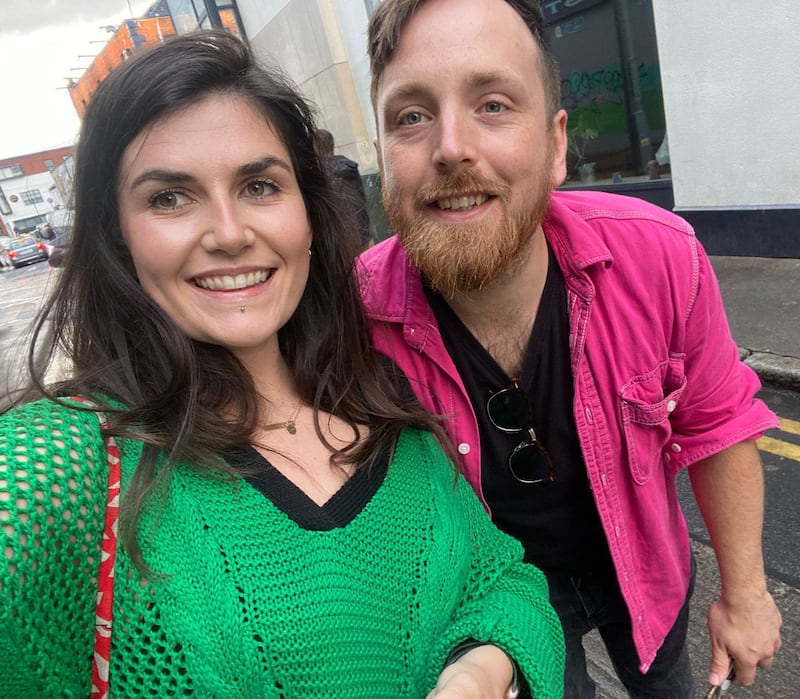 Meg Malone with her husband Glenn
Malone, who now lives in her new home in Baldoyle, Dublin, with husband Glenn, described their search as “long and painful”, having viewed more than 80 properties and being outbid on 15.
“Every property we bid on was well within our budget at asking price, but still we were outbid time after time,” she says.
On buying their home, the 32-year-old says they were “lucky” as they “only went €30,000 over the asking price” of €425,000, having seen other properties achieve €60,000 over.
[ Irish Times view: Odds stacked against buyers Opens in new window ]
“It was a soul-destroying process and we still pinch ourselves that we came out the other side and are actually homeowners now, which is ridiculous when we worked and saved so hard to be in the position to buy a property, but the bidding wars make it near impossible,” she says.
The process from placing the first bid to her offer being accepted took five weeks.
Elizabeth Surgeon, who likens online bidding to gambling, believes the system should be banned.
 Elizabeth Surgeon with her husband Darren and daughter Molly. The couple had to drop out of one bidding competition after the property reached €80,000 over its asking price
She and her husband, Darren, along with their two-year-old daughter Molly, have had to move in with her mother after they sold their house in Inchicore, Dublin, in September.
Looking to upsize, the 36-year-old veterinary nurse says they found a “beautiful home” with an asking price of €495,000. However, they dropped out after the property reached €80,000 over its asking price.
She says she was told by an estate agent that if they offered €600,000, they “might take it off the market”.
The couple is now bidding on other homes but feel “hopeless, as everything we view seems to skyrocket” while estate agents allow bidding to “drag on”.
Surgeon is one of several buyers who believe houses are being “massively underpriced” to drive intensive competition.
Chrissy Hughes, a 35-year-old who runs an information and support group on Facebook for first-time buyers in Ireland, says online bidding can create “a sense of urgency” in a “competitive environment”.
“When you see the bids coming in live, it’s very hard not to react. I think you can sometimes place a bid without thinking too much about it,” she says.
In 2024, she entered this competitive environment and ended up paying €80,000 over the asking price. Having paid €575,000 for the house in Dublin 7, Hughes says she knew the property would go far beyond the asking price.
Although online bidding platforms are “more efficient”, she says their quick nature removes a “pause” to protect buyers from making “emotional decisions”.
However, she believes much of the frustration is not about online platforms, but supply.
“In a severely undersupplied market, any bidding is going to feel intense,” she says.
Several estate agents claim buyers prefer online bidding rather than “old-fashioned” systems such as by phone or email, which gave rise to concerns over “phantom bidding”.
[ When one-third of Irish homebuyers expect to be ripped off, it’s a big problemOpens in new window ]
Marian Finnegan, chief executive of estate agent Sherry FitzGerald, says online platforms are favoured as they are “more transparent”.
Sherry FitzGerald launched its own version in 2018, and, as with other large estate agents, bidders must provide identification and proof of funds to register, with all users undergoing the “same scrutiny”.
A record of all bids is retained, Finnegan says, describing the industry as “heavily regulated” by the Property Services Regulatory Authority (PSRA).
In a statement, the PSRA says it is “considering the contents of the ESRI report”.
“Even if it wasn’t on an online platform, every estate agent has to keep a record of all transactions. I think people are somewhat comparing what it was like to purchase a property 30 years ago in an unregulated industry to what it’s like today,” Finnegan says.
She maintains that “frenzied activities” in the marketplace are a result of the “dreadfully low, inadequate supply” of housing.
“If people are behaving erratically, either by ringing and increasing their bids above what they really want to pay or by bidding on the platform, that is a function of how distressed they are because of the lack of supply in the marketplace, rather than the mediums themselves.”
Orla McMorrow, deputy chief executive of estate agent DNG, says its online bidding platform was brought about to alleviate fears of “phantom bidding”.
“If you’re dealing with any reputable agency, you can be sure that there aren’t phantom bids,” she says.
Asked about beliefs held by some buyers that properties are underpriced to generate intensive bidding, she says it is not DNG’s policy to do so. “It may be other agents’ policy, but it’s not ours.”
She disagrees with the ESRI’s finding that buyers overpay in online bidding, saying buyers are paying more because “more people are chasing less property”.
“It’s important to remember that it is our duty as an agent to get the best price available for the vendor. We act for the vendor and we are duty-bound, that is our role, to get the maximum price in an open market situation,” she says.
Bobby Geraghty, director of Hunters Estate Agent, meanwhile, says buyers have come to “almost expect to be paying in excess of the asking price”.
Using an online portal for most sales, he says they provide a “level playing field” for verified buyers and denies they are to blame for overpaying.
Instead, he says, it is “basic economics”.
“We have a pent-up demand and we have a lack of housing in the country, whether it’s Dublin or elsewhere, and that’s not going to change any time soon.”