

At RTÉ’s Montrose campus, the mood is brittle. After a spate of leaving parties for the 67 employees who accepted a voluntary exit offer late last year, 2026 so far has been dogged by the dread that other colleagues will be redeployed or will leave too.
The shrinking of the national broadcaster has begun, with consequences for those who still work for it and for almost every aspect of how RTÉ fulfils its remit.
“They are still only at base camp,” says one recently departed employee of management’s plans.
“We all feel a bit rudderless, really,” is how a senior journalist sums up sentiment among newsroom staff. “Role suppression” is a term overstretched workers have come to resent.
Such is the discontent that trade union Siptu, which represents more than 600 of RTÉ’s 1,750-plus employees, is balloting members, asking them to state whether or not they are confident that A New Direction, the 2025-2029 strategy for reshaping the broadcaster, will deliver a fit-for-purpose public service media organisation for Ireland.
What will be left of RTÉ in 2030? And how will the strategy – unveiled by director general Kevin Bakhurst amid plummeting licence fee revenues and Government pressure to slash operating costs – change how public media is made and consumed in Ireland?
The RTÉ boss envisages that by 2030 it will employ “around 1,400 people”, spread mostly between the newer Stage 7 building at Montrose and an expanded presence in Cork, where it is “looking at things as basic as new electrics” to make its studios fit for the 21st century.
RTÉ employed 1,853 people at the start of 2025. Alongside the 67 exits under the voluntary scheme, 30 people who retired or resigned last year were not replaced. Bakhurst, whose contract expires in mid-2030, hopes to secure Government approval for a second voluntary redundancy scheme this year and will ask for flexibility on the savings it must make on each departure – a change that will allow more people to leave.
In December, at a hearing of the Oireachtas culture committee, Bakhurst denied that RTÉ plans to outsource all production except news and current affairs, saying radio and sport would also remain in-house.
Employees fear that not much else will, and that – unit by unit, programme by programme – RTÉ is being stripped back, effectively to what’s known as a publisher-broadcaster. “The horses have bolted and stampeded over content already,” says one staff member.
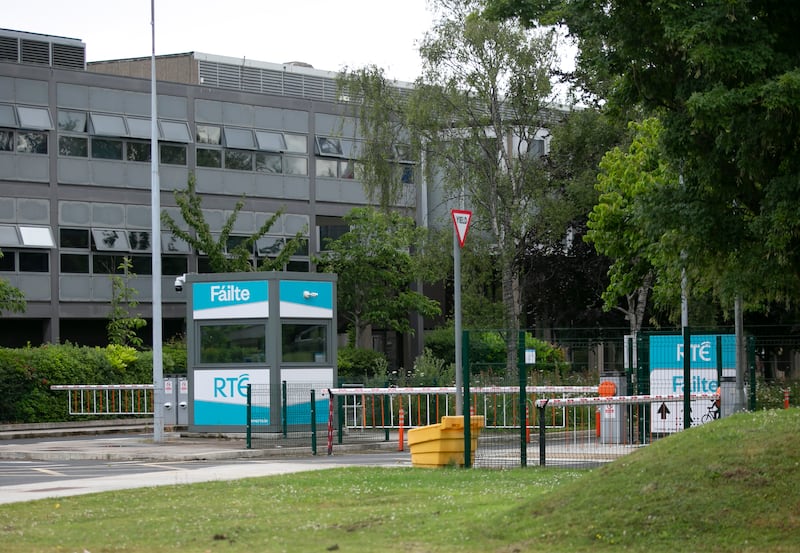 RTÉ HQ in Montrose, Dublin. Photograph: Gareth Chaney/Collins Photos
Next stop: Fair City. A feasibility study to establish a new production model for the soap opera is under way, with an industry expert installed at Montrose to devise a “basic spec” for making it. RTÉ says it intends to share this with independent companies later this spring, though change is unlikely before 2028, as a new set must be built.
Uncertainty lingers over this key element of the strategy, with actors union Equity, an affiliate of Siptu, saying its members are “none the wiser” about the future.
It was in June 2024 that Bakhurst first told staff that production of Fair City and The Late Late Show would move off site, and that they would either be “100 per cent independently produced” or made under a hybrid model by an in-house team and external crew.
This, he said, was “not to save money”, but because RTÉ could not afford the “prohibitive” investment its facilities required to meet environmental standards that will apply to public buildings from 2030. It has received an estimate of “more than €350 million” for a revamp of the dated Montrose buildings, five of which are listed as protected structures.
Staff question why environmental standards are being used to usher in more outsourcing. They know that if these changes are to be introduced, it will represent a big acceleration in RTÉ’s shift to independent production.
That shift that has the imprimatur of the Government, which will soon enact legislation compelling it to boost spending on independent commissions to 25 per cent of its public funding.
The Late Late Show, first broadcast in 1962, is part of the fabric of RTÉ. It is produced by RTÉ’s entertainment unit, the output of which has contracted in recent times. It no longer makes an in-house Saturday night chat show, for instance – the last was Angela Scanlon’s Ask Me Anything, which ended in 2023.
Aside from The Late Late proper, entertainment staff work on The Late Late Toy Show, quiz show The Money List, RTÉ One’s New Year’s Eve programmes, the Rose of Tralee and the Eurovision Song Contest (before RTÉ’s withdrawal).
Up for the Match was on this list, and RTÉ says its in-house team has “done a fantastic job” making the two summer editions of the All-Ireland finals build-up show. That praise, however, is expressed on its new commissioning brief to the independent sector. Companies that can capture the “immediacy, relevance and expertise” of Up for the Match but do it “in a new and unexpected way” have been invited to pitch for the contract.
Staff were this week advised that a scaled-back RTÉ will produce little entertainment programming in-house.
The outsourcing of the Lotto draws, flagged at the Oireachtas, is already the least of it. In 2025 the decision to commission “Christian worship content” from external companies – a move Montrose insiders drolly dubbed “the outsourcing of God” – was followed by the more unsettling closure of the in-house documentary unit.
 RTÉ staff fear that programme by programme, RTÉ is being stripped back to what’s known as a publisher broadcaster. Illustration: Cathal O’Gara; photographs by Alan Betson, Dara Mac Dónaill, Andres Poveda, Damien Eagers, Naoise Culhane and RTÉ
Opponents of that shutdown say independent companies – or, as they put it, private ones – do not have the resources to take on the same degree of editorial risk and that without an in-house unit it will be harder for RTÉ to show “reactive” documentaries with quick turnaround times.
“I don’t think the seriousness of the decision by RTÉ to stop making documentaries has hit home with the public or with politicians,” says Emma O Kelly, RTÉ education correspondent, who chairs the Dublin broadcasting branch of the National Union of Journalists (NUJ).
Like others in RTÉ’s group of trade unions, she is dismayed by what she sees as the exploitation of its corporate governance crises – which included the failure under former director general Dee Forbes to disclose payments made to presenter Ryan Tubridy – to justify making public funding “contingent on RTÉ slashing and outsourcing”.
“Kevin Bakhurst and the senior management team are doing what the Government has told them to do,” she says.
“[He] won’t be here forever, but what will be left behind by all the people implementing these cuts will be a hollowed-out public service media.”
Over in RTÉ’s 1960s administration building, the director general is recovering from a bout of laryngitis as he fulfils a round of interview requests.
The former RTÉ news boss, who returned to Montrose in July 2023 as its scandals were blazing, says he has not applied for the vacant top job at the BBC, though he has also been linked with a mooted deputy director general role. Will he be at RTÉ in six months’ time?
“I hope so. Unless I do anything wrong,” he says.
The Irish Times asks why Siptu is running its confidence motion.
“I don’t know why they’re doing it. Well, look, I do know. It’s because, I think, they can see the strategy is being implemented now, and while a lot of people buy into it and understand it, there are, of course, some people who are worried about it or concerned about it or anxious about their own jobs. The unions are there to represent them, and that’s fair enough.”
Bakhurst rejects the idea that a smaller RTÉ equates to a “hollowed-out” one, a phrase not only used by unions but also by a group of more than 50 media academics calling for the protection of RTÉ as part of the State’s “democratic infrastructure”.
Change is “not uncommon” for public service broadcasters, Bakhurst says.
“This strategy is about ensuring the long-term success and viability of RTÉ as an organisation. We could not carry on doing things the way we did them for years, the same size as we were for years.”
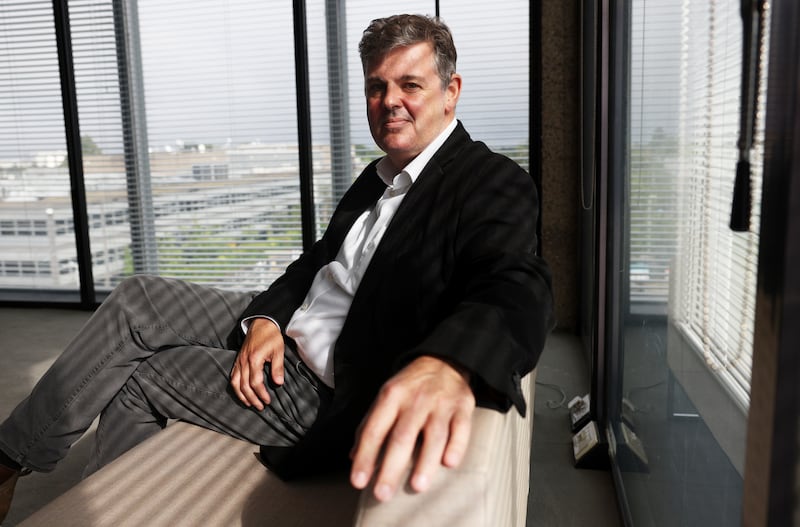 Director general of RTÉ Kevin Bakhurst.
Photograph: Laura Hutton
His statement to the Oireachtas committee that RTÉ will keep news and current affairs, radio and sport in-house doesn’t mean other areas of programming are “not going to be here”, he says.
“Some areas will be doing less. Everyone is having to make savings.”
“Everyone” includes news and current affairs. Some employees report the existence of “two RTÉs” – the newsroom, and everything else. But though the newsroom is officially protected from outsourcing, it is not immune to downsizing, with last year’s axing of debate show Upfront with Katie Hannon allowing RTÉ to suppress some roles.
More RTÉ journalists applied for redundancy than were given exit offers in 2025. Bakhurst says the next scheme could facilitate more departures, but this will be challenging.
“A lot of people in the newsroom work extremely hard, so if you’re going to lose people from news and current affairs, you have to make some choices about the way people work, or programmes, or whatever. You can’t just do that overnight,” he says.
“We’re not cutting the Six One or anything.”
As for sport, RTÉ says “the balance and the weight” of output will be made in-house. In an age of splintered on-demand viewing, the popularity of live sport is a lifeline for national broadcasters. Still, the rights don’t come cheap, and from 2018 to 2024, the proportion of RTÉ’s television budget spent on sport swelled from 20 per cent to 28 per cent.
So what happens if RTÉ is outbid? “You win some and you lose some, but if we lose sports rights, we’ll move the money into other types of programming,” Bakhurst says.
 The Sunday Game host Jacqui Hurley. Photograph: Ray McManus/Sportsfile
How much money RTÉ will have in the near future is unclear. The guaranteed three-year public funding secured under its 2024 deal with the Government broke down into €225 million in 2025, €240 million this year and €260 million in 2027.
This generated a headline-making €725 million figure. But the total was less than RTÉ had sought and less than the media regulator, Coimisiún na Meán, had recommended it receive. In the absence of any licence fee reform, question marks hover over the final two years of Bakhurst’s plan.
“Very early discussions” have taken place, and Bakhurst says RTÉ will not ask for more than €260 million, perhaps adjusted for inflation, in 2028 and 2029 – though under proposed legislative amendments it will fall to Coimisiún na Meán to recommend funding levels for RTÉ and TG4 to Minister for Culture Patrick O’Donovan.
This year RTÉ expects to spend €58 million on independent commissions, up from €50 million in 2025, meaning it is nearing the 25 per cent figure stipulated in the Broadcasting Amendment Bill. RTÉ is adamant that more commissioning will not lead to a weakening of its mission and that it is, as Bakhurst says, simply a “different way of doing it”.
He cites the higher number of documentary hours it will air in 2026: 75, up from last year’s tally of 72 (nine of which were made in-house). RTÉ’s religious output has improved, he says, since it stopped showing a weekly Mass from its own studios and replaced it with broadcasts of “real church services with real people in their own churches”, produced by Scratch Films.
Sustained Government support for RTÉ is “essential” for the wider industry, says Screen Producers Ireland (SPI). Although the independent sector’s representative body is not across the details of RTÉ’s plans for Fair City and The Late Late, SPI chief executive Susan Kirby notes that RTÉ will continue to provide editorial oversight, just as it does with all independently produced programmes.
“We would not anticipate that viewers should expect a dramatic change in tone or in the core identity of these shows,” she says.
Independent producers – the term used in legislation and across the industry – “already make many of the most loved and acclaimed programmes”, Kirby says.
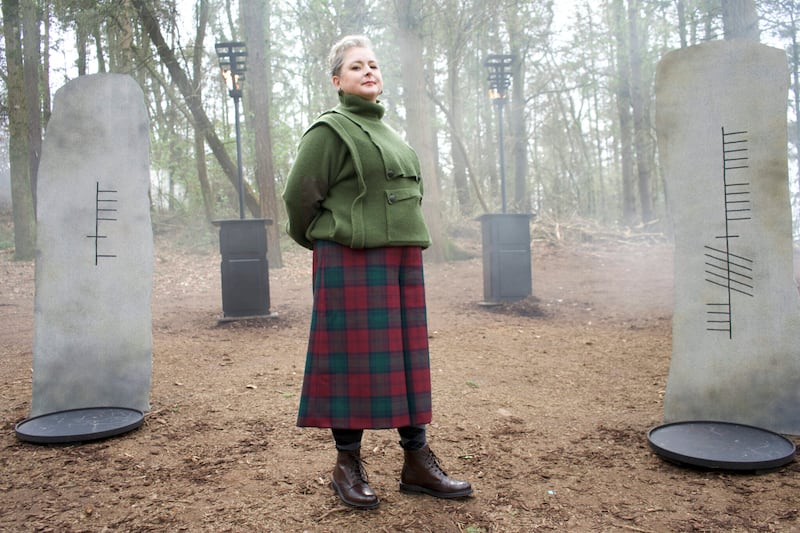 Siobhán McSweeney, presenter of Traitors Ireland
The Traitors Ireland, made and brought to RTÉ by Dublin-based Kite Entertainment, is one example. The success of the reality competition show energised people at Montrose, says a senior journalist. “There was very little begrudgery about it. It was done to a high standard, and everybody enjoyed it.”
At the Irish Film Institute last month, optimism also prevailed at a screening of These Sacred Vows, the Tenerife-set RTÉ drama now showing on Sunday nights, with parasols and paddleboards adorning a photoshoot backdrop bearing the tagline “great local drama”.
The first episode yielded poor reviews, but there is perhaps more promising material to come, including Tall Tales & Murder from Love/Hate writer Stuart Carolan and the possible return of Kin. Dermot Horan, RTÉ director of acquisitions and co-productions, has been making calls to try to revive the well-watched gangster drama, which was derailed by financial woes at its Canadian backer.
International coproductions are the norm for drama other than soaps. RTÉ is not alone in no longer being able to finance the genre by itself. It is airing more hours of “local drama” than it did a decade ago. But the industry landscape has led to a dearth of the type of “state-of-the-nation” scripted television that does not readily sell overseas.
“The ecology of the media has changed hugely over the last 20 or 30 years and RTÉ is a diminished part of that,” says Willie O’Reilly, who was group commercial director for six years from 2012.
It has no choice but to cut back, he says. “We used to joke about it. ‘We are getting littler.’”
O’Reilly queries why the Government has not increased the €160 licence fee for 18 years. “With what other element of the public service would you expect not to get a price increase?”
One ramification of this stasis – a decline in real terms – is that RTÉ relies more on commercial revenues than its counterparts across Europe. This left it exposed in the wake of the 2008 economic crisis, when advertising income plunged.
“I’m not saying there is no public service mission in RTÉ – there absolutely is – but it has always been conditioned, I think, by an eye on the commercial bottom line,” says Roddy Flynn, associate professor at DCU School of Communications.
“RTÉ is still a very influential space for voices that want to be heard, but it just feels like an increasingly neutered organisation.”
What [Bakhurst] has allowed happen in radio is very problematic
— A senior figure in current affairs
The battle for attention is intense, which is why Bakhurst’s strategy outlines digital investments that will help RTÉ reach otherwise elusive audiences. These include ongoing upgrades to the once glitch-beleaguered RTÉ Player and a long-promised new audio app featuring podcast commissions. User sign-in will become mandatory on both.
But because broadcasters must go in search of viewers, not just hope viewers will find them, RTÉ is also devising a new plan for distributing its content on YouTube.
“The reality is that YouTube is the largest video platform in the world,” says Muirne Laffan, who was chief digital officer of RTÉ until 2017.
“The thing that is different now is that it is such an international world. It’s a very fragmented, global ecosystem. But the media has always evolved. There’s no certainty with regard to the future. Change is to be expected.”
Some detect a waning of RTÉ’s influence in this fragmented era, even in news and current affairs, where it still commands strong loyalty and trust.
“The segmentation of the media has reduced the audience and the importance of television news, radio news, Morning Ireland,” says Ray Burke, former chief news editor for RTÉ. “They are just not as important as they were. And that’s a trend I don’t see changing.”
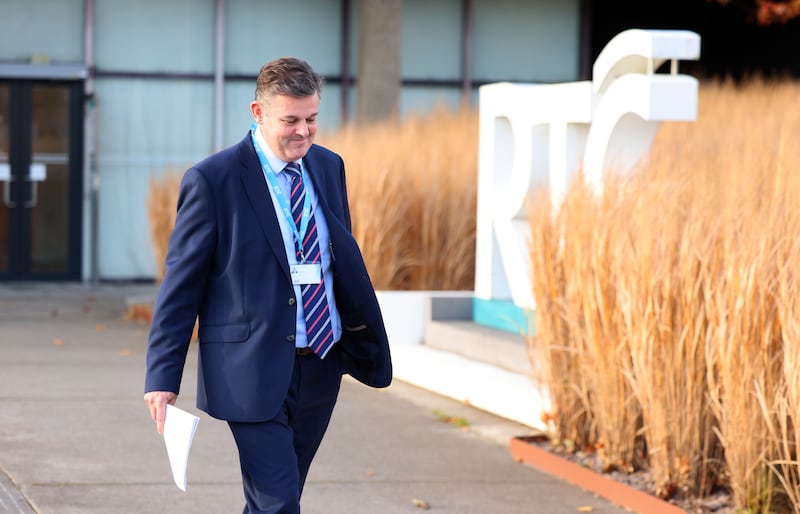 Director general of RTÉ Kevin Bakhurst. Photograph: Dara Mac Dónaill
At Montrose, diagnoses vary. “One thing I will say about the TV side of things is the unions are very, very powerful in RTÉ and as a result it makes things very inefficient in terms of getting things done,” says a senior figure in current affairs.
“There are people who don’t need to be there and who can’t be fired. And if you can’t fire them, then you start outsourcing.”
Bakhurst makes himself accessible and is “certainly trying”, the person adds, before criticising the handling of Radio 1’s recent reshuffle. “What he has allowed happen in radio is very problematic.”
Others also temper positive comments about Bakhurst, with one person saying he is likable but that “distrust from the Dee Forbes era has not gone away”. His potential receipt of a 20 per cent increase in his basic salary under new Government pay structures, taking it up to €300,000, is contrasted with unions’ fight to receive a 6 per cent pay rise for staff over a 2½-year period.
RTÉ executives are aware of the state of morale. Last year’s staff engagement survey revealed “areas that are damning”, Bakhurst admits.
In January he sent out a message announcing a new calendar of social activities to improve the “sense of community” at work. Less favourably received by despairing employees was the introduction of a requirement to meet their line managers every six to eight weeks to “strengthen two-way communication”.
The walls tell their own story. One Siptu poster affixed to a canteen noticeboard invites workers to scan a QR code to join the union in these “unprecedented times”. Another advertises the electronic ballot, which closes next Tuesday. It implores members to “vote no confidence”.