
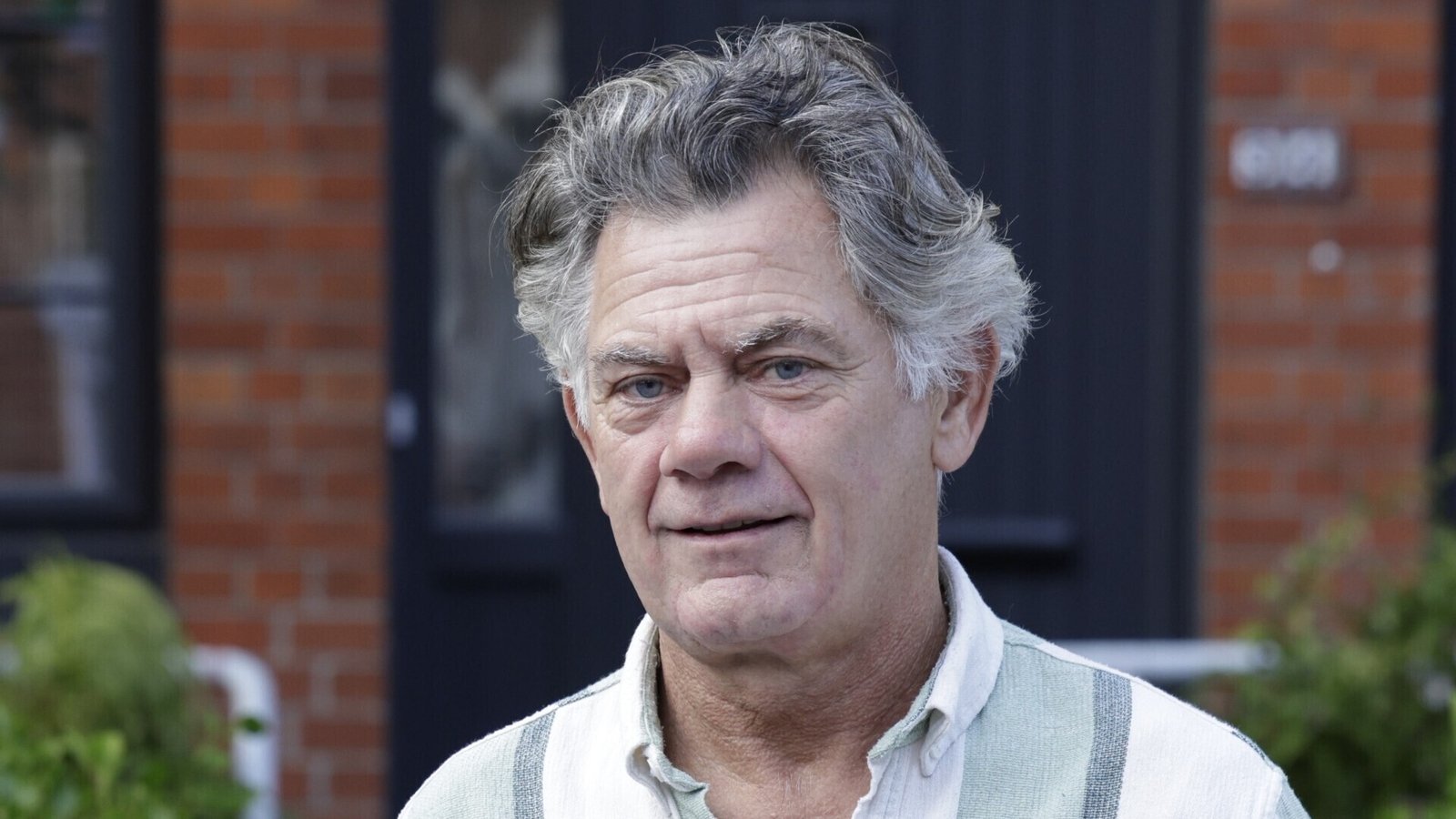
Gerard Hutch, the man known as ‘The Monk’, announced this week that following his near success in Dublin Central in November 2024, he’s standing again for election, this time in a by-election in the same constituency.
Our Crime Correspondent Paul Reynolds examines the life and times of Gerard Hutch and the findings of the Special Criminal Court that he was: in control of the guns used to murder David Byrne at the Regency Hotel ten years ago; and the leader of the Hutch organised crime group.
The candidate
“I am standing for the people in the community and I don’t count me birds until me eggs hatch,” Gerard Hutch declared as he announced his candidacy in the forthcoming Dublin Central by-election, while also claiming “I don’t make promises I can’t deliver on”.
However, unlike the other candidates, Gerard Hutch did not make himself available to the media for much scrutiny during his last campaign, preferring instead to post online short videos of himself in funny situations, chatting and laughing with supporters or making broad unchallenged statements.
He engaged in only three selected prearranged interviews where he was encouraged to talk about his childhood in poverty and his view of life and the world.
He was not questioned in any detail about ‘the elephant in the room’ – his links to organised crime.
The 62-year-old gets visibly agitated if asked anything about the Special Criminal Court judgement in the case where he was found not guilty of the murder of David Byrne at the Regency Hotel in February 2016.
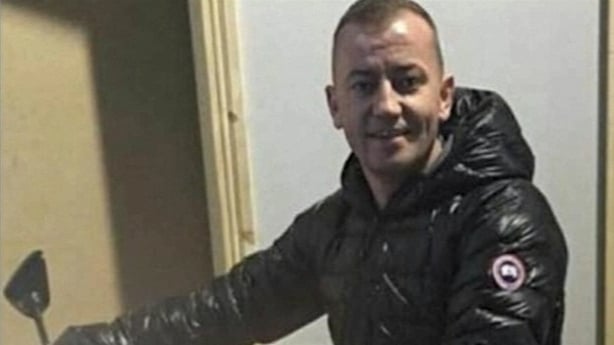
David Byrne was murdered by gunmen dressed in fake tactical garda uniforms in 2016
Gerard Hutch’s ‘go-to’ insult to reporters, who seek to question him about the findings in the court’s judgement that he was in control of the guns used to murder the Kinahan gang member that day, is to call them “dying wasps”.
There is still plenty of sting in Hutch’s tail as the latest recipient of this scorn, Paul Healy of the Irish Daily Star, learned last Thursday night at a publicity event in Dublin for a play by Rex Ryan, to which Hutch was invited.
“I’ve no interest, I’m not going to answer you,” Hutch told Mr Healy, “if you ask me I’m just going to shut up.”
Mr Healy persisted with his questions to Gerard Hutch about organised crime amid protests from Mr Ryan and the public relations personnel insisting “we are here to talk about the play”.
Some might say it was a case of Hamlet without the prince.
‘The last sting of the dying wasp’
It’s not clear if Gerard Hutch knows the origin of the phrase “the last sting of the dying wasp” but it’s ironic that a phrase made popular by a criminal and now emblazoned on T-shirts on sale on Moore Street in Dublin, first came to prominence over 21 years ago, when it was used by a former minister for justice.
The now Senator Michael McDowell said it at a garda graduation in Templemore in November 2004 when he confidently but erroneously predicted the demise of organised crime in Ireland.
The reality is that at that time, the Kinahan organised crime group, ably assisted by Hutch family members who were also in the gang, were building their criminal empire into the transnational organisation it is today.
Following Mr McDowell’s bold statement, the gang which at the time comprised Hutch and Kinahan family members along with their associates and affiliates, went on to murder their rivals Martin ‘Marlo’ Hyland, John Daly and Eamonn Dunne and anyone else who got in their way, before taking control of the drugs trade in Ireland.
The gang was actively involved in the feuds between 2000 and 2010 which cost 14 lives in Limerick and 16 in Crumlin.
In the ten years after Mr McDowell’s statement, between 2006 and 2015, 145 people were killed in Ireland in gangland murders, and the killing had also migrated abroad, most notably to Spain.
It was a murder on the Costa del Sol – the murder of Gary Hutch in September 2015 – that resulted in the implosion of the co-operative criminal enterprise between members of both families and their associates.
That assassination split that gang into two factions, the Kinahan organised crime group and the Hutch organised crime group, and started a feud that cost 18 lives which is still going on today.
Watch: ‘You’re like a dying wasp,’ Hutch tells Reynolds in December 2024
‘You had to get into crime to feed yourself’
Gerard Hutch was born into poverty in Dublin’s north inner city on 12 April 1963.
He has always blamed poverty and the absence of any alternatives for his own involvement in criminality.
His first conviction was for stealing a bottle of red lemonade for which he says he was fined. He was eight years old.
He was sent to prison at 15 after he was caught stealing and breaking into shops.
He said he had no choice, and that “you had to get into crime to feed yourself”.
Gerard Hutch was always different and somewhat distant from those he grew up with. He learned to read and write in prison. He didn’t drink, smoke or take drugs and always claimed to despise drug dealers and the drugs trade.
Some of his nephews however have for years been involved in drugs and crime at all levels; from the lowest level of suffering and death in the throes of drug addiction, to the highest level in one of the world’s wealthiest transnational organised crime groups.
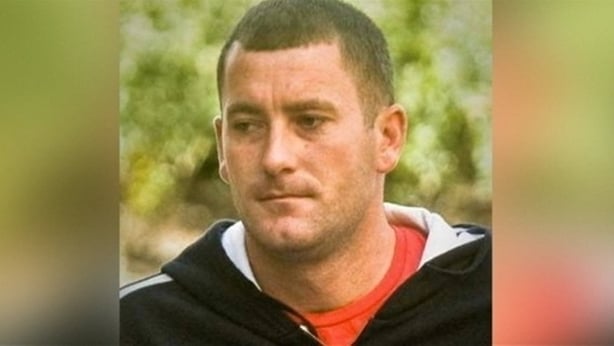
Gerard Hutch’s nephew Gareth was shot dead in 2016
Gerard’s brother Eddie’s son Christopher who was known as ‘Bouncer Hutch’ died in March 2003 from a heart attack brought on by the toxic effects of cocaine.
Another of Eddie’s sons, Ross Hutch, is serving ten years in prison for violent attacks on a man and a woman.
He is perhaps best remembered for his appearance on RTÉ’s Winning Streak in 2015 where he took the place of his brother Eddie junior and won €33,000 – €8,000 in cash and a Toyota Corolla car worth €25,000.
Gerard Hutch’s other nephews Derek ‘Dell Boy’ Hutch and Gary were also involved in organised crime, a fact which Gerard has publicly lamented.
“There’s about 50 Hutchs out there with the same name,” he said, “and if one of them gets into trouble, it lands on my door.”
In another time and another walk of life, Gerard Hutch could, perhaps, have been a senior manager or a chief executive in a reputable company.
Those at the highest levels of organised crime often exhibit characteristics and skills which would enable them to also succeed at the highest levels of legitimate business.
The Hutch organised crime group
The Hutch gang is a criminal organisation that grew out of inter-generational familial bonds. Predominantly from Dublin city centre, it is comprised of close family members and their associates.
Evidence as to the existence, structure and activities of this criminal gang was given by one of the country’s most senior organised crime investigators during Gerard Hutch’s trial for murder.
The evidence was not contested by Hutch or his legal team in court and is therefore now established and accepted as fact.
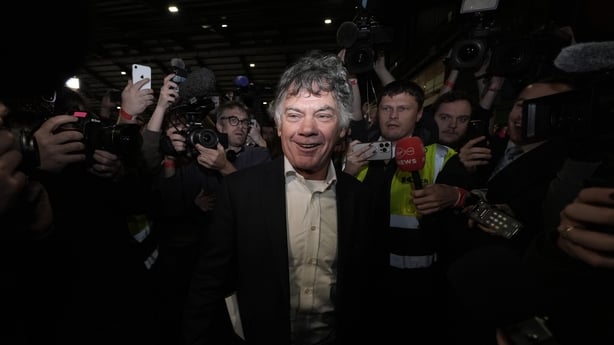
Gerry Hutch at the RDS for the General Election count in December 2024
Detective Superintendent David Gallagher from the Garda Drugs and Organised Crime Bureau said the Hutch organised crime gang is less hierarchical than some criminal organisations and operates a patriarchal system based on loyalty and monetary gain.
Historically, he said it is quite a fluid organisation whose associates and affiliates work together, independently and with other criminal organisations to commit crime.
However, he said that since 2015 and the emergence of the feud, there has been a “galvanisation” of positions within the Hutch organised crime gang.
Head of the Hutch Organised Crime Group
While Gerard Hutch was found not guilty of the murder of David Byrne, he was named both in the Special Criminal Court and in an affidavit in a separate case in the High Court, as the head of the Hutch organised crime group.
The Special Criminal Court found that Gerard Hutch was recognised as the “figurehead” and “patriarchal figure of the HOCG”, an organisation which the court had found was responsible for and had orchestrated the attack at the Regency Hotel.
It found that it was reasonable that nothing was carried out by the Hutch Organised Crime Group (HOCG) without Hutch’s “say so”.
The court also found that Gerard Hutch had control of the three AK-47 assault rifles which were carried by the gunmen in fake tactical garda uniforms at the Regency murder and were subsequently seized by gardaí from the dissident republican Shane Rowen.
The court stated that Hutch “was involved in serious criminal conduct underlying the charge against him in terms of his possession of the guns from the Regency which he knew had been used to murder David Byrne”.
Gerard Hutch has always tried to draw a distinction between the Hutch gang and the Hutch family. He claimed that he got involved as a member of the family and tried to stop the feud.
“I got in as a member of the family to try to nip it in the bud, as a member of the family, end of,” he said this week.
However, the Special Criminal Court also found that members of the Hutch family were “acting as an organised crime group” when they “orchestrated and organised a meticulously planned attack at the Regency on 5 February 2016”.
“The judge can say what she likes,” Gerard Hutch also said, “I’m no leader of any crime gang. I was never in a crime gang.”
Peacemaker
There’s no doubt that Gerard Hutch was horrified by the indiscriminate nature of the feud murders. His brother Eddie and his nephews Gareth and Derek, his friend Noel Duggan along with members of the Hutch gang, had all been shot dead
The Kinahan gang also tried to kill Gerard Hutch in Spain on New Year’s Eve 2015 and made several subsequent unsuccessful attempts on the lives of other Hutch family and gang members, including his brothers John and Patsy and on the life of the senior gang member James ‘Mago’ Gately.
The killings therefore not only affected Hutch personally, they were also bad for business. The strategy of kill and be killed was in his words “not good”.
“There has to be another way,” he said, “don’t be using a gun all the time. The heartbreak that’s left behind.”
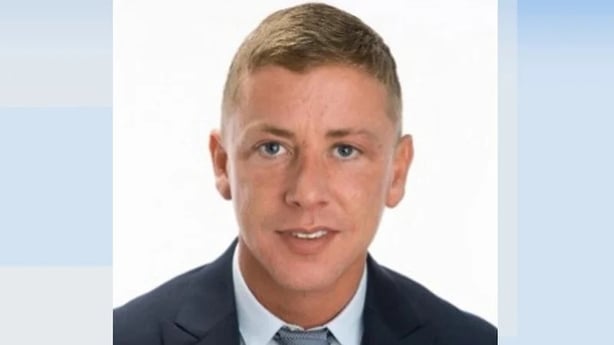
Jonathan Dowdall was jailed for his role in the Regency murder
Gerard Hutch decided to try to arrange a meeting with the Kinahan organised crime group to stop the killings, a fact that only emerged when garda recordings from a bug they had planted in Hutch gang member Jonathan Dowdall’s car, were played in public in the Special Criminal Court.
Dowdall was jailed for his role in the murder at the Regency. He subsequently entered the witness protection programme and testified against Hutch.
Hutch knew he had to negotiate with the Kinahan organised crime group to stop the killings and save lives but he also made it clear in his bugged car conversations that he knew just how dangerous the Kinahan gang is.
“Ya have to be careful of these c**ts, their capabilities,” he said
His assessment of the Kinahans was that “they want to be the biggest gang in Europe, the Columbians and all, and everyone come to them”.
He thought Daniel Kinahan was a smart individual or as he put it “a wide enough twist and do this and do that and everyone was full of promises”.
He also said that “they used the rest of the young fellas” who, because they were lower down the criminal hierarchy, were dispensable.
Hutch knew he couldn’t exact revenge for the murder of his brother from those at the top of the Kinahan organised crime group, but he was recorded as saying there would however be no amnesty for his brother’s killers, as Hutch called them on the garda recordings, “the fucking hitmen,” who carried out the murder.
“I’d like to be able to go out and get these assassins,” he said. “The c**ts who done Neddy have to fucking go.”
Apart from the gunmen, he acknowledged that “the shooting has to stop,” and that the IRA “would have to be at the meet”.
He knew the Kinahan gang was trying to kill him but dismissed the suggestion of “a million quid” bounty on his head.
“Yeah that’s what was said in the paper,” he said and laughed, calling himself “the million dollar man”.
Hutch believed at the time that Daniel Kinahan would agree to a meeting with the dissidents in England to discuss peace.
“I’d say he’ll meet them in London,” he said.
“It’ll suit Kinahan. Get a meeting. Sit down. We’ll have peace. I’d want them standing at it. We’ll have to. It’s the best option or go to war.”
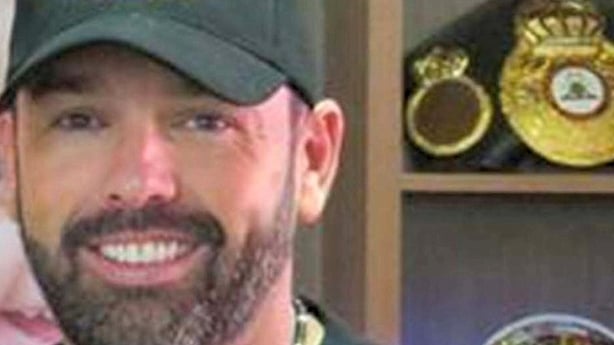
Gerard Hutch wanted to arrange a meeting with Daniel Kinahan
Hutch’s approach was not personal, but businesslike and professional. He didn’t want any discussion about the past or admissions from anyone at the meeting.
“I don’t want to go into any of that,” Hutch said. “We don’t want him [Daniel Kinahan] telling us he didn’t do Gary [a reference to the murder of his nephew in Spain]. We’re not looking for admittance off anybody.”
“I don’t want anyone else getting injured,” he said. “I’d like it put to bed. I believe whatever happens, something else happens, just stay a-fucking-live in the meantime.”
Hutch realised that his family needed someone of stature to officiate at the peace talks, someone comparable to the former Sinn Féin president.
“Try to get someone in the middle,” he said, “Gerry Adams. Someone they won’t act the bollox with, I don’t mean Gerry Adams, someone.”
Hutch also knew that along with Daniel Kinahan, David Byrne’s father James ‘Jaws’ Byrne, since deceased, would need to be consulted and ‘on board’ but he acknowledged this with a veiled threat.
“It’s gonna be Jemmy Byrne’s decision ya know,” he was recorded by the gardaí telling Jonathan Dowdall.
“And what’s he like?” Dowdall asked him.
“Well it’d be – do you wanna lose another son Jemmy,” Hutch replied.
Hutch and the gardaí
“Forget about gardaí, I’m not interested in gardaí,” Gerard Hutch also said this week when he announced he would be standing in the forthcoming by-election.
The statement is in marked contrast to what he said on one of his campaign videos during the last campaign when he complained that there were not enough gardaí on the streets of Dublin and that they were only “talkin’ about extra guards for Christmas”.
“Christmas! Is Santy Claus arriving with something special for Christmas?” he asked. “What about the rest of the year?”
Hutch said he wanted more gardaí “full time” in Dublin until the streets are “clean and safe for the Irish people”.
It’s an odd political call from a man who has claimed to never talk to the gardaí, not even in casual conversation.
He outlined to Jonathan Dowdall his strategy to deal with the gardaí when they ask to speak to him.
“Caution me,” he demands of them.
“You are not obliged to say anything unless you wish to do so, but whatever you say will be taken down in writing and may be given in evidence,” the garda will reply.
The caution informs a person of their right to silence.
“You’re after telling me to say nothing,” Hutch says.
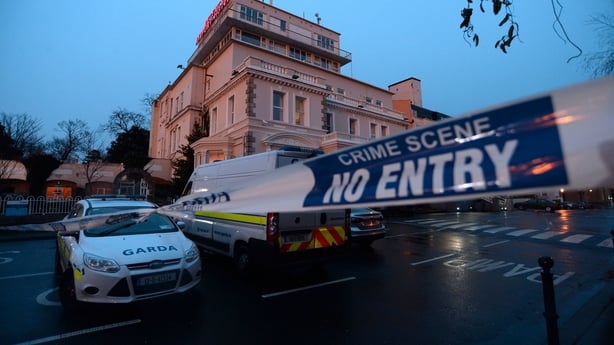
Gardaí said the Regency attack was the most ‘audacious, murderous attack in the history of the State’
The garda recordings of Hutch’s conversations with Jonathan Dowdall also reveal what he thought of the garda investigation into the murder at the Regency.
“The cops are going around like headless chickens, loads of fuck-ups have been made,” he said.
He told Dowdall that he had been under pressure to move the guns used in the Regency attack and had to push someone to “get them outta the village”, a reference to Buckingham Village, the location where the hit team met up on the morning of the David Byrne murder.
Hutch also knew that unlike the gunmen dressed in fake garda uniforms, armed gardaí do not carry AK-47 assault rifles.
“Anyone with cop on would know immediately the cops don’t use them,” he said.
The bug revealed that even though Hutch was giving the guns to the dissident republicans after the murder, he remained suspicious of them.
“You wouldn’t know with them,” he said, “You know they could be playing both sides of the coin.”
Hutch also spoke on the garda recordings about the possibility of retaliation in Dublin against the gunmen who tried to murder him in Lanzarote.
“Maybe go round and get them,” he said.
Same as the last time with a few extra bits
Gerard Hutch has accepted he earned millions from crime by paying over €1m to the Criminal Assets Bureau, which targets wealthy criminals and confiscates money that is the proceeds of crime.
However, the Criminal Assets Bureau is after him again and has issued him with a tax bill for hundreds of thousands of euro.
In the year of the tenth anniversary of the murder at the Regency, gardaí have also warned about the dangers of sanitising the activities of the Hutch gang and the threat to democracy posed by organised crime seeking political power.
“The Hutch organised crime gang is the group that was behind the most audacious, murderous attack in the history of this State,” Detective Chief Superintendent Seamus Boland said, “I think it’s important that history isn’t allowed to be rewritten at times.”
Hutch has also been criticised by rival politicians.
When he accused them during the last campaign of doing “shag all” for Dublin’s north inner city, the Social Democrats TD Gary Gannon pointed out that Hutch had moved out of the area to live in Clontarf.
Mr Gannon also said when he was working hard to secure funding for the area, including for the Corinthians Boxing Club which Hutch is closely connected to, Hutch wasn’t around.
The Tánaiste said a convicted criminal who has brought so much misery to so many communities was treated like “a celebrity” last time around, with people at Dublin airport to “welcome him back” from Spain where he remains under investigation for alleged money laundering.
Simon Harris also pointed out that “we live in a democracy where anyone can put their name on the ballot paper”.
In announcing his intention this week to again put his name of the ballot paper, Gerry Hutch declared that “the campaign will be the same as the last time, with a few extra bits”.
Gerard Hutch was officially warned ‘the last time’ that his life was in danger and received a Garda Information Message (GIM).
Whether he submits his papers and puts himself forward as a candidate in the forthcoming Dublin Central by-election remains to be seen.