
Standing on a podium near the Spire on Dublin’s O’Connell Street, Roshin Farahani tells a gathering of Ireland’s Iranian community that the “people have responded to his call”.
In response, the crowd chants: “Reza, Reza Pahlavi”, in tribute to the US-based son of the last shah of Iran.
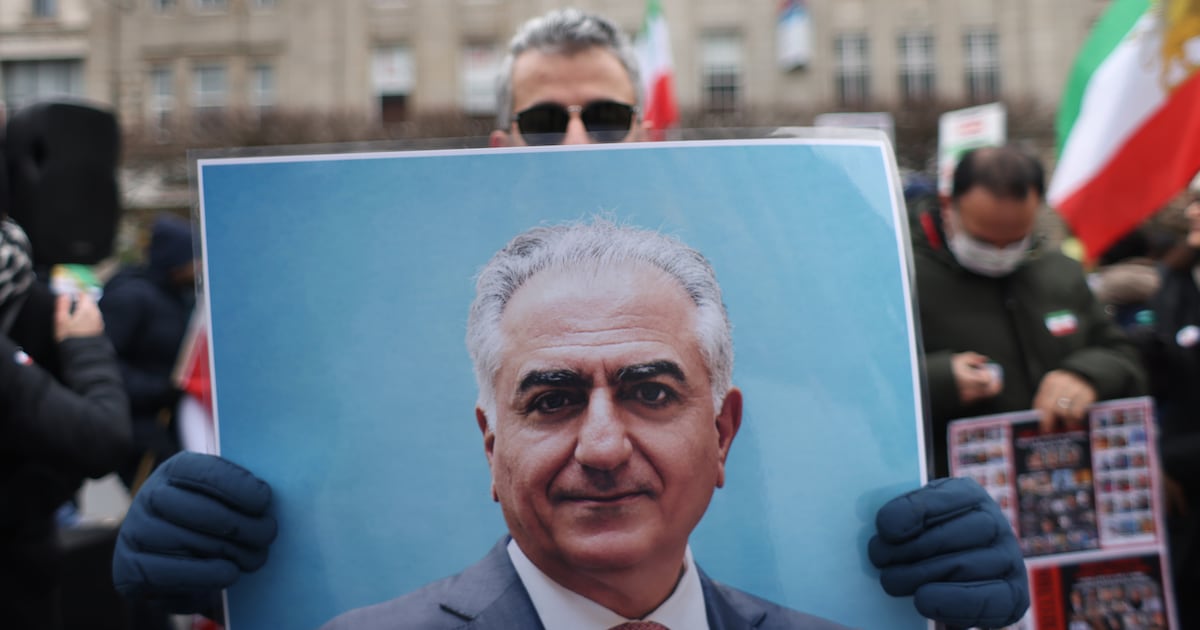
Many held photos of Pahlavi, one of which was accompanied by: “Make Iran great again.”
The protest on Saturday afternoon was one of several held globally after the US-based crown prince called for Iranians to “take to the streets”, just over a month after mass anti-regime protests saw thousands killed.
Protesters waving large Iranian flags carried photos of Pahlavi, labelling him an “alternative for Iran”. They chanted: “This is our turning point, freedom for Iran.”
[ Who is Reza Pahlavi? Opens in new window ]
Farahani, one of the organisers of the Dublin protest, told those present the people of Iran have had their voices “silenced” by “evil leaders who only know hate”.
“We stand here in Ireland with our voice intact. We have to be the voice for our people,” she said.
She echoed a number of calls previously made by Pahlavi, including an end to the regime’s repression, the cutting off of any financial aid and the expulsion of the regime’s diplomats.
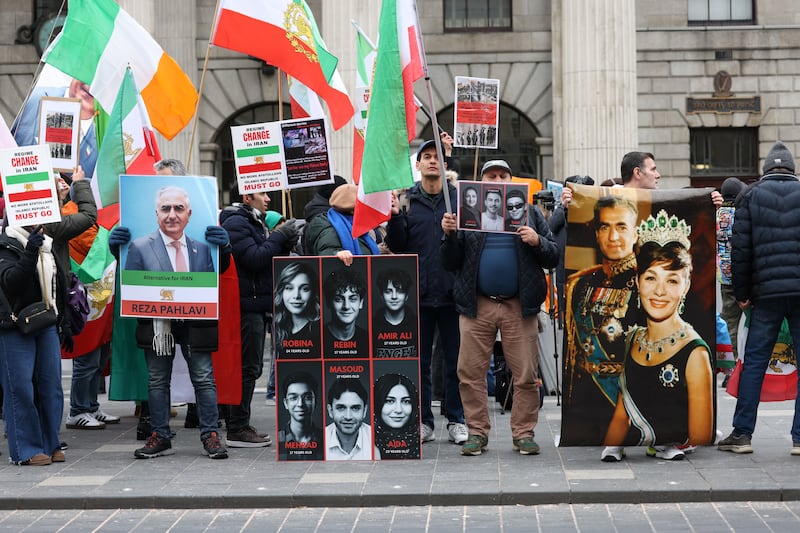 Members of Ireland’s Iranian community protested in Dublin on Saturday. Photograph: Bryan O’Brien
Mohammad, who travelled from Galway, likened life in his native Tehran to a “cemetery” after speaking to family members living there.
“People are so sad … They are so shocked that they cannot do anything,” he said, adding that it was the diaspora’s “responsibility” to make their voices heard.
[ US sends largest aircraft carrier to Middle EastOpens in new window ]
He was one of several to voice his support for Pahlavi to lead a transition to a democratic state.
“Nobody can deny it was a kind of repression by the previous kingdom,” he said.
Regarded by some Iranians as authoritarian and “repressive”, opponents of the Pahlavi family, before its ousting in 1979, were tortured by the Pahlavi Savak secret police, a force trained by the CIA and Mossad, Israel’s spy service.
However, Mohammad and several others attending Saturday’s protest trust Pahlavi to bring about a referendum that will decide Iran’s fate. He is the “best option for the transition,” he said.
“We have two options: we continue with the regime that kills very easily, or we make a change.
“He has been living in a free country for ages, and he knows democracy,” he said, adding: “We can trust him.”
Others, such as Milad, a 25-year-old from northwest Iran, would like to see the monarchy restored, and Pahlavi made king, though this should be achieved only by a referendum, he said.
“[Monarchy] works in Iran, I think,” he said, adding: “I wasn’t living back then, but the only thing I can see is the country was growing even if they say back then was a dictatorship.”
Milad said his family, who remain in Iran, were “physically okay” but “mentally, absolutely not”.
“When I talk to people, my friends, they are not the same person from before,” he said.
Masi, who travelled from Cork for the protest, said family and friends were “as sad as anybody who is alive at the moment in Iran”.
During a communications blackout last month, she spent four days not knowing if her siblings were alive or dead. “It has been very distressful,” she said, describing the crackdown on protests as a “massacre”.
She too hopes for a “fair and transparent referendum” brought about by Pahlavi, though she would vote for a republic over a monarchy.
“Don’t think that people inside Iran are not calling for Pahlavi. The time of Pahlavi is the latest history that Iranian people could actually be proud of their heritage,” she said.
“He’s our only option at the moment.”