
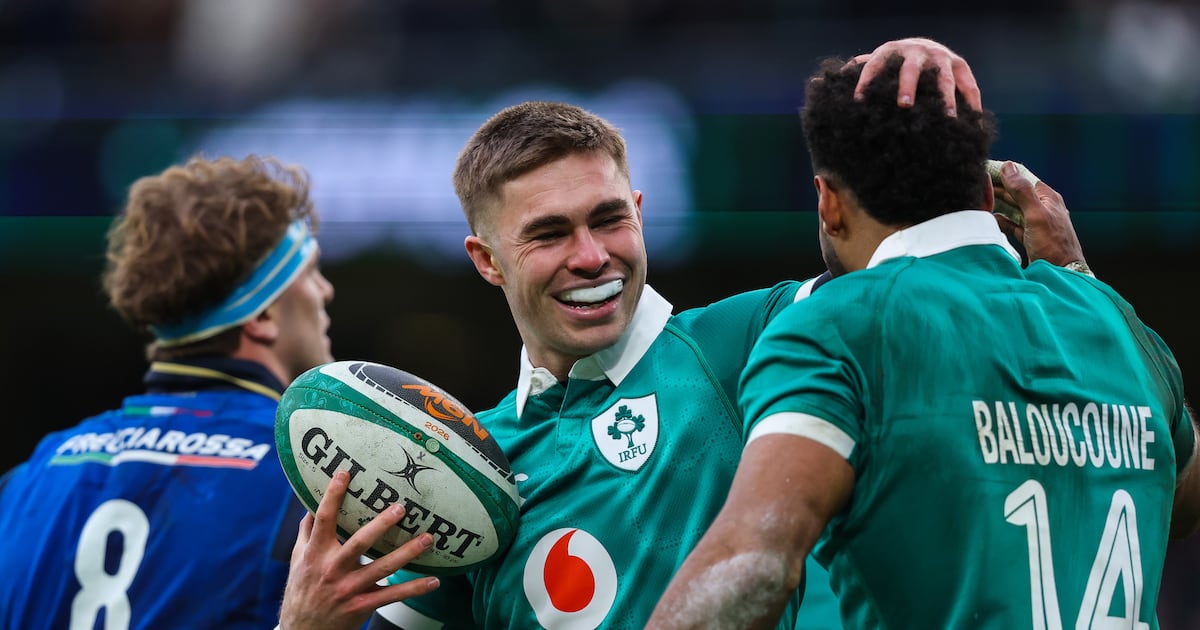
The bench. Or as Ireland supporters might affectionately refer to them, “the cavalry”, rode to the rescue at a time when it looked like the home side were going to be crucified by relentless sloppiness or torpor, abridged only by three passages of coherent, composed rugby, which culminated in tries, for Jamie Osborne, Jack Conan and Rob Baloucoune.
Ireland were so poor at times, shovelling possession laterally, shuffling sideways in alignment, a loose description, offering no depth, no penetration, no pace on to the ball, no subtlety, passive in line speed and at times wastrels in their kicking game. Osborne’s try during that period was an outlier.
The home side treated possession like a pariah, unwelcome, even a nuisance and best dispatched with a boot; even after they had accrued “turnover ball”. It was only the gradual arrival of the replacements that allowed Ireland to stop listing in rugby terms, overcome a half-time deficit and find a path through a ticket of problems, to a victory.
Rónan Kelleher won a vital loose ball and, along with Tadhg Furlong, they got over the gain-line, won collisions that green-shirted players had been losing, not through a lack of effort, or diligence but just being pedestrian and predictable.
Tom O’Toole might one day have a statue built on the site of those two scrums, especially the one in the shadow of his posts. It won’t matter what label he carries, loose or tight; he kept his head. And his body ramrod, straight and unflinching.
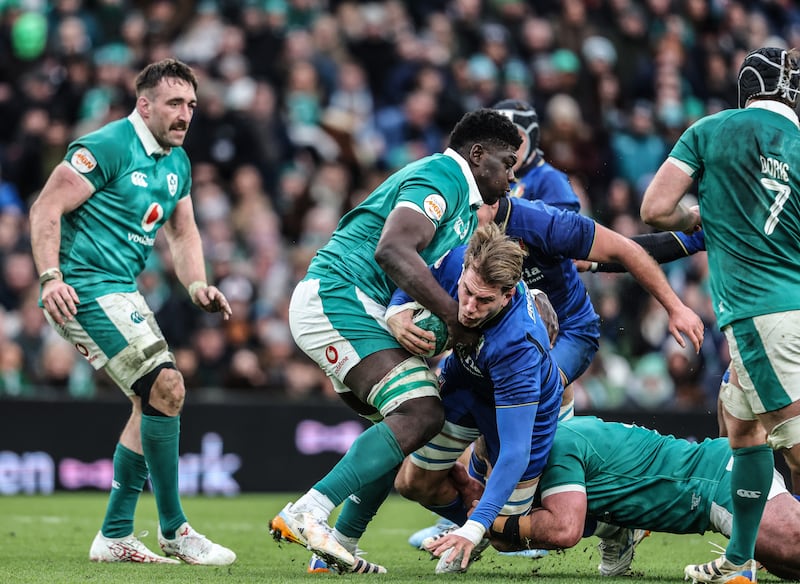 Italy’s Federico Ruzza is tackled by Ireland’s Edwin Edogbo. Photograph: Inpho
Edwin Edogbo’s debut will have plenty on the positive side of the ledger that outweighs a moment when he was penalised at a ruck. He’ll know to look at the ref the next time. His power in contact, the tackle put Italian players on the ground, and stopped them abruptly. The scrum benefited, the maul defence too.
Perhaps the only aspect that will trouble Tadhg Beirne is the lineout offered up a few turnovers on his watch, but his arrival caused Italy no end of problems at the breakdown as did his ability to cover the ground and shut down space when the visitors had the ball.
Nick Timoney gave the Irish backrow a better balance. That’s not a criticism of Cormac Izuchukwu, who had a fine game, not just in the lineout but in other facets. Only injury or fatigue was going to see Caelan Doris or Jack Conan removed from the game.
Timoney’s arrival and facility to play that openside role – a brilliant chase and tackle on Monty Ioane underlined his street smarts – and it is no coincidence that Doris enjoyed a storming finish to the game, more comfortable with the shift in responsibility. Conan, a try scorer, was also more conspicuous in the game’s death rattle.
However, the biggest impact in a game changing capacity was the arrival of the replacement halfbacks. Anybody who fixates on Jack Crowley kicking the ball into touch-and-goal at the end of the match, is a denier, when it comes to understanding his role in how Ireland won this match.
It’ll frustrate and disappoint Crowley because it was a mistake but maybe the rugby gods decided that Ireland had their fill of good fortune on the day and that a bonus-point win, had they grabbed a fourth try, would have been a step too far.
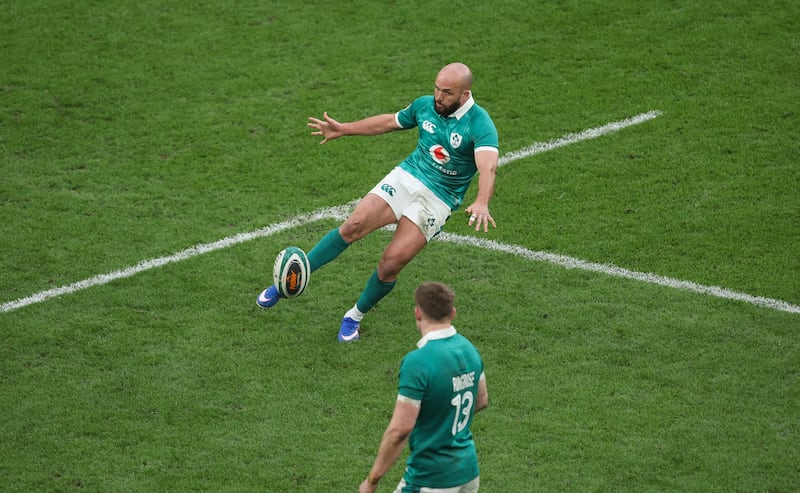 Ireland’s Jamison Gibson-Park kicks clear. Photograph: Inpho
The Munster outhalf brought tempo, decisiveness, nuanced decision-making and passing, accuracy off the tee and shape to Ireland’s patterns. He was assisted in this endeavour by replacement scrumhalf Jamison Gibson-Park, whose speed of foot and thought, ensured that Ireland removed Italy’s latitude to dally unduly in realigning in defence.
Gibson-Park gave his outhalf time and space and Crowley understood that preserving those commodities for those further afield would be pivotal to freeing up the attack. Contrast the impact of the Irish bench with their Italian counterparts, albeit that David Odiase and Paolo Odogwu caused problems.
And yet Italy had to reprise some of the character and resolve they displayed in the final quarter in Paris, in a last ditch stand uncomfortably close to their try-line. They were disciplined, accurate and vigorous in their tackling It was apposite that James Lowe was the player to lift the siege when he intercepted a pass and took off for the other end of the pitch.
He didn’t make it, but Ireland forced a penalty that ended up flying to the wrong side of the corner flag. Lowe justified his recall. His ability to turn water into wine was biblical at times. Rob Baloucoune was a deserved man-of-the-match, quantity and quality in his work, not least his finish for the try.
Izuchukwu, Conan and James Ryan also all justified their starting roles. Ireland head coach Andy Farrell will reflect on that even when the collective was disjointed. There must be realism too. If Italy had managed to make three passes stick in the first 60-minutes, it would probably have led to tries.
There might be one or two tough choices for Twickenham next Saturday but less of a debate that there might have been before today’s opening whistle. The bench is there for impact as much as injury but few would have envisaged how much the Ireland replacements impacted the outcome. That will be reflected in team composition for the England game.