
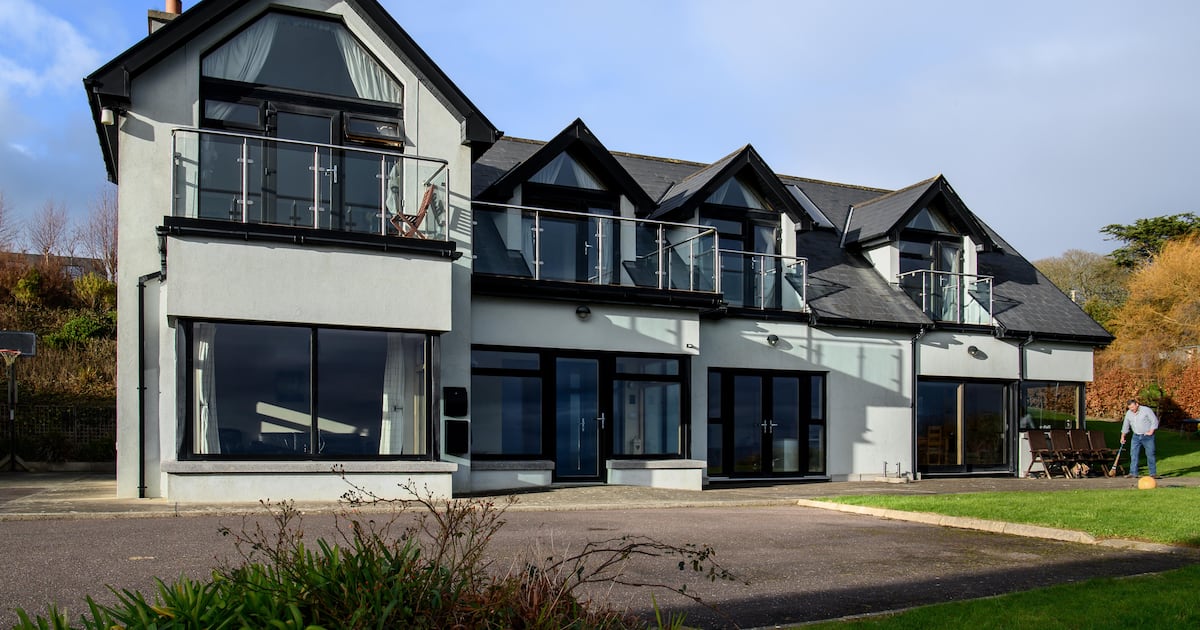
When Dónal and Marion Kissane were planning their passive house on the Cork coast in 2008, they got some baffled looks. A few years earlier, architect Tomás O’Leary had built the State’s first certified passive house, so the concept was still quite new to Ireland. Passive houses are designed to use the least amount of energy possible, through measures such as passive solar heating, airtight insulation, high performance windows, heat recovery and solar panels.
“We were both keen to build a passive house,” Dónal says. “I’m an engineer so I’m very interested in all forms of sustainability and Marion, as an accountant, was keen that it be done cost-effectively.”
Finding suppliers and contractors who were aware of passive design was the first challenge. “We were told we were wasting money on air-tightness and insulation because you cannot see it when the house is complete. This is a mindset or culture we have which is only slowly changing.”
But he persevered, and today the family of four live in a south-facing four-bedroom house in Myrtleville, with panoramic sea views. Thanks to the large number of south-facing windows, the house is flooded with light and feels bright, warm and airy. “South-facing windows are one of the passive design principles, to ensure we get a lot of passive solar gain,” he explains. “Today it’s cold but sunny and some of the rooms downstairs are 23 degrees with no heating on. The house can get too warm in the summer and part of our design is to use balcony doors and roof windows upstairs on hot days to generate airflow.”
Instead of using standard construction concrete blocks or timber frame, they opted for insulated concrete formwork (ICF). This involves using insulation blocks which fit together like Lego and pouring high strength concrete into the blocks. “It’s used all over Europe but it was new in Ireland. It gives us a highly-insulated airtight house and even today it far exceeds the building regulations,” he says. The house’s Building Energy Rating (Ber) exceeds A1.
The mechanical heat recovery ventilation system means the heat is recovered from the stale air leaving the house and fresh air is continuously circulating. “Mechanical heat recovery was new enough at the time,” he says. “We were using Irish suppliers where possible, so it was hard enough to get someone who was making those until we found a new Irish firm in Galway, ProAir.”
Homeowners who install this system talk about the instant improvement in air quality, particularly for people with allergies. He says they really appreciated its value after it had been accidentally switched off. “After just a day, the house felt very stale.”
Heat pumps were around €35,000 during this construction project, so they plumbed the house in preparation, and put the purchase on hold until they became more affordable. They added the heat pump in 2018, when it was a quarter of the price it had been during the build.
Similarly, solar PV panels were very expensive when they were building the house so they installed solar thermal panels to provide hot water and installed the PV panels in 2020 when the price had fallen considerably.
“We haven’t seen a huge increase in electricity costs with the heat pump because of the solar panels,” he says. A 750-litre thermal store, which is basically an enormous hot water tank, is heated by the thermal solar panels and used for underfloor space heating, while the PV solar panels provide the electricity. During the summer, they export the excess electricity.
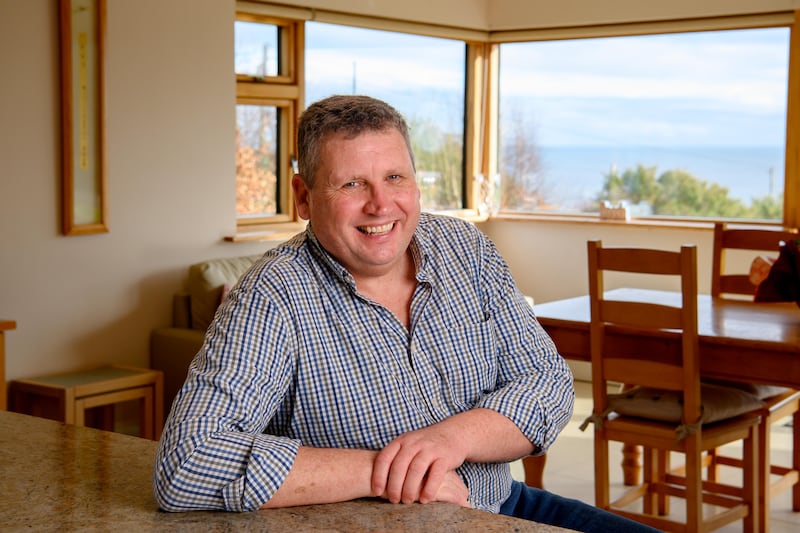 Dónal and Marion Kissane have completed planning and building their passive house in Cork. Photograph: Daragh McSweeney/Provision
 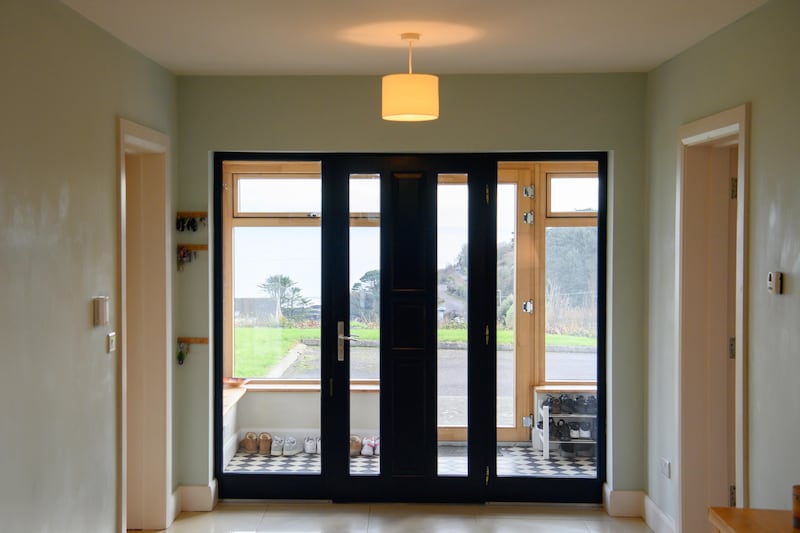 Views seen from the lobby of the house.
Photograph: Daragh McSweeney/Provision 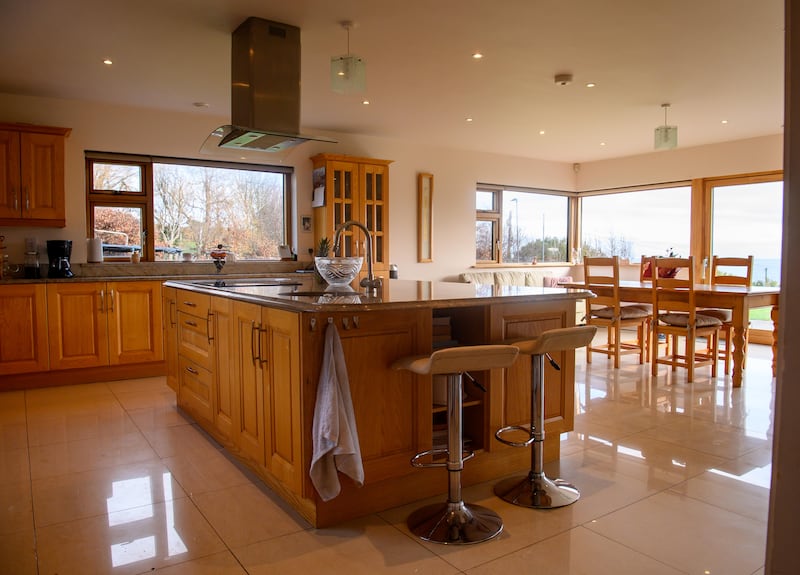 Natural light floods the kitchen-dining room. Photograph: Daragh McSweeney/Provision
 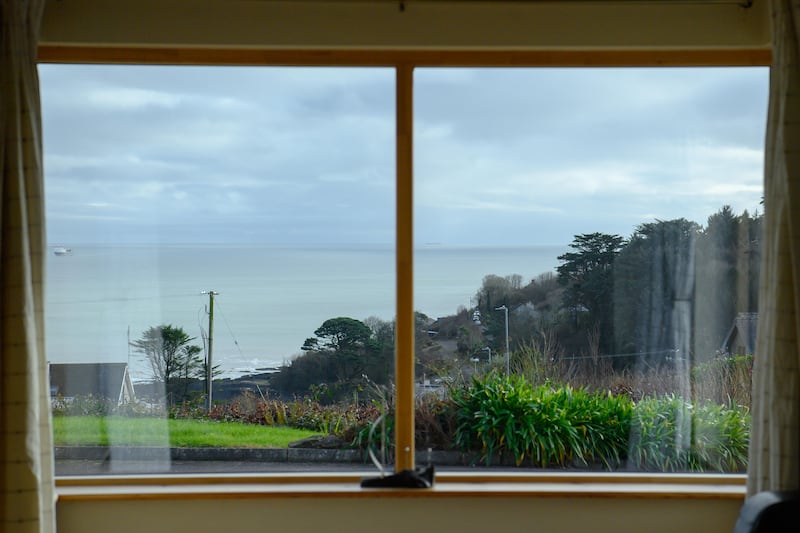 South-facing windows are one of the passive design principles, says Dónal Kissane. Photograph: Daragh McSweeney/Provision
“If I had to do it again I would do the same, but I would put in even more insulation and get a bigger thermal store,” he says. “If anyone asked me for advice, I’d say whatever euros you’re going to spend on insulation, double it, because you can’t have enough.”
He made a point of buying supplies from local businesses such as Cork Builders Providers, rather than specialist stockists, because “you know it’s cost effective and you’ll be able to get someone to fix it. Today every plumber knows how to fix our Grant Aerona heat pump and you could replace it in an hour if you needed to.”
He says there is an enormous amount of misinformation about passive houses and energy-saving measures. “People will tell you that heat pumps only work in houses with underfloor heating. That’s rubbish,” he says. There have been claims that passive houses are particularly vulnerable when it comes to power cuts but he says it’s the opposite.
“Our solar PV panels and battery can operate independent of the grid in a power cut. They can generate enough power to charge phones, iPads and e-readers etc and can run the broadband router.” And because it takes so little energy to heat the home and to provide hot water, he says passive houses are less reliant on external energy than standard houses.
[ Passive impressive: The house that costs €300 a year to heatOpens in new window ]
His wife Marion designed the interior layout, buying local wherever possible from businesses such as Suite Cottage Interiors. Their solid ash kitchen cabinets were made by local craftsman Eoin Cox.
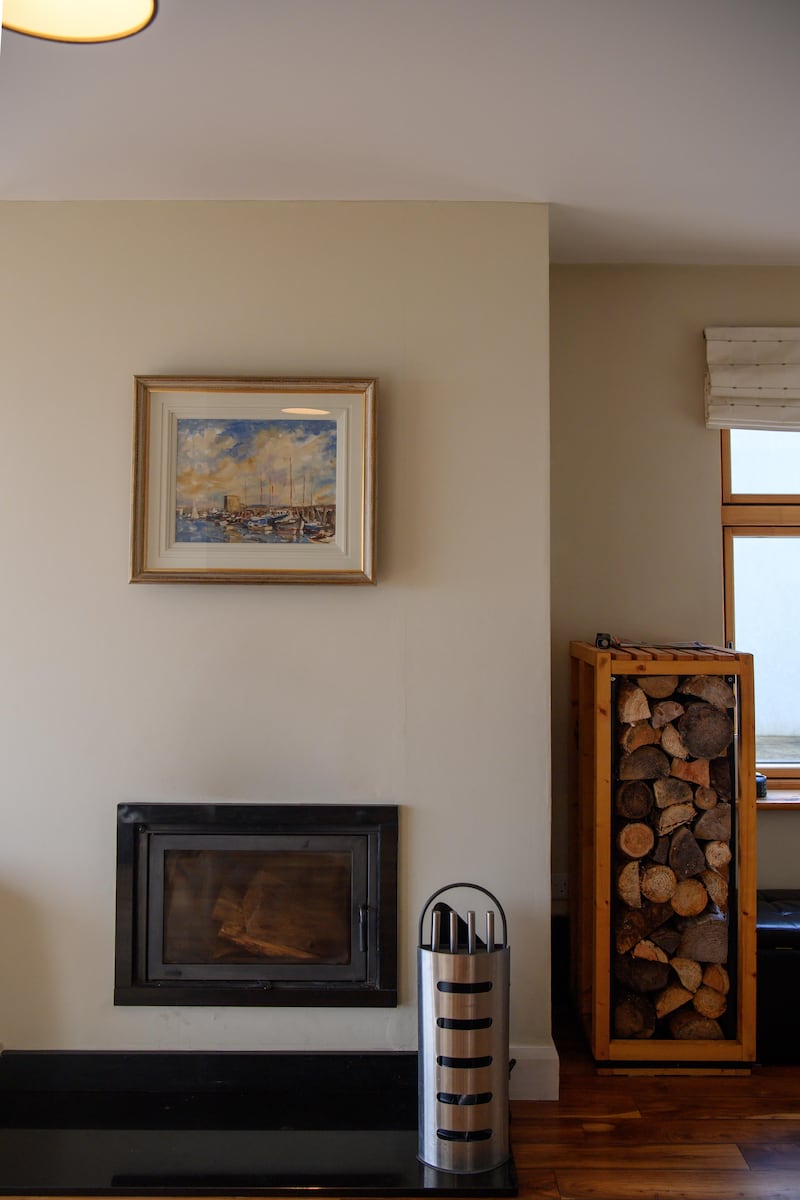 Sittingroom with wood burning stove. Photograph: Daragh McSweeney/Provision
 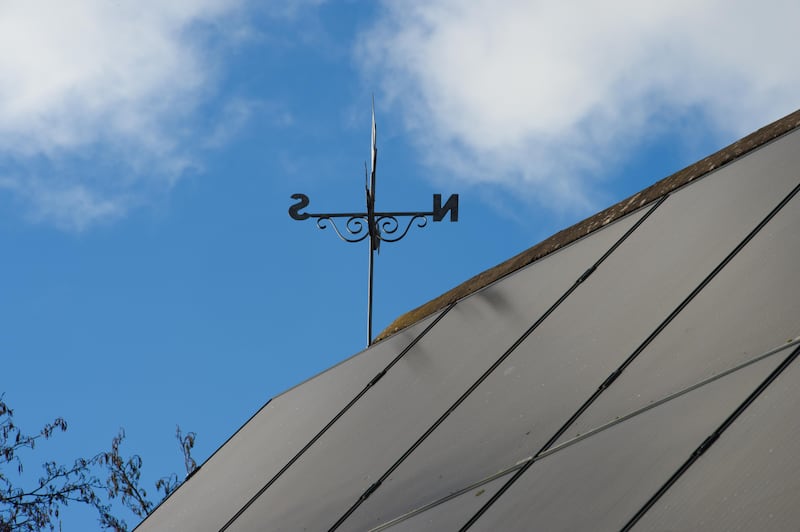 Solar panels have been installed on the property. Photograph: Daragh McSweeney/Provision
 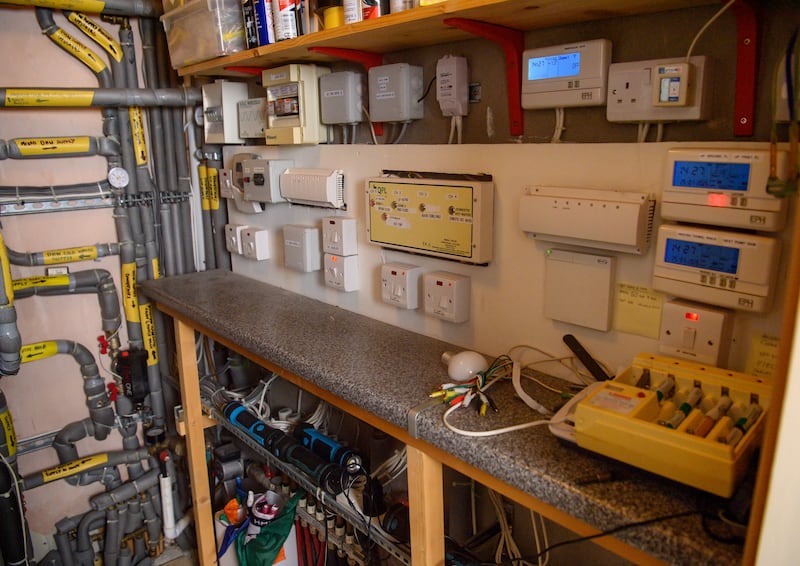 Electrics plant room in Dónal Kissane’s home.
Photograph: Daragh McSweeney/Provision
One of their favourite features is a laundry chute from upstairs to the laundry room downstairs. While it sounds like a simple modification, it proved challenging because it required cutting one of the corners of the structural pre-stressed concrete floors. “Our ICF contractor Bernie Collins, working with ICF supplier ThermoHouse, and the pre-stressed concrete floor supplier Keohanes, came up with an innovative solution and the laundry chute was installed,” he says. More passive houses have been built in Ireland since the Kissane family moved into their home, but the numbers are still very small. According to the International Passive House (IPH) database of more than 6,200 buildings, only 70 passive houses and buildings have been certified on the island of Ireland to date.
Dónal believes anyone building a house today is wasting money if they don’t go down the passive house route. “The energy performance of our house has been independently assessed and certified at less than 21 kWh/m2/year. By way of comparison most houses in Ireland use 80 -100 kWh /m2/year. So our house uses about 25 per cent of the energy of a typical Irish home,” he says, noting that the cost of using that energy is also much lower. As well as generating electricity from the solar panels, they have a smart meter and use electricity stored by the battery during the 5pm-7pm period, when electricity costs are highest for their tariff.
He now shares his knowledge by opening his home during the Passive House Open Days. “I learned a lot from talking to people when we designed our house and am always learning by talking to people,” he says. “It’s always evolving.”
Biggest win
“Our favourite thing about our house and passive building in general, is the ability to link outside and inside via passive elements such as south-facing glazing. You can sit inside on a cold day and enjoy the surroundings as if you were outside,” he says.
Biggest mistake
“You cannot puck a ball against the gable wall,” he says, echoing a complaint from his daughters Ciara and Aoife, both keen camogie players. “The house has 125mm of external insulation and render so pucking a sliotar against it will damage it.”