
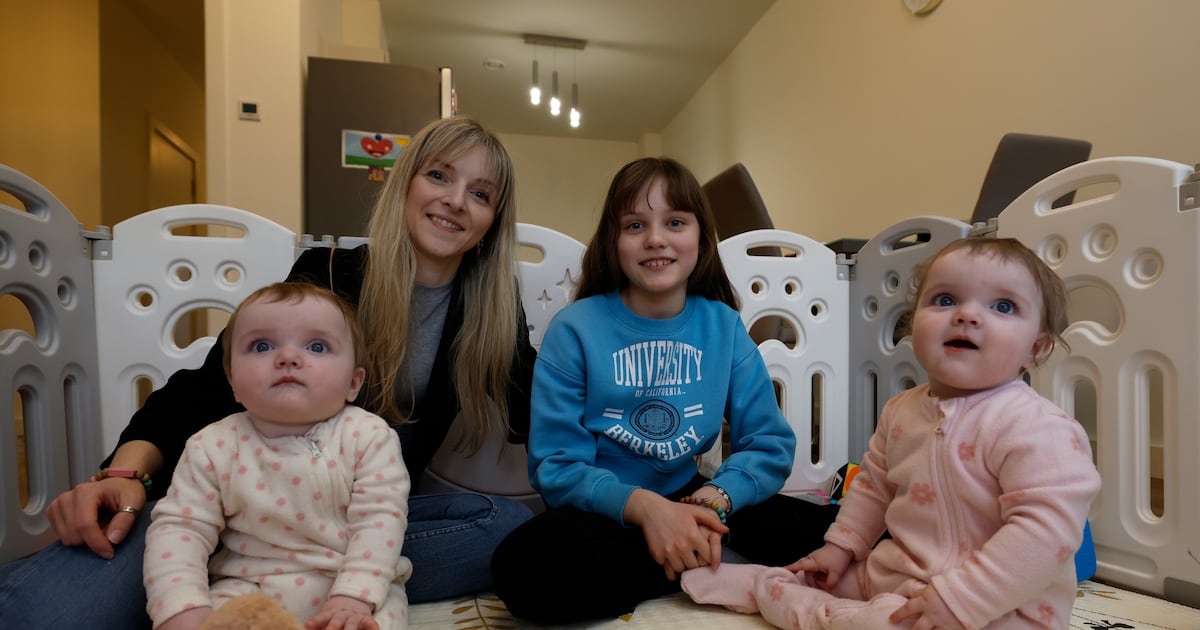
“Children don’t need to choose between languages or identities,” says Francesca La Morgia, the founder of Mother Tongues.
The organisation helping multilingual families living in Ireland to keep their languages alive was set up by the linguistics lecturer almost a decade ago.
What began as a small community-led project in Dublin has expanded to have participants based all over Ireland. Next weekend Mother Tongues holds its ninth annual festival celebrating linguistic diversity.
The number of languages spoken in an increasingly multicultural Ireland has risen to more than 70, according to the Central Statistics Office.
“It feels especially important right now,” says festival director Fernanda Ferrari, originally from Brazil.
“We’re living in a moment where the country is more linguistically and culturally diverse than ever,” Ferrari says. “And yet, many families still feel pressure – sometimes quietly – to leave parts of themselves at the door, especially when it comes to language”
“In a time when conversations around identity and belonging can feel very polarised, Mother Tongues offers something simple and powerful: a shared space where language becomes a bridge, not a divide.”
The Wexford-based artist says “language, identity and belonging are deeply connected” and “the arts can be transformative for children and families”.
Ferrari helped to develop Mother Tongues’ language explorers programme which sees artists work with children to examine, share and be proud of their home languages. “I witnessed its impact first-hand,” she says.
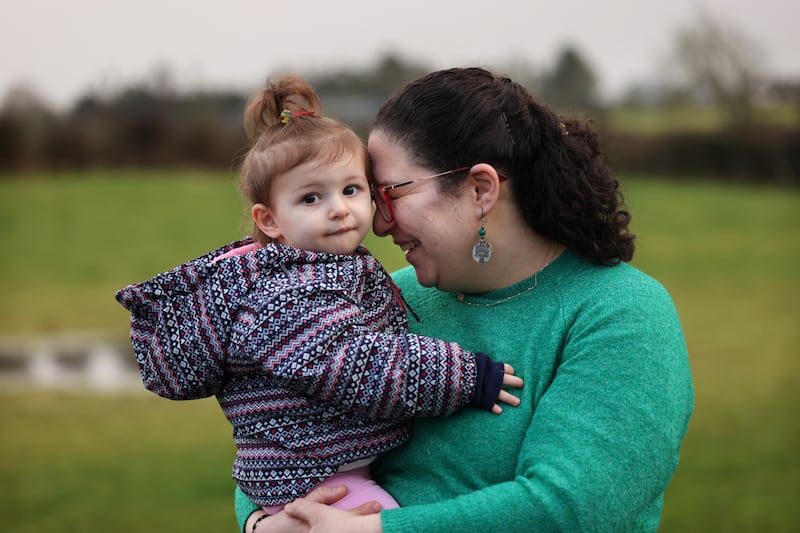 Hala Jaber, originally from Palestine, at her home in Co.Galway with her daughter Emila. Photo: Bryan O’Brien / The Irish Times
People living far from their homeland find comfort at being able to talk to others in their native tongue, says Hala Jaber, who will be facilitating a musical workshop at the festival.
The Palestine native first came to Ireland to do her degree and met her now husband, and the couple now have a daughter (19 months).
“It’s important that my daughter learns to speak Arabic as it’s part of my identity and her heritage and history,” she says.
“Children born into mixed-heritage families need to learn both languages as it helps them to connect to both sides of their families.
“Everyone back home speaks English very well, but there are lullabies, songs, stories we were told that lose some of their magic if they were translated to another language.”
Jaber advises parents who are worried about keeping their native language alive for their children to “just speak with them in your language from their birth, and they will pick it up easily”.
“There is no special way to do it, but try not to mix more than one language in one sentence.”
[ Sí, oui, ja! You can learn a language late in lifeOpens in new window ]
Jaber’s family has a third language, Irish sign language. Her husband is deaf and Jaber communicates with him via sign and is teaching their daughter to do the same.
“When I’m with my daughter on our own, I speak with her in Arabic, but when my husband is home we speak English with Irish Sign Language,” she says. “She is aware to use signs with her dad, and with me she uses words in both Arabic and English. It is fascinating to see how she is picking up and absorbing everything in a natural way.”
“Mother Tongues is important because it creates a safe space for people to celebrate their language, learn about other languages, engage with various experiences, … and understand the feeling of being able to understand versus not being able to – and how that makes them feel.”
While Dublin resident Shyamala Sathiaseelan and her husband are both from India, they have different native tongues. She grew up speaking Tamil, while he spoke Kannada.
They have brought their two children up to speak both languages so they can communicate with their respective extended families.
Native languages are crucial to keep customs, traditions and legends alive, she says.
“The mother tongue is important because a lot of books and stories get lost in translation if they listen or read in a different language,” she says. “Parents should speak to their newborn babies in their own language as that helps them express their feelings honestly and easily.”
“Also young minds pick up languages easily, even if they stop speaking it, it stays in their mind forever. When I feel strongly about something, my mother tongue comes out and I feel that if my kids can’t understand what I am saying or the emotion behind it, then I’ve lost something there.”
She will be running a bilingual workshop in English and Tamil on the connection between Rangoli and Celtic art at the upcoming festival, on the theme of the power of story.
“Stories are easy to understand, absorb and retain and when a language is taught in the form of a story, children find it easy to learn and retain more than what we can imagine.”
As a lecturer in language development at Maynooth University, Polish native Agnieszka Pedrak, who will be speaking at a festival panel, agrees.
“Children who are growing up with two or more languages have a wonderful opportunity to be better connected to their heritage, not only in childhood, but also later on in life,” she says. It helps people to understand their parents’ cultures, traditions, literature and where they are coming from “and this gives a better insight into self”, she says.
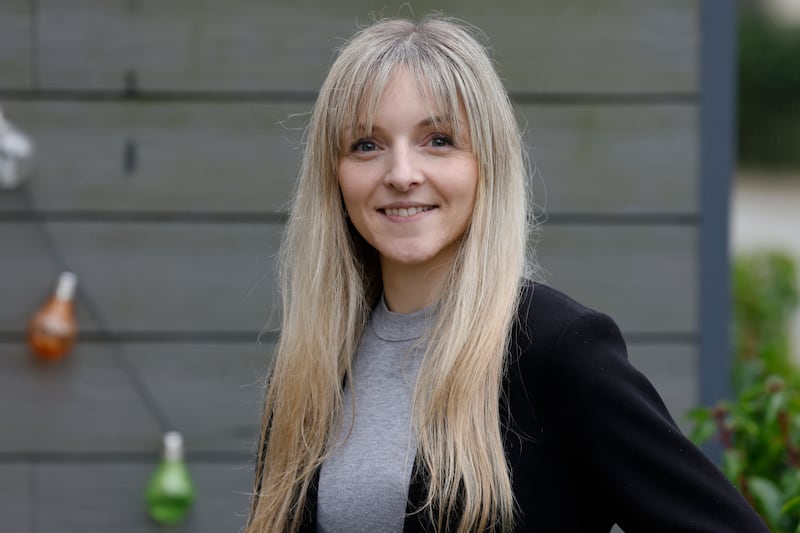 Agnieszka Pedrak, a lecturer in language development at Maynooth University, will be speaking at the Mother Tongues festival. Photograph: Nick Bradshaw
But learning a mother tongue also brings practical benefits for children in Ireland. “Many develop literacy skills so they can take their home language as a Leaving Certificate subject and score additional points,” says Pedrak, who teaches Polish in Saturday schools across Ireland. “Many children prepared specifically to take Polish at their Leaving Certificate so they could gain entry to the university they wanted.”
Polish is among 14 foreign languages available to sit at Leaving Cert in addition to Irish and English.
The postdoc researcher emphasises the importance of being able to talk to her three children in Polish. “Languages are not only tools for communication, they are part of how we live our lives.”
“We live languages, create relationships and bond with other people, especially family members in early childhood, through languages,” she says. “Languages are not only for exchanging information, there is a lot of emotion surrounding language and communication – how we build relationships, how deeply we connect with others, how we talk about feelings and problems as we grow up.”
“Growing up bilingually gives children access to their grandparents’ world, to create and nurture a close relationship with them, despite kilometres, to feel that they are also ‘at home’ when they visit their country of origin.
“So I think the festival is an amazing opportunity for parents and children to try something new and to look at languages in a fun and creative way.”
Given the resurgence of interest in the Irish language, there will also be an emphasis on Ireland’s native mother tongue at the festival.
Zita Monahan and Caitríona Ní Threasaigh will co-host a workshop as Gaeilge. While the latter grew up speaking Irish at home, Monahan grew up in an English-speaking family in Co Wicklow. However, she has always had a grá for the Irish language and makes sure her own daughter is growing up learning and speaking Irish at home and at school.
Although it is wonderful to be able to speak your mother tongue throughout childhood, it is never too late to rediscover the beauty and the cultural importance of your own language, she says.
“I genuinely believe it is never too late to become a language explorer,” she says. “We may all have different levels of fluency but when we use what we have we can develop more confidence to make a language, in this case, Irish, part of our everyday lives. I think it is so powerful for a child to see their parents or caregivers give things a go, make mistakes and discover something about themselves.”
“I started singing songs to my daughter in Irish when she was a baby and that became a really lovely part of our day together and so I began consciously choosing to speak Irish when possible, either at home or when out and about and this became more and more natural over time – if I could say something in Irish I chose to say it. That could be one word, or one sentence but over time it builds confidence and vocabulary.”
The actor and theatre maker, says that language can be made fun through music and storytelling.
“Exposure to a language doesn’t always have to be constant to be impactful,” she says. “I didn’t go to a Gaelscoil but a lecturer in college told me to put on Raidió na Gaeltachta at any opportunity and to enjoy listening to Irish without worrying too much about understanding everything. That was encouraging as when the pressure was off to ‘understand’ I could enjoy the sound and musicality of the language.”
Ferrari says “storytelling is often the first way we experience language – through parents, grandparents or caregivers reading to us, teaching us not just words, but how to make sense of the world”.
“So, this year’s festival celebrates that shared human experience – the everyday stories we carry in our home languages and how powerful they are when we share them.”
With performances, discussions, creative workshops, exhibitions, hands-on activities, artists working in 12 different languages and a visiting theatre group from Denmark, the event promises to be “joyful, playful and deeply meaningful”.
“Children hear their words spoken proudly in public spaces,” says the director. “It’s about belonging, confidence and connection – and doing all of that through creativity and joy.”
“It’s a space for everyone, to come together, celebrate who we are, meet new people, and encounter new languages and cultures through creativity, ” she says.
“You’ll see Irish-speaking families sitting beside newly arrived families, children hearing stories in languages they’ve never heard before, and parents recognising that multilingualism is not a barrier, but a gift. It’s joyful, it’s moving and it’s deeply human.”
The Mother Tongues festival takes place in Tallaght, Dublin, on February 20th and 21st and is timed to coincide with International Mother Language Day. For more information visit: mothertonguesfestival.com