
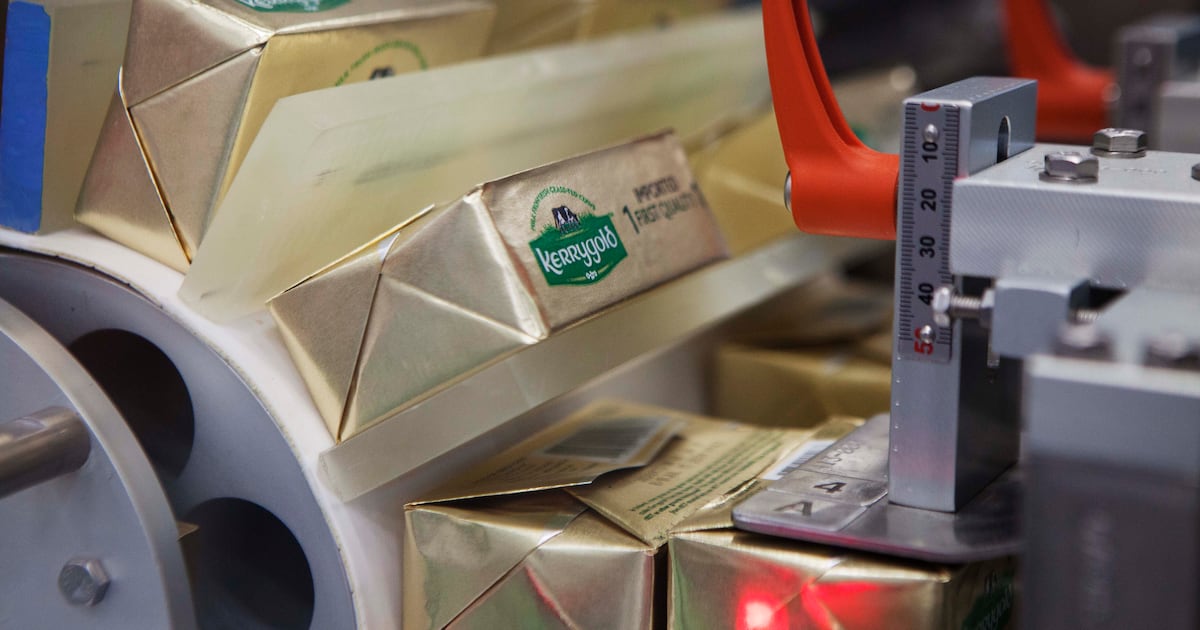
The last 12 months have been monumental for Kerrygold in Britain. Where once it was just another butter on shelves – and a nostalgic taste of home for expat Irish people – it has now become another calling card for Irish culture across the Irish Sea, joining the likes of stout, spice bags and chicken fillet rolls.
Kerrygold’s newfound chicness among British consumers began sometime in April, when an upmarket London homeware store teamed up with the brand to launch a limited edition run of butter knives, each with a green handle repurposed from Kerrygold’s plastic waste and sold in a box reminiscent of the famous gold packaging.
Queues outside Allday Goods in De Beauvoir were unfathomably long and, given just 50 knives were made on the first run, countless prospective buyers were left wanting. To satiate demand, hundreds more knives were produced. Another batch was on the way as of January 2026.
The cutlery partnership was one of numerous marketing moves last year, these operating in tandem with the launch of Kerrygold’s spreadable range into British supermarkets in March. It was no small undertaking. Back in Ireland, Kerrygold hosted its first influencer trip over the summer, taking British-based social media stars to its home in Cork to extol the virtues of grass-fed cows, rolling hills and decades of Irish dairy heritage. Meanwhile, it teamed up with a number of British-based content creators to produce recipe videos. Who knew there would be such interest in beta carotene, the red-orange pigment found in luscious grass and which gives Irish butter its yellow hue?
London-based Nell Carter (Instagram: @nellskitchn), known for her extravagant crisp-based sandwiches, was tasked with shooting six butter-based videos. Her latest creation is a leek and cheddar focaccia, served warm with Kerrygold and hot honey. She says: “I’ve got a partnership with the company to do six videos. Clearly, there’s a drive to push on social media and I’m very happy to be a part of it. I’ve seen a growing presence, lots of hype around it.”
But it’s more than business, says Carter: “I like the taste. It’s sort of the best of the accessible mid-range. It tastes creamier and richer. And I like the fact that it doesn’t have a light version, which is a strong position to take in 2026 when everyone’s diet-conscious. It’s what butter should be.”
In November, the hype went further, as Kerrygold employed the expertise of Irish chef and MasterChef judge Anna Haugh to host a dinner at her Chelsea restaurant Myrtle, one of the few London venues serving Corndale Farm chorizo from Limavady in Co Derry and the only one with beef boxty on its tasting menu. The Irish food photographer Steve Ryan, who cofounded the independent 40ft Brewery in Hackney, was there to document events.
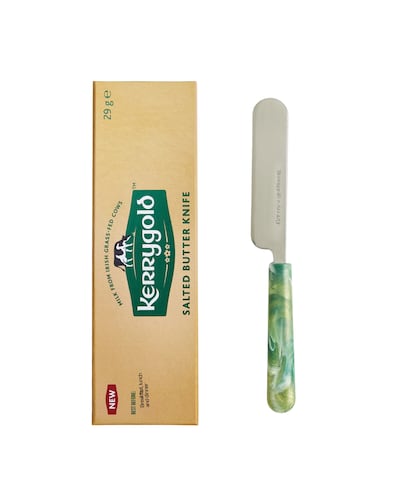 Kerrygold’s limited edition butter knife
“They did it with Angela Scanlon and lots of influencers,” Ryan says. “I’ve seen the volume turned up massively and I’m seeing it more and more. And not just in a media sense – in kitchens too. Chefs are increasingly using Kerrygold in Britain. Which I suppose validates my already strong feelings towards it, given I grew up eating the stuff and would never buy anything else for daily use.”
As with any burgeoning trend, it’s not all Kerrygold’s doing, but part of something bigger. London, and Britain more broadly, is increasingly interested in Irish food and drink today, with cheeses such as Gubeen and Milleens now regular fixtures in high-end restaurants, and spice bags arriving as common parlance in pubs. Even Wetherspoon’s does a version. And it won’t be long before Beamish, the “third stout”, is enshrined into the mainstream, with beer importer Cave Direct signing a deal late last year to take Beamish en masse to Britain for the first time. And so the name Kerrygold has transcended a mere ingredient, instead being inducted into a growing world of food-based pin-ups, each one a cultural touchstone as much as a point of patriotism for émigrés.
“There’s a lot to this sudden wave of interest, I think,” says Ryan. “It’s hard not to be happy about Kerrygold. In the family of Irish products, it’s one I truly love. I guess Barry’s Tea will be next? Although I saw Paul Mescal wore his GAA shorts in New York not so long ago and kicked off a bit of a trend over there. I wonder if we can get that going in London?”
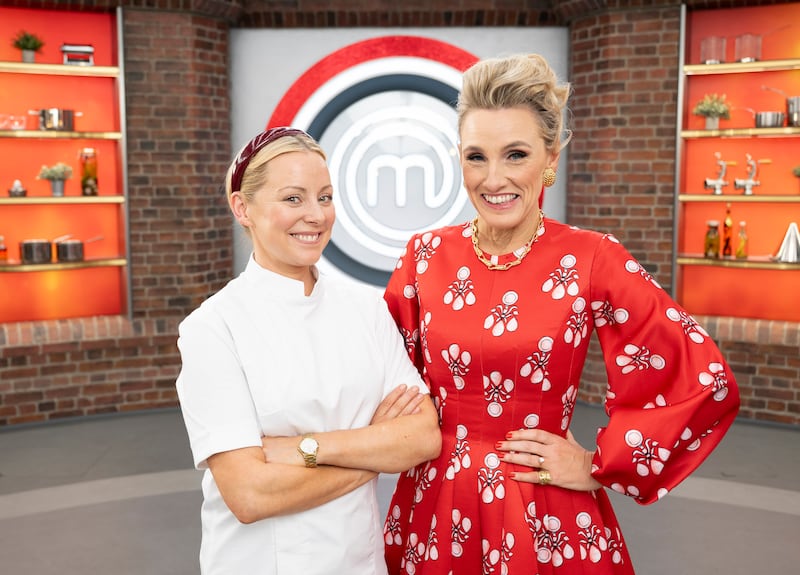 Anna Haugh (left) with fellow Masterchef judge, Grace Dent. Photograph: BBC/Shine TV/PA Wire
It wouldn’t be surprising. Outside the simple act of spreading butter on bread, Kerrygold has already curried enormous celebrity endorsements and fashion vogue. On a recent episode of The Graham Norton Show, Britain’s biggest talkshow, Colin Farrell explained that he made Margot Robbie Tayto crisp sandwiches while filming 2025’s A Big Bold Beautiful Journey.
“We were talking about the food of our childhoods and what evokes a sense of that bygone time,” Farrell regaled. “I talked about Tayto crisps, in a sandwich, with Kerrygold butter …” The actor had hardly finished his recipe when the crowd cheered its name. Host Norton also approved, in his classically understated way.
As for Kerrygold’s undeliberate foray into sartorial happenings, that was down to the Meath designer Kimberley Tino, aka Maya Grisham, whose crystal-studded clutch bag went viral on TikTok in autumn, in Britain as much as Ireland. She said the piece was inspired by childhood memories of enjoying Tayto and Kerrygold butter on a baguette after school.
[ Kerrygold butter price cut by 9% across SuperValu and Centra storesOpens in new window ]
Kerrygold owner Ornua – formerly the Irish Dairy Board – must be revelling in business success. Though sales figures have yet to be released for 2025, the 12 months prior saw the company witness its hero product become the second biggest butter brand in Britain, following Lurpak, which is made in Denmark by the dairy conglomerate Arla.
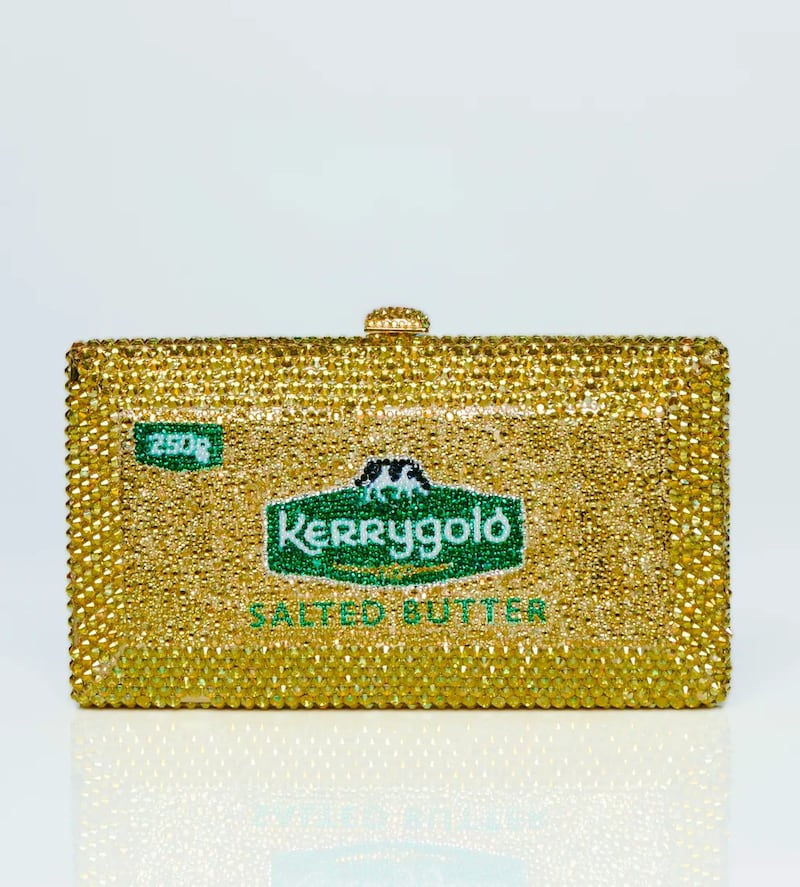 Kerrygold handbag by Maya Grisham
Of course, as much as there’s been a tangible buzz online, a plan to grow has long been in place.
Patrick Blake, director for the UK and Europe at Ornua, said Kerrygold was the UK’s fastest-growing block butter brand in 2024. The most recent sales figures available showed an 11 per cent sales increase year-on-year.
“Kerrygold’s presence in the UK dates back over 60 years with the brand first arriving on shelves across Liverpool and Manchester in 1962,” said Blake. “From there it has grown to become a global Irish success story.”
Blake highlighted customer loyalty to “staples that offer great taste”, leading to repeat purchases and said the brand’s momentum had extended “to the social conversation”. He pointed to “viral food trends like butter boards, ‘butter yellow’ summer wardrobe looks, and even cow tattoos”.
But few would have predicted the brand turning into 2026’s must-have kitchen accessory in Britain.
“It’s a serious growing force,” says Patrick Powell, an Irish chef in London. “It’s absolutely huge now. I love it, so I get it, but it’s kicked off in a big way. Maybe a bit more than expected.
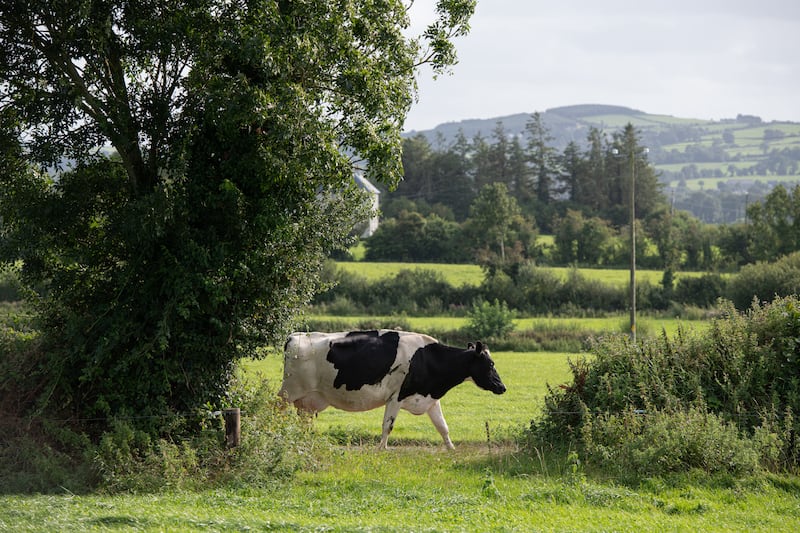 A Tipperary grass-fed cow whose milk is destined for Kerrygold
“I think it’s more than just another trend though, because whatever way you look at it, it’s just a properly good butter – rich, creamy, beautifully yellow. It turns pomme purée a lovely golden colour. There are brilliant butters from all over, and very special ones from small farms and producers, but for the price, it can’t really be beaten.”
If Powell is right, Kerrygold could overtake Lurpak by 2027 and become Britain’s most popular butter. Good dairy, it seems, is worth its weight in gold.