
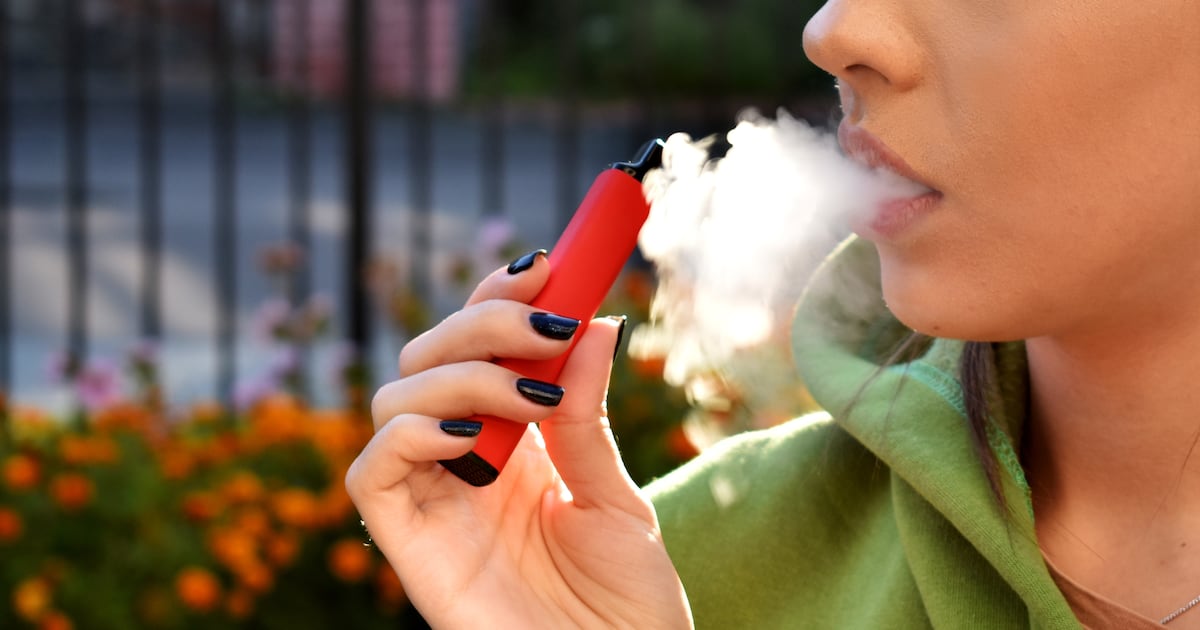
The European Union needs to urgently close “loopholes” that exist in its regulation of nicotine products, from vapes to pouches, the head of the World Health Organisation told Minister for Health Jennifer Carroll MacNeill.
Tedros Adhanom Ghebreyesus, director-general of the United Nations’ public health agency, said governments were still facing “strong industry opposition” from the tobacco lobby, when trying to regulate the sector.
In an August 22nd letter, Tedros said EU-wide regulations of tobacco and nicotine products were in need of an update, given the popularity of e-cigarettes or vapes, and nicotine pouches, among children and young people.
The letter to Carroll MacNeill said it was “essential to address regulatory loopholes that threaten tobacco control progress in the European Union member states”.
The UN health chief said “there remains a persistent difficulty of developing effective national regulations amid strong industry opposition”. Politicians were trying to keep pace with what was a “rapidly evolving landscape of tobacco and nicotine products,” Tedros wrote.
The letter and other internal documents were released to The Irish Times under the Freedom of Information Act. Tedros said he wanted to thank Ireland for its “ongoing leadership” in pushing regulations on tobacco.
The coming revision of EU regulations “represents a critical opportunity for tobacco control” globally, he wrote.
The Government has on its own bat been calling for EU restrictions on tobacco products to be updated, to take account of changes in the industry and the prevalence of vapes and pouches.
Existing EU-level regulations came into effect in 2014, which among other things required tobacco products to carry prominent health warnings and pictures on packaging. The legislation was the subject of a fierce lobbying campaign by the tobacco industry at the time.
Several tobacco giants have pivoted parts of their businesses into less regulated products, such as vapes, and nicotine pouches that are placed between a person’s lip and gum. Philip Morris bought Swedish Match, who produce the popular nicotine pouch brand ZYN, in 2022.
[ Government open to banning vapes in cars with children, says TaoiseachOpens in new window ]
Internal briefing notes prepared by the Department of Health said a revision of the EU rules had been delayed for several years.
“This has meant that multiple member states, including Ireland, have had to move ahead with their own measures,” the internal notes stated.
The Republic has introduced national legislation to ban the sale of disposable, single-use vapes, and extended restrictions around the sale and marketing of tobacco products to vapes.
The European Commission, the union’s executive arm that proposes laws, is evaluating existing EU regulations, before suggesting changes.
Carroll MacNeill had hoped a proposal would have been published in time for the Government to lead negotiations on draft legislation during the second half of this year, when Ireland will hold the rotating presidency of the Council of the European Union, the body that represents member states.
Carroll MacNeill wrote to European health commissioner Olivér Várhelyi last June, talking up the potential for work on new tobacco regulations to be advanced during the six months Ireland will chair EU-level policy debates.
However, it is expected the commission’s proposal may not land until well into the second half of this year, or later, which means negotiations between capitals may not begin until 2027.
In a letter responding to the Minister, the Hungarian commissioner acknowledged the “growing concern” about the increased use of vapes, particularly by young people.
“There is no doubt about the urgent need to address these challenges … The commission remains fully committed to tobacco control legislation which ensures comprehensive and effective tobacco control measures,” Várhelyi wrote.
“If the Commission publishes a proposal for a revision of the Tobacco Products Directive on time, Ireland will be fully committed to progressing negotiations on this proposal during our presidency in the second half of 2026,” a Department of Health spokesman said.