
It’s the start of a new week, and we’re here to provide a quick round-up of the top stories from the last week. Here’s what you need to know:
Trump Admits ‘Mistake’ In Passing Over Kevin Warsh For Fed Chair In 2017
President Donald Trump has admitted to making a significant error in not appointing Kevin Warsh as the Federal Reserve Chair in 2017. Trump acknowledged this as a “really big mistake” and attributed it to the influence of his former Treasury Secretary. This revelation was made during an interview with Fox Business.
Trump revealed that Warsh was his initial choice for the position, but then-Treasury Secretary Steven Mnuchin swayed him. Warsh was the runner-up in the selection process that ultimately led to Jerome Powell becoming the central bank’s leader.
Read the full article here.
Goldman Sachs Highlights 7 Stocks To Benefit From Memory Shortage
Giuni Lee, an analyst at Goldman Sachs, stated that the supply/demand landscape for memory chips is currently one of the tightest in over a decade.
Read the full article here.
Trump Tariffs Backfired: 94% Of Economic Burden Fell On US Importers, NY Fed Says
A report released by the Federal Reserve Bank of New York revealed that American businesses and consumers, rather than foreign exporters, bore nearly the entire financial burden of the 2025 tariffs. Despite a significant increase in the average U.S. tariff rate from 2.6% to 13%, foreign prices did not drop significantly to offset the hike.
Read the full article here.
US Economy Adds 130,000 Jobs In January
The U.S. economy added 130,000 jobs in January, according to data released by the Bureau of Labor Statistics. However, this figure was overshadowed by a major revision that saw over a million jobs vanish. The initial report had indicated a gain of 467,000 jobs in January, but this was revised to a loss of 533,000 jobs.
Read the full article here.
China Directs Banks to Cut US Treasury Holdings
China has reportedly instructed its banks to reduce their purchases of U.S. Treasury bonds, potentially dampening foreign demand for U.S. debt. Economist Peter Schiff cautioned that if the Federal Reserve intervenes to buy the bonds, it could lead to higher consumer prices.
Read the full article here.
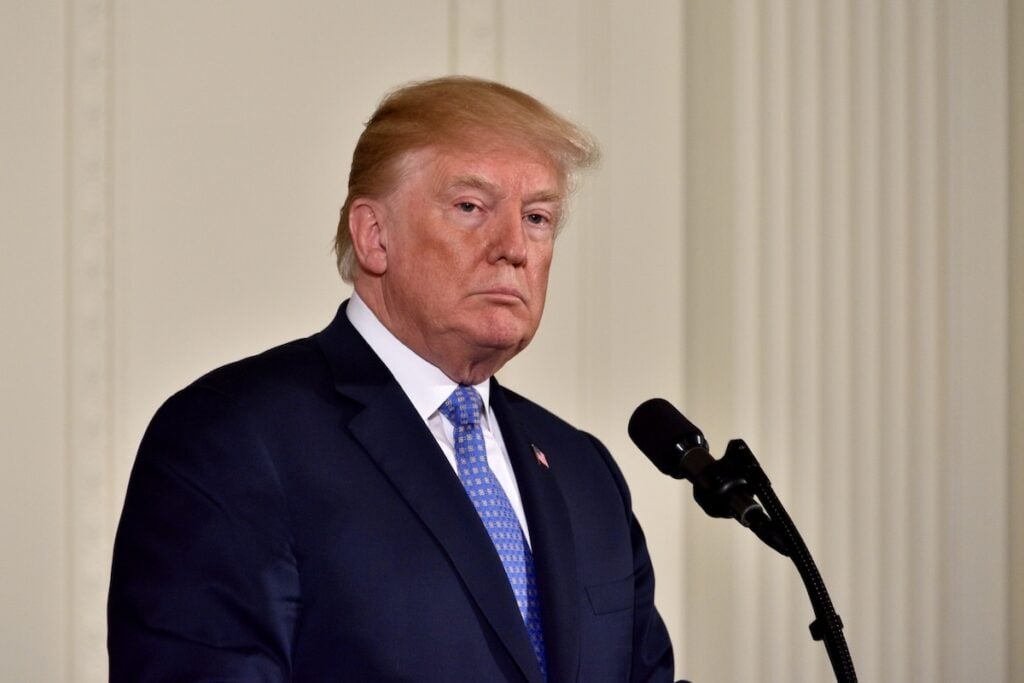
Photo courtesy: Evan El-Amin on Shutterstock.com
Disclaimer: This content was partially produced with the help of AI tools and was reviewed and published by Benzinga editors.