
Passionate sparring, deliciously delivered lines, an inspiring female lead, blood on the screen. It all spells obvious sequel potential.
But enough about Sam Raimi’s Send Help. This weekend brings the release of “Wuthering Heights”, as the title is styled, and, with months of enjoyably derision-tinged chatter about the Emily Brontë adaptation all but guaranteeing a decent box-office return, Hollywood economics demand that thoughts now turn to a second instalment.
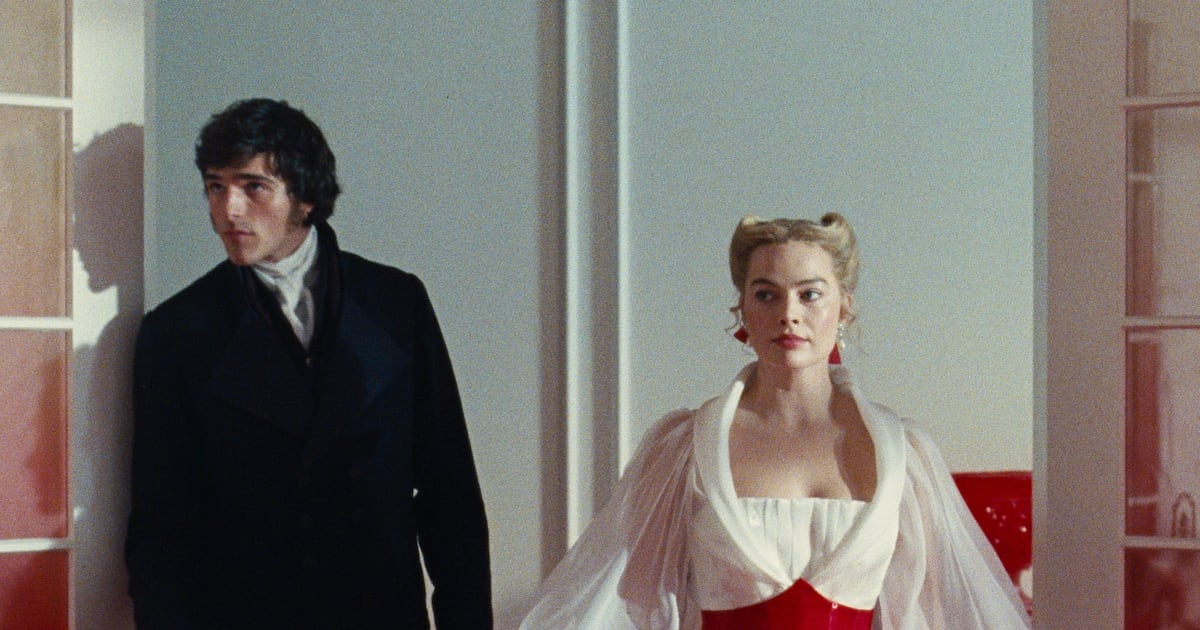
Yes, it’s time to start fantasy casting “Wuthering Heights” 2 – or, by rights, Wuthering Heights “2”, because, like others before her, Emerald Fennell has opted to skip over the second half of the novel in her take, leaving a creaking door open for a “sequel” that finally gives the younger Cathy Linton – daughter of Catherine “Margot Robbie” Earnshaw – her due.
A film about the travails of the next generation would, admittedly, be difficult to pull off within the confines of Fennell’s universe, not least because “Wuthering Heights” excises Catherine’s brother Hindley from the narrative, making the future development of her offspring’s ultimately happy union with his son Hareton impossible.
Who knows? Maybe the woman who brought us the grave-humping scene in Saltburn has a line, and that line is marriage between cousins.
But it does seem like a lost opportunity that no one has bothered to make an iteration of Wuthering Heights that begins at the midpoint of the novel, with Catherine dead and Heathcliff tormenting everyone around him.
There’s more than enough plot for a proper horror. We could see his displaced rage and keenness for intergenerational revenge fuel decades of senseless violence against hapless children forced to pay for the sins of their deceased parents, while his favourite ghost pops up every now and again to say hi.
[ ‘Wuthering Heights’ review: Less 120 Days of Sodom, more Carry on HeathcliffOpens in new window ]
Eventually, the abuser becomes a spent force. Cathy 2.0 – tamer than her “mischievous and wayward” mother and, frankly, less of a dose – emerges as the real heroine of the story, and even gets to go back to her nice house at the end. Or does she?
The second half of Wuthering Heights is less a structural flaw, of course, than it is the entire point. It’s the earlier chapters of Brontë’s work that should be jettisoned from film adaptations, as starting with the arrival of “sullen” Heathcliff and dwelling on his nascent moorcentric friendship with Catherine soon requires a disconcerting change of heads, with compelling child actors often replaced by less convincing grown-ups.
I studied Wuthering Heights – the quotation-mark-free version – at school, and remember it mostly as a cautionary tale about the unfortunate sequence of events that can follow an ankle injury.
Without such arresting visual fare as Robbie’s latex and cellophane dresses to consider, I recall writing reams of earnest essay material about the symbolism of windows in Brontë’s Gothic text when really my overriding thought was that her characters would have been spared a lot of pain and misery if only television had been invented 150 years earlier.
Still, Yorkshire is a lovely place to spend some time, as “influencers, TikTokers and Instagrammers” are discovering, according to this week’s BBC news report on the hordes of content creators now “descending on Haworth”, the village where the Brontë family grew up.
My own weekend in Haworth some years ago was, unlike “Wuthering Heights”, free of torture, with a fascinating visit to the Brontë Parsonage Museum followed by second-hand-bookshop browsing and some cake.
The fittest member of our group set a cruel pace on the walk up to Top Withens, the long-ruined farmhouse “associated” with the novel, but otherwise there was no hint of Fennellian sadomasochism, just impressively bleak moorland views and a cobbled main street that might prove perilous in heels.
This is to say that West Yorkshire is deservedly reaping the rewards of Fennell’s film finally being out there in the world, and if influencers are more likely to bump into a local unleashing his best Kate Bush impression than Jacob Elordi looking moody in the mist, then it has still, surely, been an educational time for all concerned. Why not repeat the experience and give everyone in Brontë country a fresh injection of vibes-based screen tourism?
The novel might not be, in any shape or form, “the greatest love story of all time”, as Warner Bros has marketed “Wuthering Heights”, but it is still an object lesson in the importance of retaining an honest lawyer – and that makes it a timeless tale.
Gaps stalk this book. Various riffs on it tend to focus on either Heathcliff’s origin story or the “missing years” where he disappears and gets rich. But, because of the way the novel is narrated, there is also much we don’t know about the younger Cathy and how she finds the resilience to overcome the brutality that surrounds her. She should be the star. When exactly Heathcliff dies doesn’t completely matter. There will, as Brontë suggests, be others like him.