
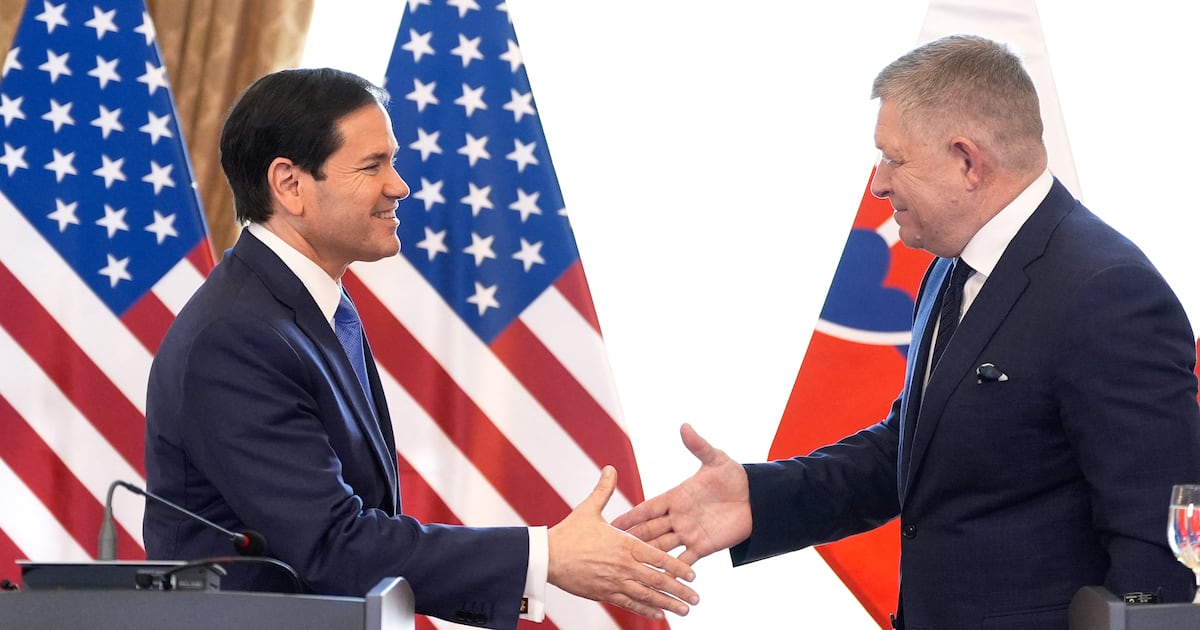
US secretary of state Marco Rubio has named Slovakia and Hungary, headed by Trump-friendly leaders, as a “key component” in Washington’s future engagement with Europe.
Rubio meets Hungarian prime minister Viktor Orbán in Budapest on Monday after warning EU leaders in Munich that the US was interested in allies “not paralysed into inaction by fear of climate change, fear of war, fear of technology”.
In Slovakia on Sunday, Rubio said the Trump administration expected “every country in the world to act in their national interest; that is what countries are supposed to do. When our national interests are aligned … this is an extraordinary opportunity for co-operation and partnership.”
He also promised Slovakia and Hungary “concrete actions that we will take together in ways that are beneficial to your people and our people”.
Back in Munich, EU foreign policy chief Kaja Kallas welcomed as “important” Rubio’s message that the US and Europe are “intertwined” but said it was “also clear that we don’t see eye to eye on all issues and this will remain the case”.
[ Rubio spares Europe a Valentine’s Day massacreOpens in new window ]
She dismissed as “fashionable Euro-bashing” claims by Rubio, echoing others in the Trump administration, that Europe’s political establishment was pushing the Continent to a cultural and economic abyss.
“Contrary to what some may say, woke, decadent Europe is not facing civilisational erasure,” she said.
As for US claims that free speech in Europe is endangered by political correctness, she added: “Coming from a country that is number two in the press freedom index, hearing criticism from a country that is 58 in the same index … is interesting.”
Her remarks concluded a tense transatlantic standoff over the weekend in Munich, where attending EU leaders welcomed Rubio’s conciliatory tone but remained wary of the conditions he offered for co-operation with the US.
While EU leaders in Munich offered polite resistance, Slovak prime minister Robert Fico, who visited Trump last month in Florida, told Rubio in Bratislava that the EU was in “deep crisis”.
Meanwhile, Orbán, whose April re-election is not assured, stayed away from Munich to launch a weekend series of campaign broadsides against the “oppressive machinery” of the EU.
[ US destiny ‘intertwined’ with Europe, but with caveats, says RubioOpens in new window ]
“Fear-mongering about Putin is primitive and unserious. Brussels, however, is a palpable reality and a source of imminent danger,” said Orbán in a state-of-the-nation address drawing parallels between the EU and the Soviet regime that dominated postwar Hungarian life for decades.
Rubio is expected to endorse Orbán in person on Monday’s visit, echoing last week’s online endorsement by Trump of Orbán as a “truly strong and powerful leader”.
As Hungary’s election campaign enters top gear, Orbán’s Fidesz party is trailing eight points in polls. Before leaving Munich, Rubio told Bloomberg that the Trump administration was still hopeful of reaching a peaceful settlement with Tehran. As 250,000 exiled Iranians demonstrated for regime change in Munich on Saturday, Rubio insisted the US had, if need be, “sufficient firepower in the region to ensure that they don’t make a mistake and come after us and trigger something larger”.