
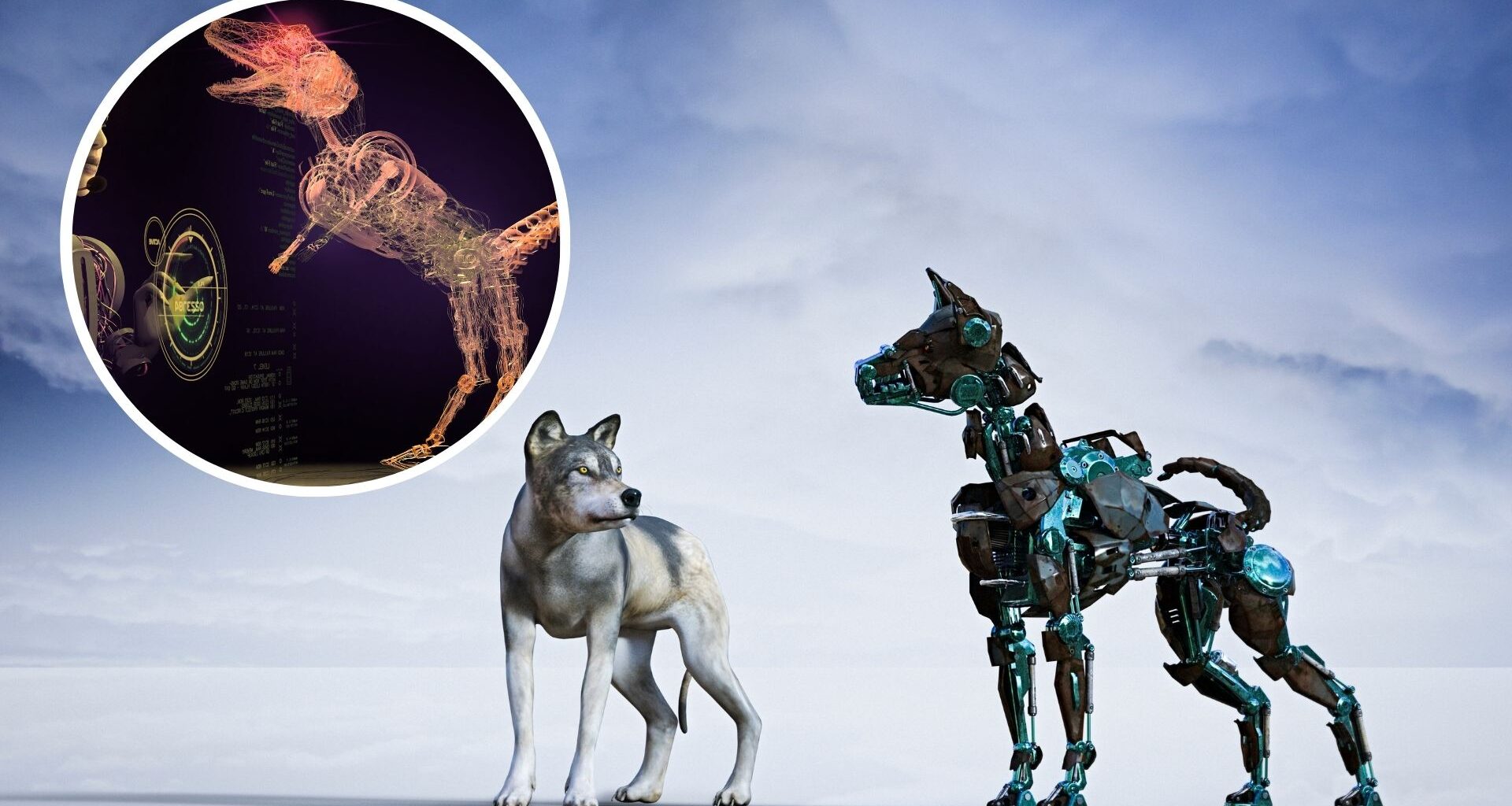
Researchers in Sweden created artificial animals that over time develop functioning vision from scratch – from simple light sensitivity to the ability to discern objects. Artificial animals developed functioning vision without any instruction.
The results show how AI can be used to understand the inner secrets of evolution.
“We have succeeded in creating artificial evolution that produces the same results as in real life. It’s the first time AI has been used to follow how a complete vision system can arise without instructing the computer how it should come to be,” said Professor Dan-Eric Nilsson, sensory researcher and evolutionary biologist at Lund University.
Researchers created virtual animals, released them into synthetic world
Researchers pointed out that in computer — a world built of code — small artificial animals are moving around. They can’t see anything. Yet. But generation by generation something starts to happen. The artificial animals react to light. They orientate themselves, and later they get eyes.
The researchers created the virtual animals and released them into a synthetic world, giving them tasks on how to navigate, avoid obstacles and find food. Each generation showed small variations, and just like in nature, those that coped the best passed on their characteristics. The difference was that all this happened inside a computer – and happened much faster, according to a press release.
Eyes developed in the same way as those of real organisms
“The most surprising aspect was that the computer’s eyes developed in the same way as those of real organisms, even though the environment we created was very simplified,” said Dan-Eric Nilsson.
“In nature there are various solutions for achieving vision: dispersed photoreceptors, camera-type eyes and compound eyes. All three types were seen in the computer simulations. It was as if evolution found it familiar and followed its usual paths, even in our digital world,” says Dan-Eric Nilsson.”
Simple light-sensitive structures grew into functioning eyes
Researchers revealed that step by step, simple light-sensitive structures grew into functioning eyes, linked to primitive “brains” that could interpret the information. For the researchers, it means a completely new way to tackle the big questions about evolution: Why has it taken certain paths? Why are some solutions so common, while others never arise?
The method has potential far beyond evolutionary biology. The same principles can be used by engineers to develop technical systems that are robust, efficient and adaptable – just like biological solutions often are. By studying how evolution solves problems, the researchers can learn how to build technology that works better in reality, according to the press release.
“This is just the beginning. Using AI we can explore potential evolutionary futures and see which solutions are waiting around the corner, long before nature itself gets there,” concluded Dan-Eric Nilsson.