
Our national treasures and artefacts are rightly held in our national museums, but regional museums also hold many local unexpected gems that have the capacity to make us catch our breath. Some months ago, when I was on another assignment, I happened to visit the Museum of Hidden History, in Clonmel, Co Tipperary, where I had not been before.
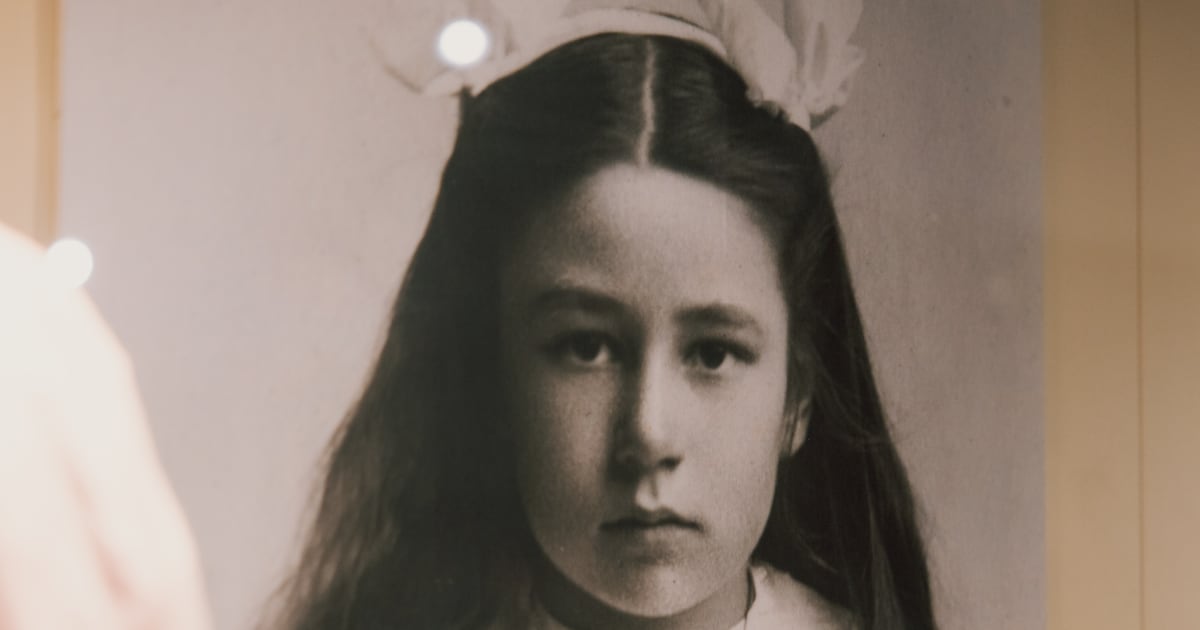
While walking round, I saw a display in a glass case that made me stop. I read all the labels, all the text, and then took a half dozen photographs of the exhibits within. I was transfixed. What I was looking at were material remnants of a young girl’s life, an 11-year-old child who died of typhoid in 1919. In the case was a striking photograph of her, solemn and lovely of face and dark of hair, wearing a pendant necklace. Also in the display case were some of her possessions from over a century before.
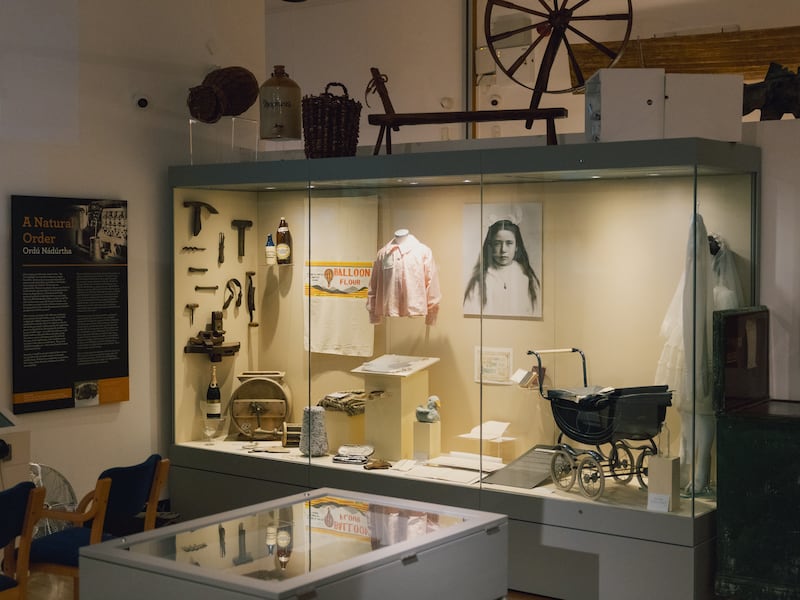 A display cabinet with items belonging to Dorothy May Petronell Grubb located in the Tipperary Museum of Hidden History, Clonmel, Co.Tipperary. Photo by Dan Dennison / The Irish Times
The photograph was of Dorothy May Petronell Grubb, who was known as Petronell. She grew up as part of a wealthy Quaker family in a large house in Ardmayle, near Cashel, Co Tipperary. She had three older brothers, who went away to boarding school in England. While on a holiday in 1919 in Killarney with her parents, Sara Mary and Louis Henry Grubb, Petronell contracted typhoid. She died within a week.
As the exhibit explains, her grieving mother collected together some of her daughter’s possessions and stored them in a box. Some of these objects are now on display in Clonmel. They include her favourite toy, a blue stuffed duck; a pair of leather gloves that were bought in Selfridges, London; a silver knife, fork and spoon set, a gift from “Uncle Reggie”; a pink linen shirt she had been in the process of making when she died; samples of the homework that she did with her governess, Lilias Largan; a piece of her long reddish hair, which her mother had tied with a pink ribbon. After her death, she was brought in a flower-filled hay cart for burial at the local church in Ardmayle.
Collectively, the display is deeply moving, both personal and universal. Who could not mourn the untimely death of a child in any era? It’s also an insight into the life of one privileged child and her family living in Co Tipperary, a year after the end of the first World War. Our social history artefacts in museums have many reminders of lives lived during and after the Famine in rural Ireland, whether they be the huge cauldrons that serviced workhouses and soup kitchens, or photographs of barefoot families being evicted, the thatch of their simple houses afire. There are not many silver cutlery sets on display that belonged to a Big House child, three years before the outbreak of Civil War.
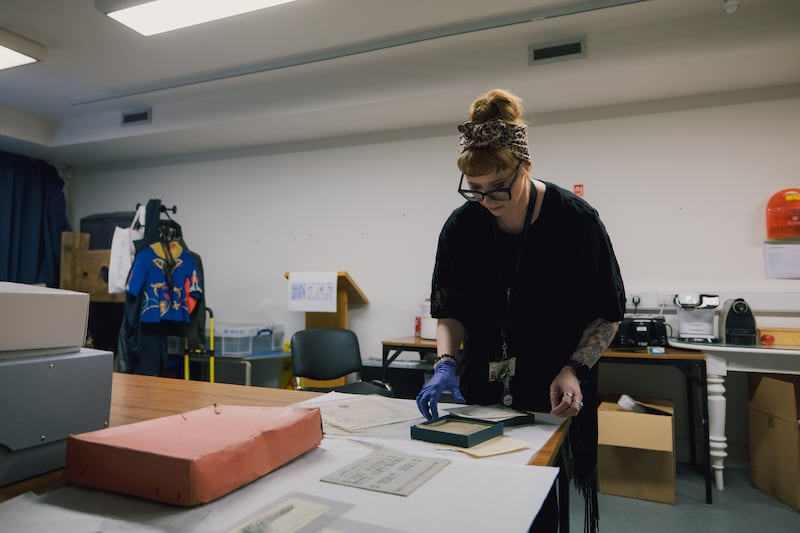 Jayne Sutcliffe, documentation and collections officer with Tipperary Museum of Hidden History, at work. Photograph: Dan Dennison
 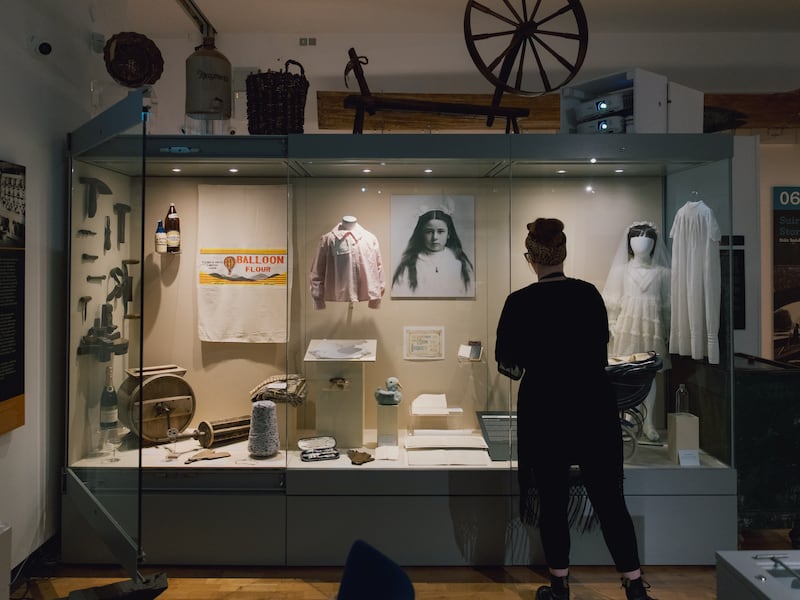 Petronell’s grieving mother collected together some of her daughter’s possessions and stored them in a box. Some of these objects are now on display in Clonmel, with the exhibition proving popular among museum visitors. Photograph: Dan Dennison
The 1911 census recorded 14 members of the Grubb household. One of the three sons was already away at school. Along with their parents and the other three Grubb children, including Petronell, who was then two, also listed is a butler, a nurse, a governess, a cook, a laundress, a housemaid and three additional maids. These were just the people residing in the Big House. The groomsman, gardeners and chauffeur were housed elsewhere. Henry Louis Grubb, listed as Head of Household, under “Occupation” has written “no profession”.
Descendants of the Grubb family kept Petronell’s box of possessions safe over the decades. In 2019, a century after her aunt Petronell had died, her niece and namesake, Petronelle Clifton Brown, donated the box to the Museum of Hidden History. It is now, according to Marie McMahon, curator and manager of the museum, by far one of their most popular exhibits.
 Items belonging to Dorothy May Petronell Grubb in Clonmel, Co Tipperary. Photograph: Dan Dennison
 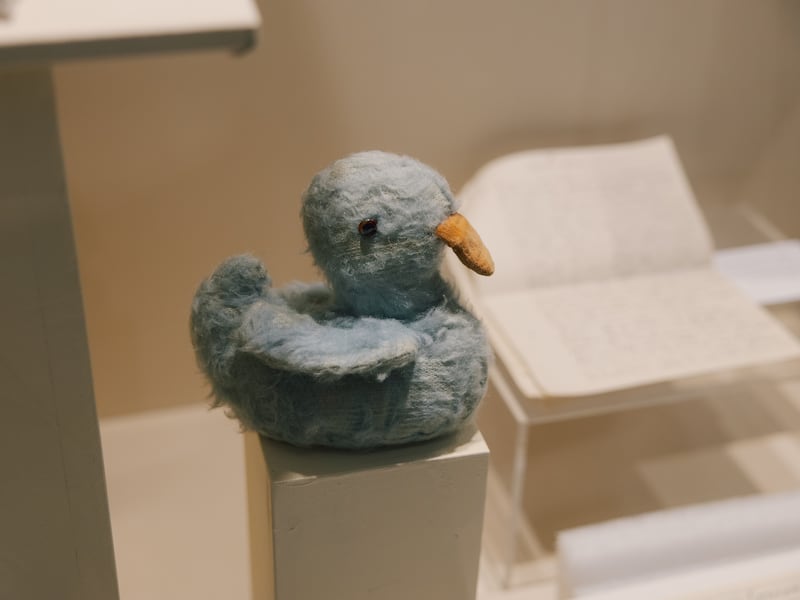 Dorothy May Petronell Grubb’s favourite toy, a fluffy blue duck, features in the Tipperary Museum of Hidden History’s exhibition. Photograph: Dan Dennison
“Even though she’s gone, we’re still talking about her more than a hundred years later,” says Jayne Sutcliffe, collections and documentation officer. “In terms of donations from the public, especially to county council museums, to get something so complete on an individual like this, is rare.”
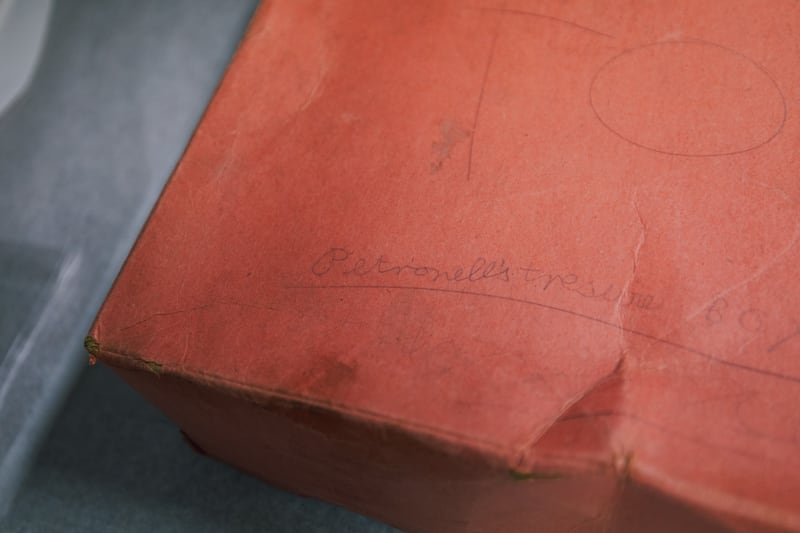
Not on display is the faded red cardboard box the items came in. In a child’s handwriting – Petronell’s – are the words “Petronell’s treasure box”. It’s a box that would have held a child’s dress, or a coat; one which she evidently kept for her own use, and which her mother in turn used to store her daughter’s belongings in.
Petronelle Clifton Brown is now 84, and lives near Cashel. She’s standing outside her home, awaiting my arrival down the long driveway. There are several dogs running around, including one that only has three legs. “You can see the Rock of Cashel lit up at night from the front door,” she tells me, before we move inside.
Hanging on a cabinet door when we go into the room where we are to do the interview, is a bone-white cotton and lace christening gown, in pristine condition. It is an exquisite piece of antique clothing, every stitch done by hand.
“You have timed your visit well,” Clifton Brown says, patting the fabric. “I only got this in the last couple of days.”
As we sit down, I don’t know where to look first. There are a number of objects laid out on the table. There are photographs, one of a beautiful woman, whose long formal white gown has a seam of real flowers stitched into the fabric. This is Clifton Brown’s grandmother, at an event in London as a young girl. There is a delicate gold pendant necklace, set with a red stone. It’s the pendant young Petronell was wearing in the photograph of her in the museum.
There is a small flat leather case, with the initials, D.M.P.G. stamped in gold on the exterior. Within is a Swiss-made clock that came from West & Son in Dublin; Petronell’s travelling clock. There is a miniature painting of her as a small child. There is a Bible, whose mottled flyleaf reads: “For my darling daughter, with Mother’s best love”, dated August 3rd, 1916. Added later in smaller print, in the same handwriting, are the dates of Petronell’s birth and death.
Clifton Brown has a print out of the census record from 1911, which she shows me, and she remarks on the number of staff there were to look after the family. “The philosophy at the time was you should employ as many people as you can afford,” she says.
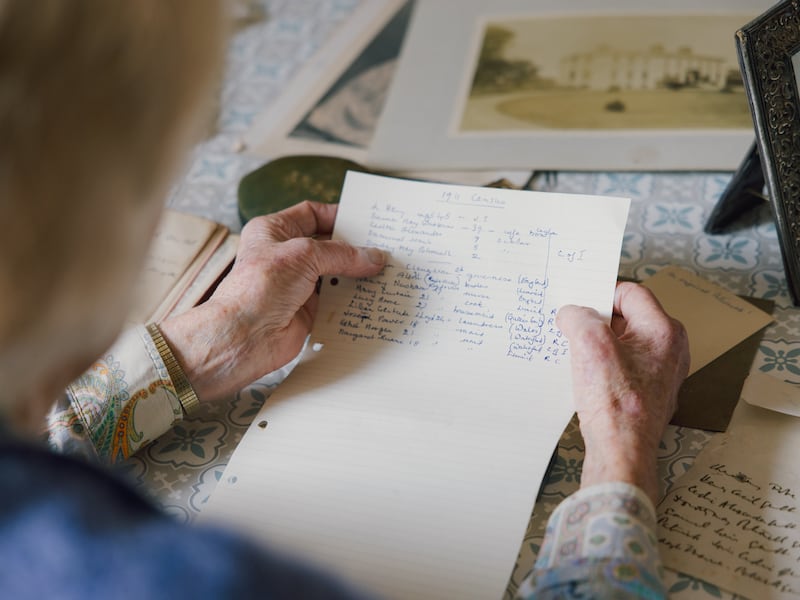 Petronelle Clifton Brown (84), Petronell’s niece, at home near Cashel, Co Tipperary. Photograph: Dan Dennison
 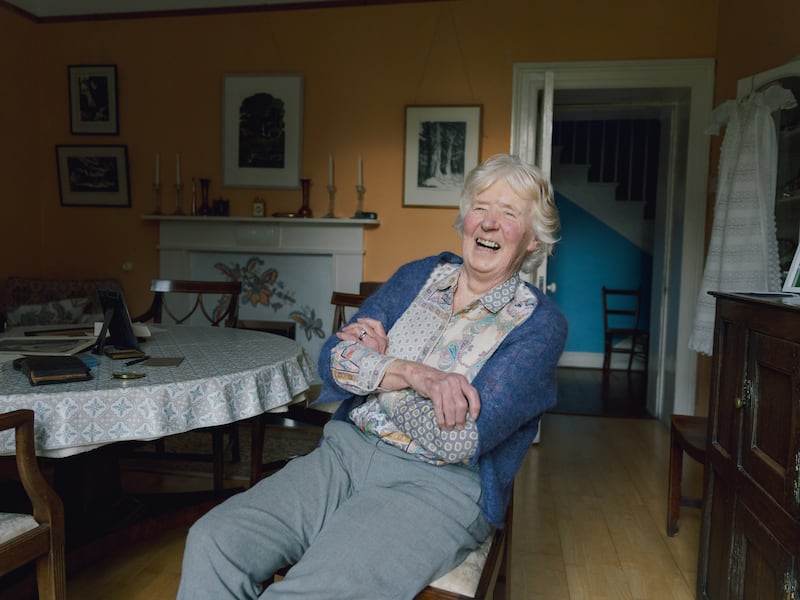 Petronelle Clifton Brown (84), Petronell’s niece, at home near Cashel, Co Tipperary. Photograph: Dan Dennison
 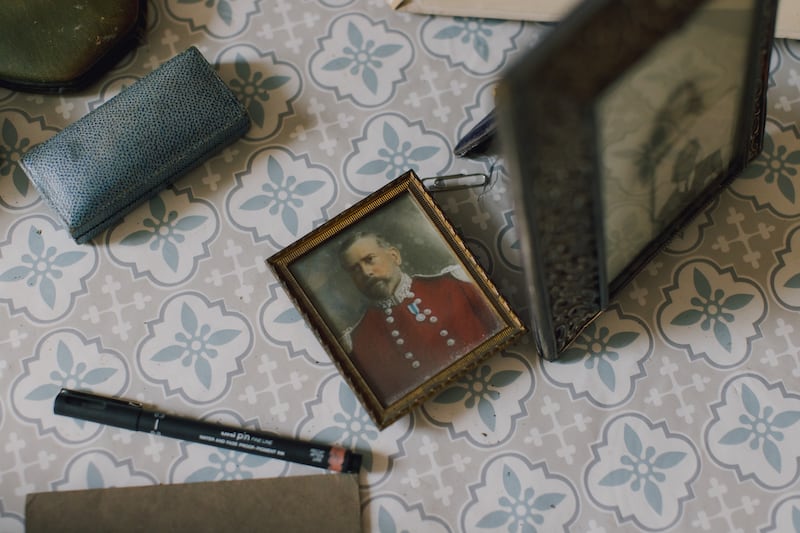 Family items belonging to Petronelle Clifton Brown. Photograph: Dan Dennison
Petronell’s three brothers, were, respectively, Henry Cecil, Cedric Alexander, and Samuel Louis. All four siblings were christened in the white robe that hangs from the cabinet wall behind us. Clifton Brown’s father was Samuel Lewis, the youngest son. The other two brothers went to live and work abroad, in South Africa and Argentina respectively. Henry and Cedric frequently wrote home letters which were shared with the wider family.
I ask Clifton Brown when she first became aware of the aunt with whom she shared a name. “Everyone is living even if they are dead,” she says. “These uncles, one in South Africa and one in Argentina, were always writing to my father, and Petronell’s name was always being mentioned. She was very much alive to us all. I always knew about her.”
What age would Clifton Brown have been when she realised there were artefacts belonging to her dead aunt?
“Granny was completely devastated at the sudden death of her daughter, and put the reside of her possessions into a big dress box that belonged to her as a little girl.” The majority of her clothing was given away to charity at the time.
Two years after Petronell’s death, and a year before the Civil War, the family sold Ardmayle House and moved to Bournemouth in England. The box went with them.
“Granny died just as the second World War was breaking out, and all the furniture was put into store in Bournemouth and there it stayed. In 1949, we went over to see what was in storage, and among the things was this box. My father brought it home to Beechmount House in Fethard, where I was brought up, and it sat in their wardrobe for years. It was always there, tied up with string.”
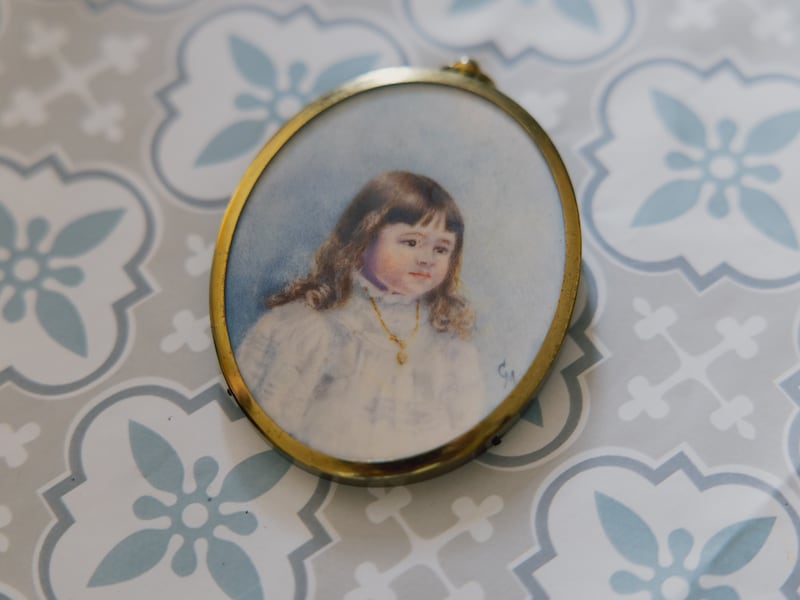 Details of family photos with Dorothy May Petronell Grubb, the subject of the display located in the Tipperary Museum of Hidden History, Clonmel, Co Tipperary. Photograph: Dan Dennison
 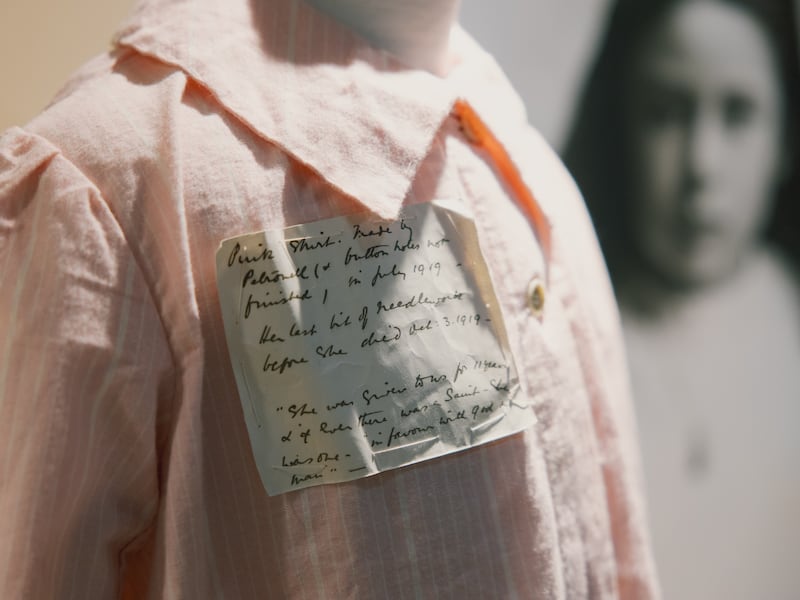 A list of items belonging to Dorothy May Petronell Grubb in a display cabinet in the Tipperary Museum of Hidden History, Clonmel, Co Tipperary. Photograph: Dan Dennison
 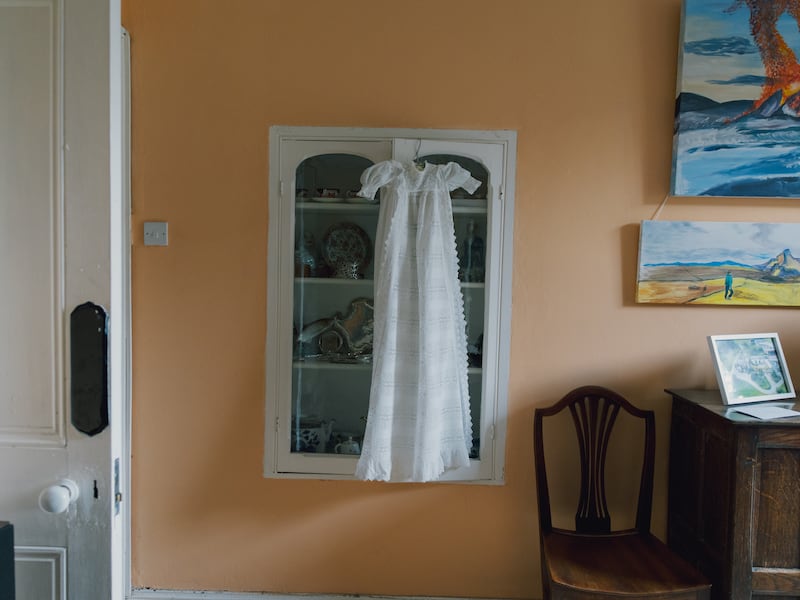 Petronell’s three brothers, were, respectively, Henry Cecil, Cedric Alexander, and Samuel Louis. All four siblings were christened in the pristine bone-white robe that hangs from the cabinet wall. Photograph: Dan Dennison
Did Clifton Brown ever go looking at the box, with its toy duck, travelling clock, gold pendant, school work and other objects belonging to her aunt?
“We were not encouraged to rummage in our parents’ wardrobe,” she says.
As for the family christening robe that only came into her possession a couple of days prior, that spent much of its time in South Africa with uncle Henry. It came to her when another family member died: a surprise inheritance she thought was longsince lost or destroyed. Clifton Brown shows me the handwritten piece of paper her grandmother had folded in with the gown, detailing the names and dates of those who had been christened in it.
At this point, Clifton Brown and my colleague Dan Dennison leave the room to take images of the christening grown in better light. I look again at the objects on the table that once belonged to a long-dead girl, whose face haunts many of those who see it in the nearby county museum. There is a smaller version of that photograph in a little frame on the table. As if magnetised, my fingers reach for Petronell Grubb’s gold pendant with the red garnet, displayed in its jewel box, which she wore for that same photograph. It feels literally elemental: this direct connection with the past.
I suddenly have a catch in my throat, irrationally mourning the loss of someone I never knew, who never got to live their full life; a young girl whose life is now suspended in a kind of historical amber, and who once owned the necklace I am now carefully holding in my hands.
[ Dancehall days: ‘He asked me to dance. Now we’re married 42 years’Opens in new window ]
When Clifton Brown comes back into the room, I ask her if it is strange to see items belonging to a family member in a museum, and also to know that those items are a very popular exhibit.
“We might as well share them,” she says. “It is a social history of that time; like holding up a mirror to what her life was like.”
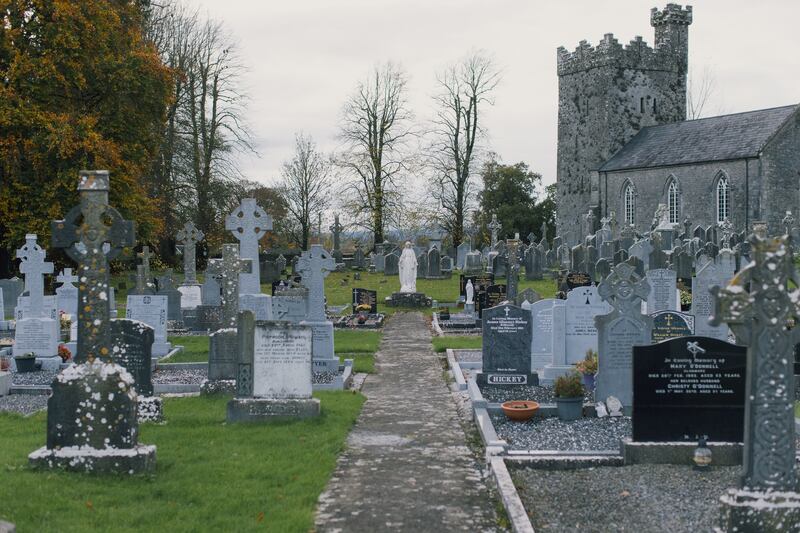 Dorothy May Petronell Grubb was buried in the grounds of Ardmayle church, not far from the house where she lived her short life. Photograph: Dan Dennison
 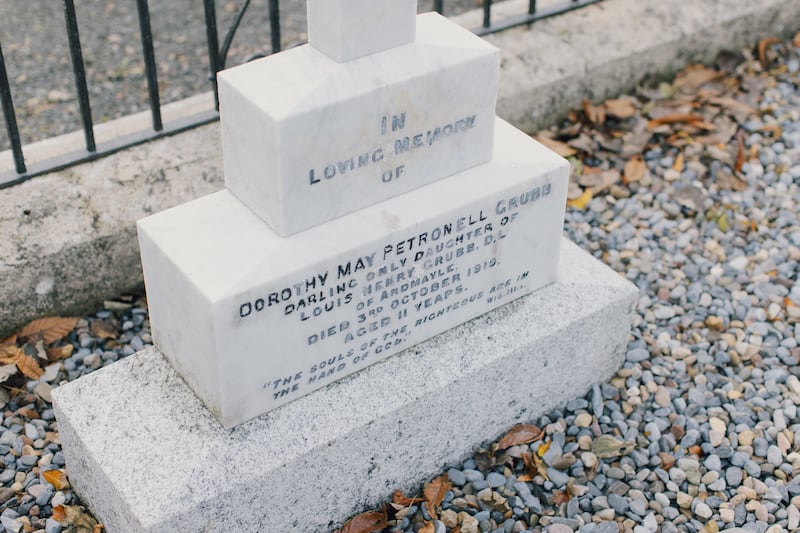 Dorothy May Petronell Grubb was buried in the grounds of Ardmayle church, not far from the house where she lived her short life. Photograph: Dan Dennison
Dorothy May Petronell Grubb was buried in the grounds of Ardmayle church, not far from the house where she lived her short life. She was brought there from her home by hay cart, covered with a bower of flowers. I drive there now along narrow roads lined with stone walls knitted together with brambles.
Her grave is located close to the entrance of the church, a distinctive white marble cross marking the location, the stone so clear and bright it seems astonishing it’s more than a century old. It’s evident the plot is tended regularly, and the person interred there still remembered.
Back at the house, Clifton Brown had told me that after Petronell’s burial, her name was spelt out in daffodil bulbs, that came up year after year each spring. At some point since 1919, the plot was covered in a multitude of small stones, where no grass nor flowers now grow.
I stand there for a while, in the chill winter afternoon, imagining the transformation spring would have brought to the plot in decades past. Daffodil bulbs can, and do, survive a very long time, if continually thinned out. Those attending Ardmayle Church at some period in the past would have noticed during springtime that the name Petronell was suddenly alive in vivid yellow; her memorial daffodils glowing luminous and bright.