
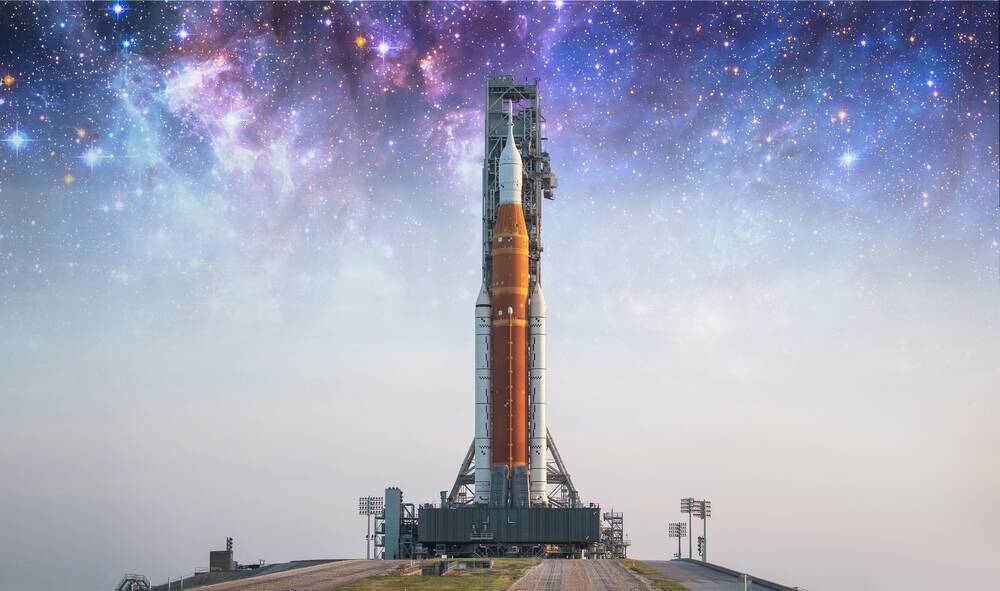
NASA engineers spent the weekend studying the data after another attempt to fill the agency’s monster Space Launch System (SLS) produced mixed results.
Dubbed a “confidence test” by NASA, the core stage of the SLS was partially filled with liquid oxygen to check out the newly replaced seals around where the propellant leaked in a recent Wet Dress Rehearsal (WDR). According to NASA, “Teams were able to gain confidence in several key objectives of the test,” although things did not go entirely to plan.
One issue was a reduced flow of liquid hydrogen into the rocket, which engineers suspect was caused by a filter in ground support equipment. The component has now been replaced, although NASA has not said it plans to conduct a further confidence test before attempting a second WDR in February. The Artemis II mission, which will use this SLS, is set for launch in March at the earliest, with additional opportunities in April.
The agency said it had obtained data “at the core stage interfaces, taken at the same time in the test where they encountered a leak during the previous wet dress rehearsal.”
It added: “Engineers will purge the line over the weekend to ensure proper environmental conditions and inspect the ground support equipment before replacing a filter suspected to be the cause of the reduced flow.”
NASA Administrator Jared Isaacman used a post on X (formerly Twitter) to point out that problems were observed on the previous mission to the Moon: “Considering the issues observed during the lead-up to Artemis I, and the long duration between missions, we should not be surprised there are challenges entering the Artemis II campaign.”
Isaacman also made himself somewhat of a hostage to fortune with the comment, “I will say near-conclusively for Artemis III, we will cryoproof the vehicle before it gets to the pad, and the propellant loading interfaces we are troubleshooting will be redesigned.”
The engines of the SLS core stage are former Space Shuttle units, which run on liquid oxygen and hydrogen, meaning that NASA has plenty of experience at dealing with the stuff. However, the final Space Shuttle launch was in 2011, and the gap between SLS flights can be measured in years rather than months.
As for Artemis III, there is no guarantee it will launch during Isaacman’s tenure. It could easily slip into the 2030s unless the mission profile is changed, as it requires a lander that NASA’s Aerospace Safety Advisory Panel fears will not be ready in time. ®