
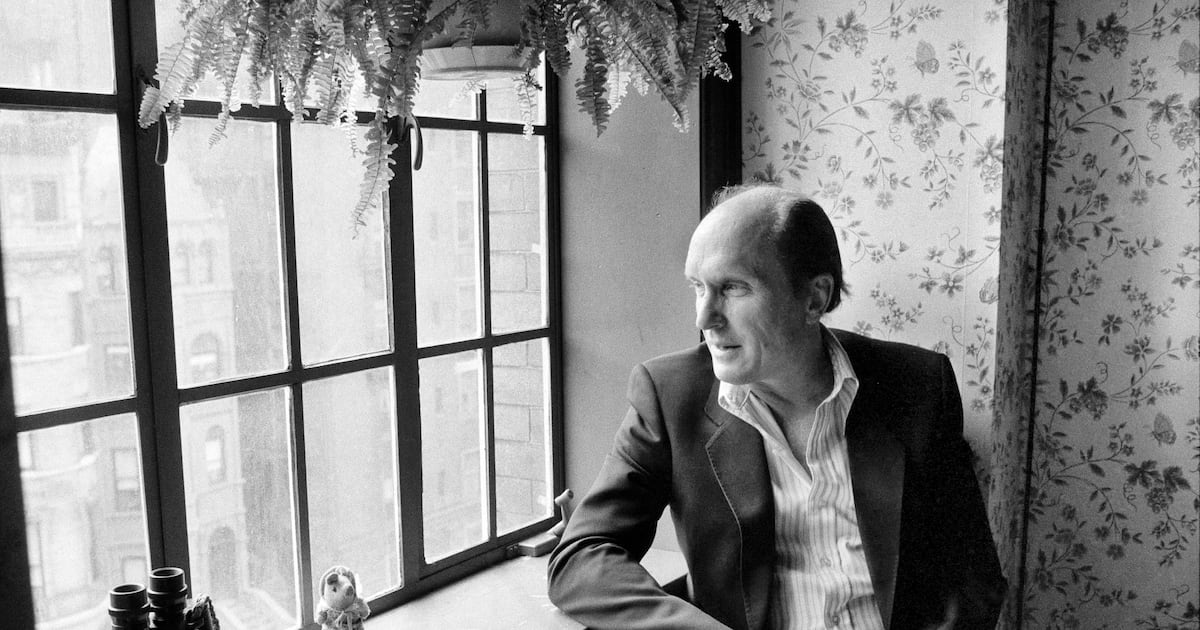
Robert Duvall was a screen icon hewn from Old Hollywood granite – a quietly forbidding force of nature who brought a dangerous energy to the smaller parts he was often asked to play.
The actor, who has died aged 95, had a career that spanned decades but he will forever be connected to the 1970s and the golden age of the tinsel‑town auteur thanks to his signature roles in The Godfather and Apocalypse Now.
These were both wildly improbable leaps in the dark by the young Francis Ford Coppola and Duvall was with him all of the way. He contributed a quiet, brooding intensity to The Godfather, playing Corleone consigliere Tom Hagen.
He was a character who could easily have melted into the background as Marlon Brando and Al Pacino blazed like exploding suns. However, Duvall refused to be overshadowed and contributed an edge to what could have been a forgettable role.
Because Duvall was so dependable, he was too often taken for granted in Hollywood
Hagen was a devastating portrait of evil at its most banal. A respectable functionary in a mid-priced suit, he seldom raised his voice and never threatened anyone.
Yet it was he who orchestrated the “offer he can’t refuse” horse head in the bed – a display of violence all the more chilling because the bloodshed took place off-screen.
But it was with Coppola’s Apocalypse Now that Duvall seized cinematic immortality with both hands.
Amid Coppola’s swirl of dark, dreamlike imagery, Duvall’s performance went off like a direct hit from a bunker‑buster.
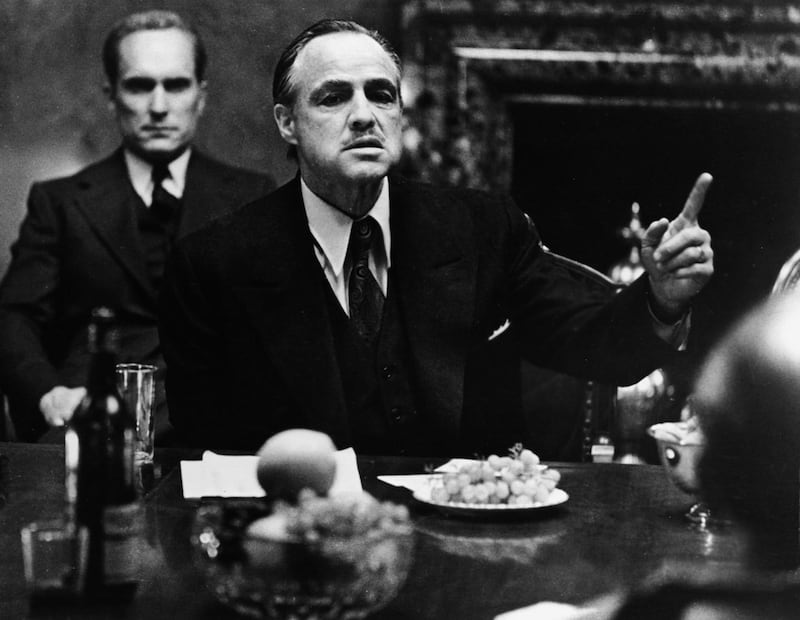 Marlon Brando (right) and Robert Duvall in The Godfather. Photograph: Paramount Studios/Courtesy of Getty Images
He played the warmongering figure of lieut col Bill Kilgore absolutely straight, where other actors might have been tempted to bring an ironic touch.
Watching Duvall declare, “Charlie don’t surf” as Viet Cong missiles rained down or declare “I love the smell of napalm in the morning”, it was unclear whether or not Duvall approved of Kilgore’s statements.
That was the genius of the performance – at his best, Duvall went broad, but never winked or mugged. It was a turn perfectly attuned to the gonzo quality of Apocalypse Now – a film that purported to be anti‑war yet which made conflict in the jungle feel nightmarishly alluring.
In his later years, Duvall was always a welcome presence: his name in the credits was a stamp of quality. He was full of fervent honesty in The Apostle – a passion project that he wrote and directed and in which he played a preacher who had lost his family through addiction.
He also threw up sparks opposite John Travolta in the 1998 courtroom drama A Civil Action and went toe‑to‑toe with Robert Downey jnr in another legal caper, 2014’s The Judge.
Because he was so dependable, he was too often taken for granted in Hollywood.
Though Oscar‑nominated for both The Godfather and Apocalypse Now, he did not win an Academy Award until 1984, when he was acknowledged for Tender Mercies, in which he played a country singer and recovering alcoholic in rural Texas.
The American West could come calling once again in 2006 when he received an Emmy for the western mini‑series Broken Trail, about an ageing cowboy who saddles up one final time and heads out into the untamed wilderness.
He has himself now gone into the great beyond – an actor who blended grit and humility and embodied a rough‑hewn archetype that, with his death, has now passed into history.